PLASTICULTURE IN MEXICO: ENVIRONMENTAL IMPACTS AND CHALLENGES FOR SUSTAINABILITY
DOI:
https://doi.org/10.32351/rca.v11.425
Keywords:
protected agriculture, agroplastics, soil pollution, waste management, horticultureAbstract
Plasticulture has transformed Mexican horticulture, with over 45,000 hectares under protected agriculture in northern and central states. However, the inadequate management of agricultural plastic waste—mulches, greenhouse covers, and irrigation systems—has emerged as a growing environmental problem due to its contribution to microplastic pollution in soils. The objective of this study was to critically analyze the scientific evidence on the adverse effects of plasticulture in Mexico, with an emphasis on microplastic generation, its soil impacts, and the regulatory challenges to sustainability. A systematic review was conducted on environmental and ecological impact aspects, as well as the management of plastic waste generated by plasticulture in Mexico. International evidence shows that microplastics alter soil properties, reduce photosynthesis in crops by up to 12%, and are transferred through food chains. For Mexico, critical gaps have been identified: the absence of a national inventory of agricultural plastic waste and the lack of specific regulations. The installed recycling capacity covers less than 1% of the estimated annual waste generation. It is concluded that it is urgent to create a monitoring system, develop regulations based on a circular economy, promote biodegradable alternatives, and establish extended producer responsibility.
Downloads
References
Anagnosti, L., Varvaresou, A., Pavlou, P., Protopapa, E., & Carayanni, V. (2021). Worldwide actions against plastic pollution from microbeads and microplastics in cosmetics focusing on European policies. Has the issue been handled effectively? Marine Pollution Bulletin, 162, 111883. https://doi.org/10.1016/j.marpolbul.2020.111883
Andrady, A. L. (2011). Microplastics in the marine environment. Marine Pollution Bulletin, 62(8), 1596-1605. https://doi.org/10.1016/j.marpolbul.2011.05.030
Betancourt, C. R. (2025). El plástico, características y principales impactos. Su uso en la agricultura, recomendaciones para su manejo. Ciencia y Tecnología Agropecuaria, 10(1), 49-59.
Bläsing, M., & Amelung, W. (2018). Plastics in soil: Analytical methods and possible sources. Science of the Total Environment, 612, 422-435. https://doi.org/10.1016/j.scitotenv.2017.08.086
Bosker, T., Bouwman, L. J., Brun, N. R., Behrens, P., & Vijver, M. G. (2019). Microplastics accumulate on pores in seed capsule and delay germination and root growth of the terrestrial vascular plant Lepidium sativum. Chemosphere, 226, 774–781. https://doi.org/10.1016/j.chemosphere.2019.03.163
Cole, M., Lindeque, P., Halsband, C., & Galloway, T. S. (2011). Microplastics as contaminants in the marine environment: A review. Marine Pollution Bulletin, 62(12), 2588-2597. https://doi.org/10.1016/j.marpolbul.2011.09.025
Corradini, F., Meza, P., Eguiluz, R., Casado, F., Huerta-Lwanga, E., & Geissen, V. (2019). Evidence of microplastic accumulation in agricultural soils from sewage sludge disposal. Science of the Total Environment, 671, 411–420. https://doi.org/10.1016/j.scitotenv.2019.03.368
de Souza Machado, A. A., Lau, C. W., Till, J., Kloas, W., Lehmann, A., Becker, R., & Rillig, M. C. (2018). Impacts of microplastics on the soil biophysical environment. Environmental Science & Technology, 52(17), 9656–9665. https://doi.org/10.1021/acs.est.8b02212
Delgado, A., da Rocha, A. M., Souza, C. F., & Matsuura, E. (2011). Plasticultura: Uso de plásticos na agricultura. Revista Brasileira de Agropecuária Sustentável, 1(1), 15-25.
Dris, R., Gasperi, J., Saad, M., Mirande, C., & Tassin, B. (2016). Synthetic fibers in atmospheric fallout: A source of microplastics in the environment? Marine Pollution Bulletin, 104(1-2), 290-293. https://doi.org/10.1016/j.marpolbul.2016.01.006
Du, S., Zhu, R., Cai, Y., Xu, N., Yap, P. S., Zhang, Y., He, Y., & Zhang, Y. (2025). Microplastic pollution inhibits crop photosynthesis and poses a threat to food security. Proceedings of the National Academy of Sciences, 122(15), e2420797122. https://doi.org/10.1073/pnas.2420797122
Laos, E. V., & Pérez, O. (1998). Reciclaje de desechos plásticos en el Perú. Revista de Química, 12(2), 53-63.
Espi, E., Salmerón, A., Fontecha, A., García, Y., & Real, A. I. (2006). Plastic films for agricultural applications. Journal of Plastic Film & Sheeting, 22(2), 85-102. https://doi.org/10.1177/8756087906064220
FAO. (2021). Assessment of agricultural plastics and their sustainability: A call for action. Food and Agriculture Organization of the United Nations.
Forbes México. (2022, 22 de octubre). Alistan en Culiacán la planta de reciclado plástico agrícola más grande del país. https://www.forbes.com.mx/alistan-en-culiacan-la-planta-de-reciclado-plastico-agricola-mas-grande-del-pais/
Frias, J. P. G. L., & Nash, R. (2019). Microplastics: Finding a consensus on the definition. Marine Pollution Bulletin, 138, 145-147. https://doi.org/10.1016/j.marpolbul.2018.11.022
Gao, H., Yan, C., Liu, Q., Ding, W., Chen, B., & Li, Z. (2019). Effects of plastic mulching and plastic residue on agricultural production: A meta-analysis. Science of the Total Environment, 651, 484-492. https://doi.org/10.1016/j.scitotenv.2018.09.105
GESAMP. (2016). Sources, fate and effects of microplastics in the marine environment: A global assessment (Reports and Studies No. 93). International Maritime Organization. http://www.gesamp.org/publications/report-of-the-43rd-session
González-Viñas, W., & Mancini, H. L. (2003). Ciencia de los materiales. Editorial Ariel Ciencia.
H2O IQ. (2024). Are farm fields a hidden source of microplastics? Water Solutions Network. https://www.h2oiq.org/are-farm-fields-hidden-source-of-microplastics
Hartmann, N. B., Hüffer, T., Thompson, R. C., Hassellöv, M., Verschoor, A., Daugaard, A. E., ... & Wagner, M. (2019). Are we speaking the same language? Recommendations for a definition and categorization framework for plastic debris. Environmental Science & Technology, 53(3), 1039-1047. https://doi.org/10.1021/acs.est.8b05297
Hernández-Sánchez, L., Cruz-López, V., Román-Doval, R., & Cruz-Martínez, H. (2025). Microplásticos y nanoplásticos: una revisión sistemática de su impacto en el crecimiento de tomate (Solanum lycopersicum). Ciencia e Innovación Agroalimentaria de la Universidad de Guanajuato, 6 (Número Especial), 296-308.
Huang, Y., Liu, Q., Jia, W., Yan, C., & Wang, J. (2020). Agricultural plastic mulching as a source of microplastics in the terrestrial environment. Environmental Pollution, 260, 114096. https://doi.org/10.1016/j.envpol.2020.114096
Huerta Lwanga, E., Mendoza Vega, J., Ku Quej, V., Chi, J. de los A., Sanchez del Cid, L., Chi, C., Escalona Segura, G., Gertsen, H., Salánki, T., van der Ploeg, M., Koelmans, A. A., & Geissen, V. (2017). Field evidence for transfer of plastic debris along a terrestrial food chain. Scientific Reports, *7*, 14071. https://doi.org/10.1038/s41598-017-14588-2
INEGI. (2022). Censo Agropecuario 2022. Instituto Nacional de Estadística y Geografía.
Kader, M. A., Senge, M., Mojid, M. A., & Ito, K. (2017). Recent advances in mulching materials and methods for modifying soil environment. Soil and Tillage Research, 168, 155-166. https://doi.org/10.1016/j.still.2017.01.001
Kasirajan, S., & Ngouajio, M. (2012). Polyethylene and biodegradable mulches for agricultural applications: A review. Agronomy for Sustainable Development, 32(2), 501-529. https://doi.org/10.1007/s13593-011-0068-3
Kataria, N., Yadav, S., Garg, V. K., Rene, E. R., Jiang, J. J., Rose, P. K., Kumar, M., & Khoo, K. S. (2024). Occurrence, transport, and toxicity of microplastics in tropical food chains: perspectives view and way forward. Environmental Geochemistry and Health, 46(3), 98. https://doi.org/10.1007/s10653-024-01862-2
Liu, E. K., He, W. Q., & Yan, C. R. (2014). “White revolution” to “white pollution”—Agricultural plastic film mulch in China. Environmental Research Letters, 9(9), 091001. https://doi.org/10.1088/1748-9326/9/9/091001
Maqbool, A., Soriano, M. A., & Gómez, J. A. (2023). Macro- and micro-plastics change soil physical properties: a systematic review. Environmental Research Letters, 18(12), 123002. https://doi.org/10.1088/1748-9326/ad0a1a
Mohasin, M., Habib, K., Rao, P. S., & Kumar, A. (2025). Microplastics in agricultural soils: Sources, impacts, and mitigation strategies. Environmental Monitoring and Assessment, 197(6), 684. https://doi.org/10.1007/s10661-025-14114-2
My, N. T. D., & Giao, N. T. (2025). A review of microplastic contamination in agriculture: Sources, impacts, and solutions. Journal of Applied Sciences and Environmental Management, 29(8), 2674–2686. https://doi.org/10.4314/jasem.v29i8.34
Nizzetto, L., Futter, M., & Langaas, S. (2016). Are agricultural soils dumps for microplastics of urban origin? Environmental Science & Technology, 50(20), 10777-10779. https://doi.org/10.1021/acs.est.6b04140
Nizzetto, L., Hurley, R., Collard, F., Thompson, R. H., & Carcasci, G. (2025). State of research on the impacts of plastic pollution on soil health and crops. Food and Agriculture Organization of the United Nations (FAO). https://doi.org/10.4060/cd6407en
Penn State Extension. (2025). Microplastics in agricultural lands. Pennsylvania State University. https://extension.psu.edu/microplastics-in-agricultural-lands
Rillig, M. C. (2012). Microplastic in terrestrial ecosystems and the soil? Environmental Science & Technology, 46(12), 6453-6454. https://doi.org/10.1021/es302011r
Sahai, A., Kumar, R., & Singh, S. (2025). Microplastic contamination in agricultural soils: A comprehensive review of sources, occurrence, and impacts. Journal of Hazardous Materials, 485, 137032. https://doi.org/10.1016/j.jhazmat.2024.137032
Sakin, E., Dilekoglu, M. F., & Yanardağ, İ. H. (2025). Unseen threat: The devastating impact of microplastics on soil health in agricultural lands. CATENA, 253, 108904. https://doi.org/10.1016/j.catena.2025.108904
Sánchez Ortiz, R., Castruita Esparza, L. U., Sánchez Bernal, J. A., & Álvarez Valencia, C. L. (2024). El uso de agroplásticos en el siglo XXI. Revista Spauach. Academia Vitalis, *8*(9), 53-59. https://spauach.uach.mx/uploads/magazine_article/article_file/47/El_uso_de_agropla%CC%81sticos_en_el_siglo_XXI.pdf
Secretaría de Agricultura y Desarrollo Rural (SADER). (2023). Panorama agroalimentario de México. Gobierno de México.
Secretaría de Medio Ambiente y Recursos Naturales (SEMARNAT). (2022). Informe de la situación del medio ambiente en México. Gobierno de México.
Skawina, A., Dąbrowska, A., Bonk, A., Paterczyk, B., & Nowakowska, J. (2024). Tracking the micro- and nanoplastics in the terrestrial-freshwater food webs. Bivalves as sentinel species. Science of the Total Environment, 917, 170468. https://doi.org/10.1016/j.scitotenv.2024.170468
Smyth, K., Marchand, C., & Jaffrezic, A. (2025). Soil contamination by microplastics in a small French agricultural watershed: Levels, sources, and vertical distribution. Environmental Pollution, 365, 125412. https://doi.org/10.1016/j.envpol.2024.125412
Steinmetz, Z., Wollmann, C., Schaefer, M., Buchmann, C., David, J., Tröger, J., Muñoz, K., Frör, O., & Schaumann, G. E. (2016). Plastic mulching in agriculture. Trading short-term agronomic benefits for long-term soil degradation? Science of the Total Environment, *550*, 690-705. https://doi.org/10.1016/j.scitotenv.2016.01.153
Thompson, R. C., Olsen, Y., Mitchell, R. P., Davis, A., Rowland, S. J., John, A. W. G., McGonigle, D., & Russell, A. E. (2004). Lost at sea: Where is all the plastic? Science, 304(5672), 838. https://doi.org/10.1126/science.1094559
Tigrero-Zapata, G. J., Sánchez-Iznaga, A. L., Verdesoto-Arguello, A. E., Saucedo-Aguilar, A. E., Camacho-Bustamante, L. C., & Soto-Montaño, C. L. (2023). Impacto del plástico de envases de pesticidas en suelos agrícolas: una problemática cultural del agro ecuatoriano. Revista Ingeniería Química y Desarrollo, 5(2), 1-15.
Tilman, D., Balzer, C., Hill, J., & Befort, B. L. (2011). Global food demand and the sustainable intensification of agriculture. Proceedings of the National Academy of Sciences, 108(50), 20260–20264. https://doi.org/10.1073/pnas.1116437108
Xu, L., Wang, Y., & Zhang, S. (2025). Microplastics derived from agricultural plastic mulch films: A growing environmental concern. Current Opinion in Environmental Science & Health, 43, 100589. https://doi.org/10.1016/j.coesh.2024.100589
Zener de Polanía, I., & Peña-Baracaldo, F. (2013). Plásticos en la agricultura: beneficio y costo ambiental: una revisión. Revista U.D.C.A Actualidad & Divulgación Científica, 16(1), 139-150.
Zhang, D., Liu, H., Hu, W., Qin, X., Ma, X., Yan, C., & Wang, H. (2016). The status and distribution characteristics of residual mulching film in soils of China. Journal of Integrative Agriculture, 15(11), 2639–2646. https://doi.org/10.1016/S2095-3119(15)61240-0
Zhang, B., Liu, J., Li, Y., Zhou, L., Guo, J., Tao, X., & Chen, L. (2025). Effect of non-biodegradable and biodegradable microplastics on plants from physiological to individual levels: A meta-analysis. Authorea Preprints. https://doi.org/10.22541/au.174901910.05447286/v1
Estadísticas de lectura: 681
Descargas: PDF (SPANISH) 414 - HTML (SPANISH) 67 - XML (SPANISH) 297 - EPUB (SPANISH) 109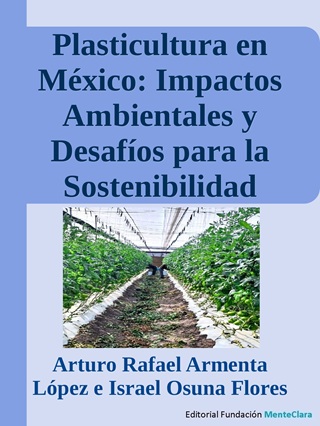
Published
Issue
Section
License
Copyright (c) 2026 MenteClara Foundation’s Peer-reviewed Journal

This work is licensed under a Creative Commons Attribution 4.0 International License.
Authors who publish in this journal agree with the following terms:
a. Authors publish under a Creative Commons Acknowledgment 4.0 International license that allows others to share the work with an authorship acknowledgment of the work and the initial publication in this journal.
b. Authors, who retain their rights after publication, are allowed and encouraged to disseminate their work electronically (for example, in institutional repositories or on their own website) before and during the submission process, as it may result in productive exchanges as well as earlier and greater citations of published works (See The Effect of Open Access).
 Since November 1st, 2018, all articles published in this journal are available under a Creative Commons Acknowledgment 4.0 International license.
How to Cite





 View the