THE TAPEXTLE WELL AS TECHNOLOGICAL HERITAGE IN THE FACE OF PORT EXPANSION IN THE CUYUTLÁN LAGOON, COLIMA, MEXICO
DOI:
https://doi.org/10.32351/rca.v11.440
Keywords:
tapextle well, artisanal salt, Cuyutlán Lagoon, technological heritage, port infrastructureAbstract
Artisanal salt production is a historically significant cultural activity in the Cuyutlán Lagoon, Colima, Mexico. Within this system, the pozo de tapextle stands out as a traditional technology used to obtain brine through the leaching of saline soil, filtration, and solar evaporation. This article analyzes the tapextle well as technological heritage, not merely as a material structure, but as part of a system composed of territory, raw material, technical knowledge, community, and cultural landscape. Through qualitative documentary research with a Heritage Impact Assessment approach, the study reviews archaeological, historical, environmental, institutional, and heritage-related sources. The central argument is that port infrastructure expansion could affect salt-making heritage not only through direct physical destruction, but also through hydrological, sedimentary, territorial, and sociocultural transformations that may reduce the functional continuity of the practice. The article proposes a specific heritage assessment that integrates material heritage, intangible heritage, cultural landscape, productive territory, and the direct participation of salt workers.
Downloads
References
Abad-Espinoza, L. G. (2019). The rethinking and enhancement of the natural and cultural heritage of the cultural landscapes: The case of Sečovlje and Janubio saltpans. PASOS. Revista de Turismo y Patrimonio Cultural, 17(4), 671–693. https://doi.org/10.25145/j.pasos.2019.17.048
Ashrafi, B., Kloos, M., & Neugebauer, C. (2021). Heritage impact assessment, beyond an assessment tool: A comparative analysis of urban development impact on visual integrity in four UNESCO World Heritage Properties. Journal of Cultural Heritage, 47, 199–207. DOI: https://doi.org/10.1016/j.culher.2020.08.002
Castellón-Huerta, B. R. (2017). La sal y la arqueología. Arqueología Mexicana, 25(146), 32–41.
Castellón-Huerta, B. R. (2019). La sal, el sabor de los dioses. Arqueología Mexicana, 26(158), 32–41.
del Valle, L. (2023). Safeguarding intangible cultural heritage for sustainable development: The case of traditional salt activity. Journal of Cultural Heritage Management and Sustainable Development. https://doi.org/10.1108/JCHMSD-05-2022-0088
Gaytán-Gómez, O. Z., & Orozco-Plascencia, J. M. (2015). La historia de la sal en México, las salinas de Cuyutlán y el caso de la cooperativa de salineros de Colima. Ciencias Económicas, 12(1), 25–38 https://doi.org/10.14409/CE.V1I0.4979
Hueso-Kortekaas, K. (2020). La patrimonialización de las salinas tradicionales: Una herramienta para el desarrollo local. Estudios Geográficos, 81(289), e047. DOI: https://doi.org/10.3989/estgeogr.202061.061
Hueso-Kortekaas, K., & Carrasco-Vayá, J.-F. (2024). The patrimonialization of traditional salinas in Europe, a successful transformation from a productive to a services-based activity. Land, 13(6), 772. https://doi.org/10.3390/land13060772
ICOMOS. (2011). Guidance on heritage impact assessments for cultural World Heritage properties. International Council on Monuments and Sites. https://www.icomos.org/images/DOCUMENTS/World_Heritage/Guidance_on_heritage_impact_assessments.pdf
Mellink, E., & Riojas-López, M. E. (2007). Modificaciones estructurales artificiales de Laguna Cuyutlán, Colima, México. Revista Geográfica, 142, 131–142. https://doi.org/10.2307/40996755
Moguel Cos, M. A., & Carballal Staedtler, M. (2024). La arqueología de la Laguna de Cuyutlán, Manzanillo, Colima. Una evaluación de diez años de salvamentos arqueológicos. Diario de Campo, 13, 163–185. https://www.jstor.org/stable/40996755
Olay-Barrientos, M. Á., Carballal Staedtler, M., & Moguel Cos, M. A. (2015). La vida en época prehispánica en la Laguna de Cuyutlán, Colima, México: Conocimiento, adaptación y aprovechamiento de recursos del medio ambiente. Archaeobios, 9, 13–27. https://dialnet.unirioja.es/descarga/articulo/6337839.pdf
Piza-López, M. (2019). Acapulco y sus alrededores: Herencia filipina a partir del Galeón de Manila [Tesis de licenciatura, Universidad Autónoma de Guerrero]. Biblioteca Digital del Instituto Nacional de Antropología e Historia. https://investigacion.inah.gob.mx/media/649
Red TDT. (2026, 20 de enero). Niega SEMARNAT autorización en materia de impacto ambiental para el desarrollo del Puerto Nuevo Manzanillo en la Laguna de Cuyutlán. https://remamx.org/2026/01/boletin-de-prensa-niega-semarnat-autorizacion-en-materia-de-impacto-ambiental-para-el-desarrollo-del-puerto-manzanillo-en-la-laguna-de -cuyutlan/
Reyes, J. C. (1995). La sal en México. Gobierno del Estado de Colima; Universidad de Colima.
Reyes-Garza, J. C. (2004). El tapextle salinero: Notas sobre su origen, distribución y variantes. En E. Williams (Ed.), Bienes estratégicos del antiguo Occidente de México: Producción e intercambio (pp. 183–206). El Colegio de Michoacán.
Reyes-Garza, J. C., & Leytón Ovando, R. (1992). Cuyutlán: Una cultura salinera. La Palabra y el Hombre, 81, 121–146. https://cdigital.uv.mx/server/api/core/bitstreams/9a6f6b5c-7dbc-493c-a8a1-44eeb234f996/content
Secretaría de Comunicaciones y Transportes. (2011, 23 de diciembre). Decreto de habilitación del Puerto de Laguna de Cuyutlán, ubicado en el Municipio de Manzanillo, en el Estado de Colima. Diario Oficial de la Federación. https://vlex.com.mx/vid/habilitacion-puerto-laguna-cuyutlan-manzanillo-340696734
Secretaría de Cultura. (2018). Tecnología salinera del “Pozo de tapextle”. Sistema de Información Cultural. https://sic.cultura.gob.mx/ficha.php?table=frpintangible&table_id=305
Thompson, I. B. (1999). The role of artisan technology and indigenous knowledge transfer in the survival of a classic cultural landscape: The marais salants of Guérande, Loire-Atlantique, France. Journal of Historical Geography, 25(2), 216–234. https://doi.org/10.1006/jhge.1999.0115
UNESCO. (2003). Convención para la salvaguardia del patrimonio cultural inmaterial. Organización de las Naciones Unidas para la Educación, la Ciencia y la Cultura. https://www.unesco.org/es/legal-affairs/convention-safeguarding-intangible-cultural-heritage
UNESCO. (2025). The practice of making Asin Tibuok, the artisanal sea salt of the Boholano of Bohol Island, Philippines. Intangible Cultural Heritage in Need of Urgent Safeguarding. https://ich.unesco.org/en/USL/the-practice-of-making-asin-tibuok-the-artisanal-sea-salt-of-the-boholano-of-bohol-island-philippines-02316
UNESCO World Heritage Centre. (2019). Salt Mines of Maras. Tentative Lists. https://whc.unesco.org/en/tentativelists/6412
UNESCO, ICOMOS, ICCROM, & IUCN. (2022). Guidance and toolkit for impact assessments in a World Heritage context. UNESCO World Heritage Centre. https://whc.unesco.org/en/documents/195279
Valdez, F., & Liot, C. (1994). La cuenca de Sayula: Yacimientos de sal en la zona de frontera oeste del Estado tarasco. En B. Boehm de Lameiras (Ed.), El Michoacán antiguo: Estado y sociedad tarascos en la época prehispánica (pp. 285–334). El Colegio de Michoacán. https://www.researchgate.net/publication/32974470_La_cuenca_de_Sayula_yacimientos_de_sal_en_la_frontera_oeste_del_estado__Tarasco
Valdez, F., Liot, C., Acosta, R., & Emphoux, J. P. (1996). The Sayula basin: Lifeways and salt-flats of central Jalisco. Ancient Mesoamerica, 7(1), 171–186. https://doi.org/10.1017/S0956536100001371
Weigand, P. C., & Weigand, C. G. (1997). Salinas y salineros: Manufactura prehispánica de sal en el Occidente de México. Antropología en Jalisco: Una visión actual, 9, 5–23.
Estadísticas de lectura: 0
Descargas: PDF (SPANISH) 0 - HTML (SPANISH) 0 - XML (SPANISH) 0 - EPUB (SPANISH) 0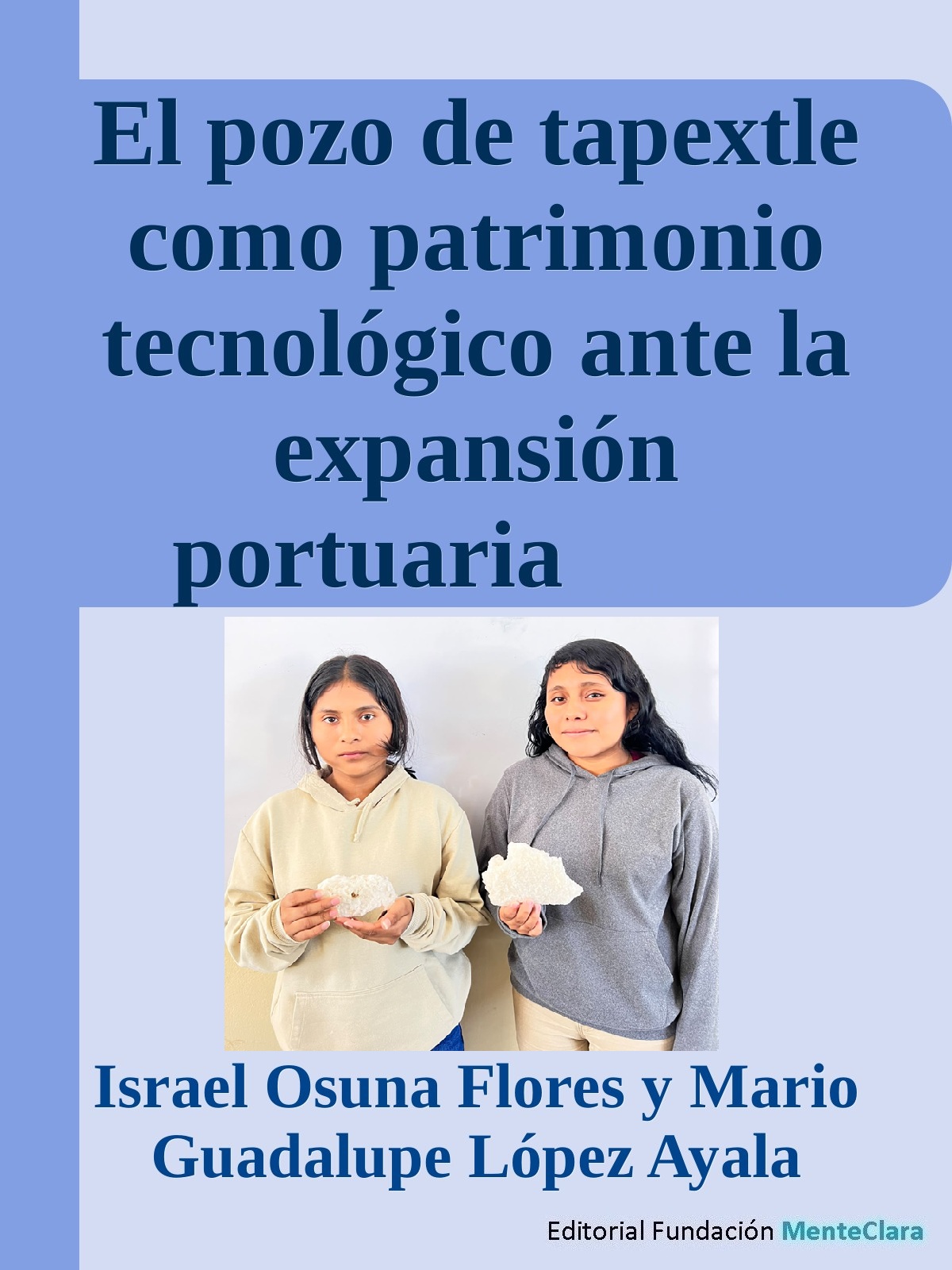
Published
Issue
Section
License
Copyright (c) 2026 MenteClara Foundation’s Peer-reviewed Journal

This work is licensed under a Creative Commons Attribution 4.0 International License.
Authors who publish in this journal agree with the following terms:
a. Authors publish under a Creative Commons Acknowledgment 4.0 International license that allows others to share the work with an authorship acknowledgment of the work and the initial publication in this journal.
b. Authors, who retain their rights after publication, are allowed and encouraged to disseminate their work electronically (for example, in institutional repositories or on their own website) before and during the submission process, as it may result in productive exchanges as well as earlier and greater citations of published works (See The Effect of Open Access).
 Since November 1st, 2018, all articles published in this journal are available under a Creative Commons Acknowledgment 4.0 International license.
How to Cite





 View the