ENVIRONMENTAL BIOTECHNOLOGY FOR SUSTAINABLE TOURISM: AN ANALYSIS OF APPLICATIONS, FEASIBILITY, AND CONSERVATION CHALLENGES
DOI:
https://doi.org/10.32351/rca.v11.421
Keywords:
Environmental conservation, circular economy, bioeconomy, waste management, environmental innovationAbstract
Sustainable tourism and environmental biotechnology represent two strategic fields whose synergistic potential has not yet been fully explored. This article presents a comprehensive analysis of how biotechnological tools can operationalize the principles of sustainable tourism, focusing on regenerative conservation, climate action, and the transition to a circular economy. Through a systematic review of scientific literature, technical reports, and regulatory frameworks, concrete applications are identified, such as the bioremediation of coastal ecosystems, the biological treatment of waste, environmental DNA monitoring, and the development of local bioeconomies linked to agritourism. The results demonstrate that biotechnology offers viable solutions for restoring, monitoring, and valuing natural capital in tourist destinations. However, structural challenges persist in financing, technology transfer, training, and governance. The article concludes by proposing priority lines of action to strengthen this integration, emphasizing that the adoption of biotechnological innovation is crucial for building a tourism sector that is competitive, resilient, and genuinely sustainable.
Downloads
References
Ayala, C.D., Ortega Méndez, N., Ramos Esquivel, F. M., & Vázquez-Núñez, E. (2022). El potencial de la biotecnología para la atención de problemas ambientales: conceptos básicos. Jóvenes en la Ciencia, 16, 1–5. Recuperado a partir de https://www.jovenesenlaciencia.ugto.mx/index.php/jovenesenlaciencia/article/view/3820
Blanco, M. & González, M. (2025). Manual de agrobioturismo: Diseño de productos turísticos que valorizan las prácticas de la bioeconomía. https://hdl.handle.net/11324/23865
Chicaiza-Ortiz, C. D., Rivadeneira Arias, V. D. C., & Herrera-Feijoo, R. J. (2023). Biotecnología ambiental, aplicaciones y tendencias. Editorial Universitaria Abya-Yala. https://repositorio.ikiam.edu.ec/jspui/bitstream/RD_IKIAM/679/1/L-IKIAM-000009.pdf
Comisión Nacional de Áreas Naturales Protegidas [CONANP]. (2022). Diagnóstico ambiental de áreas naturales protegidas con actividad turística. Comisión Nacional de Áreas Naturales Protegidas.
Cordero-Ramírez, J. D., Figueroa-López, A. M., Martínez-Álvarez, J. C., López-Meyer, M., Castro-Martínez, C., Morales-Aguilar, J. J., & Maldonado-Mendoza, I. E. (2022). Culturable bacteria of the maize rhizosphere: conserving Mexican potential biotechnological resources. Revista Mexicana de Biodiversidad, 93(3), e933983. https://doi.org/10.22201/ib.20078706e.2022.93.3561
Cruz-Cano, R. I., Cervantes, A. A., Kolb, M., Bretón-Deval, L., & Cruz-Cano, N. B. (2022). El uso del ADN ambiental en el estudio de cuerpos de agua: Una propuesta para su implementación en México. Publicación digital de la Red del Agua UNAM, (Edición Especial, Diciembre 2022), 19. https://agua.org.mx/wp-content/uploads/2023/01/EdicionEspecial_TerceraDiasporaHidrica-1.pdf#page=19
Cuautle Hernández, V. Á., Mendoza Patiño, L., Minto Rojas, M., Gil Mota, S., Anacleto Jiménez, N., Vásquez Contreras, M. F., Ortiz Pacheco, P., Cortes García, E. J., Flores Marín, P., Mendoza Hernández, J. C., & Pérez Osorio, G. (2021). Aplicaciones de la biorremediación. Revista Latinoamericana el Ambiente y las Ciencias, *12*(31), 62–75. https://rlac.buap.mx/sites/default/files/RLAC%2012%2831%29-5.pdf
García-Rodríguez, F., & Mendoza-Rodríguez, P. (2019). Impacto del turismo en ecosistemas costeros del Caribe mexicano. Investigaciones Geográficas, 100, 45–62. https://doi.org/10.14350/rig.600
González-Pérez, M. M., & Lomelí-Ramírez, M. G. (2024). Biopolímeros renovables: Aliados sostenibles de la economía circular. En M. G. Lomelí Ramírez, A. M. Guevara Castillo, & M. M. González Pérez (Eds.), Innovación en biomateriales sustentables para un mundo mejor (pp. 41-78). Universidad de Guadalajra. https://riudg.udg.mx/bitstream/20.500.12104/106861/1/Innovacio%CC%81n%20en%20materiales%20para%20un%20mundo%20mejor%2C%20digital.pdf#page=41
IICA (Instituto Interamericano de Cooperación para la Agricultura, Costa Rica). 2023. Programa de Innovación y Bioeconomía (en línea). San José. 31 p. Consultado 10 jul. 2025. Disponible en https://repositorio.iica.int/handle/11324/21830
Losada-Grullón, L. (2023). Diseño de una planta para el compostaje de los biorresiduos generados en un hotel en República Dominicana (Trabajo de Fin de Máster). Universidad Politécnica de Cartagena. https://repositorio.upct.es/server/api/core/bitstreams/3067b44c-ddf7-44d4-bc56-7dc9a9880063/content
Medina, S. J. (2025). Captura de carbono en los parques nacionales del Estado de México. Una propuesta teórica-metodológica (Tesis doctoral). Universidad Autónoma del Estado de México. http://ri.uaemex.mx/bitstream/handle/20.500.11799/142773/RI%20SJMS.pdf?sequence=1
Monteiro, M. R. N., da Silva, V. F., dos Santos Miranda, B., de Almeida Tavares, M. S., & Tiago, K. P. (2025). Importância dos biocosméticos de origem amazônica para a bioeconomia regional. Cuadernos de Educación y Desarrollo-QUALIS A4, 17(12), e10328-e10328. https://doi.org/10.55905/cuadv17n12-055
Muñoz, E. (1997) Biotecnología, Industria y Sociedad. El caso español. Fundación CEFI, Madrid.
Nuñez-García, U., Navarro-Gómez, H. I., González-Sandoval, M. del R., & Flores-Badillo , J. (2023). Tratamiento biológico de aguas residuales con perspectiva de economía circular. Pädi Boletín Científico De Ciencias Básicas E Ingenierías Del ICBI, 11(Especial3), 112–122. https://doi.org/10.29057/icbi.v11iEspecial3.11486
OMT (2005). Indicadores de desarrollo sostenible para los destinos turísticos. Guía práctica. Recuperado de: http://www.e unwto.org/doi/book/10.18111/9789284408382
Pérez Hernández, V. S., Millán Aguilar, O. G., Manzano Sarabia, M. M., Hurtado Oliva, M. Á., & Osuna Martínez, C. C. (2024). Mangles al rescate: cómo estos árboles purifican ecosistemas costeros. Revista Digital Universitaria, 25(5). https://doi.org/10.22201/ceide.16076079e.2024.25.5.8
Secretaría de Medio Ambiente y Recursos Naturales [SEMARNAT]. (2017). Turismo sustentable en México. Centro de Educación y Capacitación para el Desarrollo Sustentable. https://biblioteca.semarnat.gob.mx/janium/Documentos/Ciga/Libros2013/CD002793.pdf
Secretaría de Medio Ambiente y Recursos Naturales [SEMARNAT]. (2021). Informe de la situación del medio ambiente en México 2020. Secretaría de Medio Ambiente y Recursos Naturales.
Vega-Zepeda, A., & Rodríguez-Barrios, R. (2022). Turismo sustentable y conservación biocultural en comunidades indígenas de México. Turismo y Sociedad, 30, 233–254. https://doi.org/10.18601/01207555.n30.12
Estadísticas de lectura: 485
Descargas: PDF (SPANISH) 360 - HTML (SPANISH) 92 - XML (SPANISH) 47 - EPUB (SPANISH) 82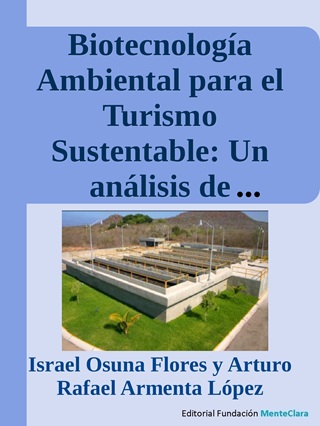
Published
Issue
Section
License
Copyright (c) 2026 MenteClara Foundation’s Peer-reviewed Journal

This work is licensed under a Creative Commons Attribution 4.0 International License.
Authors who publish in this journal agree with the following terms:
a. Authors publish under a Creative Commons Acknowledgment 4.0 International license that allows others to share the work with an authorship acknowledgment of the work and the initial publication in this journal.
b. Authors, who retain their rights after publication, are allowed and encouraged to disseminate their work electronically (for example, in institutional repositories or on their own website) before and during the submission process, as it may result in productive exchanges as well as earlier and greater citations of published works (See The Effect of Open Access).
 Since November 1st, 2018, all articles published in this journal are available under a Creative Commons Acknowledgment 4.0 International license.
How to Cite





 View the