BIOTECHNOLOGICAL POTENTIAL OF MICROALGAE AS BIOFERTILIZERS TO MITIGATE SALINE STRESS IN CROPS
DOI:
https://doi.org/10.32351/rca.v11.430
Keywords:
microalgae, biofertilizers, biostimulants, saline stress, sustainable agriculture, biotechnologyAbstract
Soil salinization limits global agricultural productivity by affecting growth, nutrient uptake, and crop yield. Microalgae have emerged as a sustainable biotechnological alternative due to their ability to act as biofertilizers and biostimulants. These photosynthetic microorganisms produce phytohormones, amino acids, polysaccharides, and antioxidants that promote plant growth and increase tolerance to saline stress. The objective of this scoping review is to synthesize the available evidence on the potential of microalgae as biofertilizers in crops under salinity, describing their mechanisms of action, most used species, application methods, advantages, limitations, and future perspectives. The collected evidence shows that genera such as Chlorella, Scenedesmus, Dunaliella, Arthrospira, and several cyanobacteria improve nutritional efficiency, increase antioxidant activity, promote ionic balance, and reduce oxidative damage induced by excess salts. Reported applications increase crop yields between 10% and 40%, while nitrogen-fixing cyanobacteria can contribute up to 30 kg N ha⁻¹ season⁻¹. Recent molecular studies indicate that microalgal biostimulants regulate the expression of stress-responsive genes, improve osmolyte biosynthesis, and enhance the detoxification of reactive oxygen species. However, important challenges persist regarding formulation standardization, industrial scalability, and the detailed understanding of their molecular mechanisms of action.
Downloads
References
Alvarez, A. L., Weyers, S. L., Goemann, H. M., Peyton, B. M., & Gardner, R. D. (2021). Microalgae, soil and plants: A critical review of microalgae as renewable resources for agriculture. Algal Research, 54, Article 102200. https://doi.org/10.1016/j.algal.2021.102200
Araújo, R., Vázquez Calderón, F., Sánchez López, J., Azevedo, I. C., Bruhn, A., Fluch, S., Garcia Tasende, M., Ghaderiardakani, F., Ilmjärv, T., Laurans, M., Mac Monagail, M., Mangini, S., Peteiro, C., Rebours, C., Stefansson, T., & Ullmann, J. (2021). Current Status of the Algae Production Industry in Europe: An Emerging Sector of the Blue Bioeconomy. Frontiers in Marine Science, 7, 626389. https://doi.org/10.3389/fmars.2020.626389
Arksey, H., & O'Malley, L. (2005). Scoping studies: Towards a methodological framework. International Journal of Social Research Methodology, 8(1), 19–32. https://doi.org/10.1080/1364557032000119616
Barsanti, L., & Gualtieri, P. (2014). Algae: Anatomy, biochemistry, and biotechnology. CRC Press. https://doi.org/10.1201/b16544
Brito-López, C., van der Wielen, N., Barbosa, M., & Karlova, R. (2025). Plant growth-promoting microbes and microalgae-based biostimulants. Philosophical Transactions of the Royal Society B, 380(1927), 20240251. https://doi.org/10.1098/rstb.2024.0251
Chabili, A., Minaoui, F., Hakkoum, Z., Douma, M., Meddich, A., & Loudiki, M. (2024). A Comprehensive Review of Microalgae and Cyanobacteria-Based Biostimulants for Agriculture Uses. Plants, *13*(2), 159. https://doi.org/10.3390/plants13020159
Chaves, M. M., Flexas, J., & Pinheiro, C. (2009). Photosynthesis under drought and salt stress: regulation mechanisms from whole plant to cell. Annals of botany, 103(4), 551–560. https://doi.org/10.1093/aob/mcn125
Craigie, J. S. (2011). Seaweed extract stimuli in plant science and agriculture. Journal of Applied Phycology, 23, 371–393. https://doi.org/10.1007/s10811-010-9560-4
du Jardin, P. (2015). Plant biostimulants: Definition and concept. Scientia Horticulturae, 196, 3–14. https://doi.org/10.1016/j.scienta.2015.09.021
du Jardin, P. (2020). Plant biostimulants: A new paradigm for the sustainable intensification of crops. En Y. Rouphael, P. du Jardin, P. Brown, S. De Pascale & G. Colla (Eds.), Biostimulants for sustainable crop production (pp. 1-27). Burleigh Dodds Science Publishing.
FAO. (2021). Global Status of Salt-Affected Soils. Food and Agriculture Organization of the United Nations. https://www.fao.org/global-soil-partnership/resources/highlights/detail/en/c/1458974/
FAO. (2022). The future of food and agriculture: Drivers and triggers for transformation (The Future of Food and Agriculture, No. 3). https://doi.org/10.4060/cc0959en
Gill, S. S., & Tuteja, N. (2010). Reactive oxygen species and antioxidant machinery in abiotic stress tolerance in crop plants. Plant physiology and biochemistry : PPB, 48(12), 909–930. https://doi.org/10.1016/j.plaphy.2010.08.016
Gonçalves, J., Freitas, J., Fernandes, I., & Silva, P. (2023). Microalgae as Biofertilizers: A Sustainable Way to Improve Soil Fertility and Plant Growth. Sustainability, 15(16), 12413. https://doi.org/10.3390/su151612413
González-Pérez, B. K., Rivas-Castillo, A. M., Valdez-Calderón, A., & Gayosso-Morales, M. A. (2022). Microalgae as biostimulants: A new approach in agriculture. World Journal of Microbiology and Biotechnology, 38(1), 4. https://doi.org/10.1007/s11274-021-03192-2
Hasanuzzaman, M., Bhuyan, M. H. M. B., Zulfiqar, F., Raza, A., Mohsin, S. M., Mahmud, J. A., Fujita, M., & Fotopoulos, V. (2020). Reactive Oxygen Species and Antioxidant Defense in Plants under Abiotic Stress: Revisiting the Crucial Role of a Universal Defense Regulator. Antioxidants, *9*(8), 681. https://doi.org/10.3390/antiox9080681
Hasanuzzaman, M., & Fujita, M. (2022). Plant Responses and Tolerance to Salt Stress: Physiological and Molecular Interventions. International Journal of Molecular Sciences, 23(9), 4810. https://doi.org/10.3390/ijms23094810
Isayenkov, S. V., & Maathuis, F. J. M. (2019). Plant Salinity Stress: Many Unanswered Questions Remain. Frontiers in Plant Science, 10, 80. https://doi.org/10.3389/fpls.2019.00080
Kusmayadi, A., Suyono, E. A., Nagarajan, D., Chang, J. S., & Yen, H. W. (2020). Application of computational fluid dynamics (CFD) on raceway design for microalgae cultivation. Journal of Industrial Microbiology and Biotechnology, 47(4), 373–382. https://doi.org/10.1007/s10295-020-02273-9
Legrand, J., Artu, A., & Pruvost, J. (2021). A review on photobioreactor design and modelling for microalgae production. Reaction Chemistry & Engineering, 6, 1134–1151. https://doi.org/10.1039/D0RE00450B
Levac, D., Colquhoun, H., & O'Brien, K. K. (2010). Scoping studies: Advancing the methodology. Implementation Science, 5, 69. https://doi.org/10.1186/1748-5908-5-69
Markou, G. and Georgakakis, D. (2011) Cultivation of Filamentous Cyanobacteria (Blue-Green Algae) in Agro-Industrial Wastes and Wastewaters: A Review. Applied Energy, 88, 3389-3401. https://doi.org/10.1016/j.apenergy.2010.12.042
MarketsandMarkets. (2025). Biostimulants Market by Active Ingredient, Crop Type, Application Method, Formulation, and Region - Global Forecast to 2030. MarketsandMarkets Research Report. https://www.marketsandMarkets.com/Market-Reports/biostimulant-market-1081.html
Miranda, A. M., Hernandez-Tenorio, F., Villalta, F., Vargas, G. J., & Sáez, A. A. (2024). Advances in the Development of Biofertilizers and Biostimulants from Microalgae. Biology, 13(3), 199. https://doi.org/10.3390/biology13030199
Munns, R., & Tester, M. (2008). Mechanisms of salinity tolerance. Annual Review of Plant Biology, 59, 651–681. https://doi.org/10.1146/annurev.arplant.59.032607.092911
Parida, A. K., & Das, A. B. (2005). Salt tolerance and salinity effects on plants. Ecotoxicology and Environmental Safety, 60(3), 324–349. https://doi.org/10.1016/j.ecoenv.2004.06.010
Parlamento Europeo y Consejo de la Unión Europea. (2019). Reglamento (UE) 2019/1009 del Parlamento Europeo y del Consejo, de 5 de junio de 2019, por el que se establecen normas relativas a la comercialización de los productos fertilizantes UE y se modifican los Reglamentos (CE) n° 1069/2009 y (CE) n° 1107/2009 y se deroga el Reglamento (CE) n° 2003/2003. Diario Oficial de la Unión Europea, L 170, 1-114.
Peters, M. D. J., Marnie, C., Tricco, A. C., Pollock, D., Munn, Z., Alexander, L., McInerney, P., Godfrey, C. M., & Khalil, H. (2020). Updated methodological guidance for the conduct of scoping reviews. JBI Evidence Synthesis, 18(10), 2119–2126. https://doi.org/10.11124/JBIES-20-00167
Philippot, L., Raaijmakers, J. M., Lemanceau, P., & van der Putten, W. H. (2013). Going back to the roots: the microbial ecology of the rhizosphere. Nature Reviews Microbiology, 11(11), 789–799. https://doi.org/10.1038/nrmicro3109
Posten, C. (2021). Optimization of photosynthesis by reactor design. En C. Posten & R. Rosello Sastre (Eds.), Microalgae Biotechnology (pp. 177-205). De Gruyter. https://doi.org/10.1515/9783110716979-007
Ronga, D., Biazzi, E., Parati, K., Carminati, D., Carminati, E., & Tava, A. (2019). Microalgal biostimulants and biofertilisers in crop productions. Agronomy, 9(4), 192. https://doi.org/10.3390/agronomy9040192
Rouphael, Y., & Colla, G. (2018). Synergistic biostimulatory action: Designing the next generation of plant biostimulants for sustainable agriculture. Frontiers in Plant Science, *9*, 1655. https://doi.org/10.3389/fpls.2018.01655
Shrivastava, P., & Kumar, R. (2015). Soil salinity: A serious environmental issue and plant growth promoting bacteria as one of the tools for its alleviation. Saudi Journal of Biological Sciences, 22(2), 123–131. https://doi.org/10.1016/j.sjbs.2014.12.001
Shelar, P. V., Mankar, G. D., Sontakke, O. P., Wayase, U. R., Bhosale, K. S., Nikalje, G. C., Ahire, M. L., Nikam, T. D., & Barmukh, R. B. (2024). A Review on Physio-Biochemical and Molecular Mechanisms of Salt Tolerance in Crops. Current Agriculture Research Journal, 12(2). https://doi.org/10.12944/CARJ.12.2.05
Sun, Z., Liu, X., Ugya, A. Y., Liu, H., Sun, L., & Luo, G. (2026). Microalgae and cyanobacteria as a tool for agricultural sustainability: a review of biofertilizer and biostimulant potential. Frontiers in Plant Science, 16, 1733394. https://doi.org/10.3389/fpls.2025.1733394
Tricco, A. C., Lillie, E., Zarin, W., O'Brien, K. K., Colquhoun, H., Levac, D., Moher, D., Peters, M. D. J., Horsley, T., Weeks, L., Hempel, S., Akl, E. A., Chang, C., McGowan, J., Stewart, L., Hartling, L., Aldcroft, A., Wilson, M. G., Garritty, C., Lewin, S., … Straus, S. E. (2018). PRISMA Extension for Scoping Reviews (PRISMA-ScR): Checklist and Explanation. Annals of internal medicine, 169(7), 467–473. https://doi.org/10.7326/M18-0850
Trivedi, P., Leach, J. E., Tringe, S. G., Sa, T., & Singh, B. K. (2020). Plant-microbiome interactions: from community assembly to plant health. Nature reviews. Microbiology, 18(11), 607–621. https://doi.org/10.1038/s41579-020-0412-1
van Zelm, E., Zhang, Y., & Testerink, C. (2020). Salt tolerance mechanisms in plants. Annual Review of Plant Biology, 71, 403–433. https://doi.org/10.1146/annurev-arplant-050718-100005
Vangenechten, B., De Coninck, B., & Ceusters, J. (2025). How to improve the potential of microalgal biostimulants for abiotic stress mitigation in plants?. Frontiers in plant science, 16, 1568423. https://doi.org/10.3389/fpls.2025.1568423
Waszczak, C., Carmody, M., & Kangasjärvi, J. (2018). Reactive Oxygen Species in Plant Signaling. Annual review of plant biology, 69, 209–236. https://doi.org/10.1146/annurev-arplant-042817-040322
Weuster-Botz, D. (2022). Lab-scale photobioreactor systems: principles, applications, and scalability. Bioprocess and Biosystems Engineering, 45, 791–813. https://doi.org/10.1007/s00449-022-02711-1
Yakhin, O. I., Lubyanov, A. A., Yakhin, I. A., & Brown, P. H. (2017). Biostimulants in plant science: A global perspective. Frontiers in Plant Science, 7, 2049. https://doi.org/10.3389/fpls.2016.02049
Zhu, J. K. (2001). Plant salt tolerance. Trends in Plant Science, 6(2), 66–71. https://doi.org/10.1016/s1360-1385(00)01838-0
Zhu, J. K. (2020). Abiotic stress signaling and responses in plants. Cell, 167(2), 313-324. https://doi.org/10.1016/j.cell.2016.08.029
Zhou, W., Chen, F., Meng, Y., Chandrasekaran, U., Luo, X., Yang, W., & Shu, K. (2020). Plant waterlogging/flooding stress responses: From seed germination to maturation. Plant Physiology and Biochemistry, 148, 228–236. https://doi.org/10.1016/j.plaphy.2020.01.020
Estadísticas de lectura: 286
Descargas: PDF (SPANISH) 180 - HTML (SPANISH) 57 - XML (SPANISH) 16 - EPUB (SPANISH) 71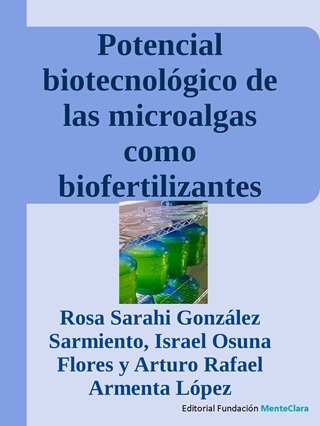
Published
Issue
Section
License
Copyright (c) 2026 MenteClara Foundation’s Peer-reviewed Journal

This work is licensed under a Creative Commons Attribution 4.0 International License.
Authors who publish in this journal agree with the following terms:
a. Authors publish under a Creative Commons Acknowledgment 4.0 International license that allows others to share the work with an authorship acknowledgment of the work and the initial publication in this journal.
b. Authors, who retain their rights after publication, are allowed and encouraged to disseminate their work electronically (for example, in institutional repositories or on their own website) before and during the submission process, as it may result in productive exchanges as well as earlier and greater citations of published works (See The Effect of Open Access).
 Since November 1st, 2018, all articles published in this journal are available under a Creative Commons Acknowledgment 4.0 International license.
How to Cite





 View the