TANTRA MANUAL – EMOTIONAL REPROGRAMMING: FROM TANTRA TO THE TECHNOLOGY OF DESIRE® (excerpt)
DOI:
https://doi.org/10.32351/rca.v11.417
Keywords:
Tantra, desire, subjectivity, discourse analysis, technology of desire, embodied practices, experiential learning, ethics of desireAbstract
Manual of Tantra. From Tantra to the Technology of Desire® is a distinctive contribution to contemporary studies of desire, subjectivity, and tantric practices. The book articulates experiential knowledge with conceptual tools drawn from discourse analysis, psychology, symbolic anthropology, and classical tantric traditions. Rather than presenting tantra as a purely spiritual or ritual system, the author advances a critical framework in which desire is understood as a dynamic, relational, and structurally unfulfilled process. This structural impossibility of fulfillment is presented not as a limitation, but as the driving force behind creativity, learning, and subjective transformation.
Structured as a training manual, the work is grounded in more than two decades of teaching experience in both face-to-face and distance-learning contexts. Its pedagogical style combines conceptual rigor, autobiographical narratives, and practical exercises, enabling readers not only to study desire as an object of analysis but also to experience it as a technology that can be observed, trained, and re-signified.
Positioned within a non-dogmatic and non-confessional framework, the book engages in critical dialogue with religious, psychological, and contemporary cultural discourses. It proposes an ethics of desire based on subjective responsibility and the recognition of the other as a constitutive dimension of desire itself. As such, the manual represents a relevant contribution for scholars researching desire and subjectivity, as well as for professionals in education, psychotherapy, and embodied or contemplative practices.
Downloads
References
Alemany Bolufer, J. (1949). Pancha Tantra - Cinco series de cuentos orientales. Biblioteca De La Escuela Argentina De Tantra.Retrieved from https://tantra.org.ar/biblioteca/index.php/Biblioteca/article/view/13
ALEMANY Y BOLUFER, José. Pancha-tantra. Traducción del sánscrito. Madrid, Libreria Perlado, Páez y Cia, 1908.
Acri, A. (2017). VIAJANDO POR LOS «CAMINOS DEL SUR»: EL BUDISMO ESOTÉRICO EN EL
ASIA MARÍTIMA, SIGLOS VII-XIII D.C. Revista Científica Arbitrada De La Fundación MenteClara, 2(2), 6-62. https://doi.org/10.32351/rca.v2.2.28
Basu, R. L. (2024). PANCHATANTRA Y SUS LECCIONES. Revista Científica Arbitrada De La Fundación MenteClara, 9. https://doi.org/10.32351/rca.v9.362
BESSIÈRES, Albert. Le nouveau St François-Xavier: Saint Jean de Britto, martyr. Toulouse: Apostolat de la prière, 1945.
CAPRA, Fritjof. El tao de la física. Barcelona: Sirio, 2006, octava edición. [Versión en inglés: The Tao of Physics. Berkley: Shambala Publications, 1975.]
CHHAYA, Mayank. Dalai Lama. Hombre, monje, místico. Grijalbo, 2010.
CONDE-SALAZAR INFIESTA, Luis. Antonio de Andrade, cartas desde el Tíbet del primer europeo que lo pisó. Editorial Planeta, S. A. y Sociedad Geográfica Española, 2009.
Dalai Lama y HOPKINS, Jeffrey, El tantra de Kalachakra: rito de iniciación. Alicante: Dharma, 1994.
DE LA MORA, Juan Miguel. Tantrismo hindú y proteico. Universidad Nacional Autónoma de México, 1989.
Duman, E. K. (2019). Implementación del concepto de angst de Heidegger en el problema budista sobre el sufrimiento: Cómo el discurso budista genera dificultades epistemológicas y cómo abordarlo con la ontología occidental. Revista Científica Arbitrada De La Fundación MenteClara, 4(2), 7-17. https://doi.org/10.32351/rca.v4.2.84
Gómez, O. R. (2013). El tantrismo dentro de la Compañía de Jesús - Del Tíbet al Vaticano hoy. Biblioteca De La Escuela Argentina De Tantra. Retrieved from https://tantra.org.ar/biblioteca/index.php/Biblioteca/article/view/6
Gómez, O. R. (2015). Antonio de Montserrat - Biografía del primer jesuita iniciado en el budismo tántrico tibetano. Biblioteca De La Escuela Argentina De Tantra. Retrieved from https://tantra.org.ar/biblioteca/index.php/Biblioteca/article/view/7
Gómez, O. R. (2016). ANTONIO DE MONTSERRAT - LA RUTA DE LA SEDA Y LOS CAMINOS
SECRETOS DEL TANTRA. Revista Científica Arbitrada De La Fundación MenteClara, 1(1), 5-20. https://doi.org/10.32351/rca.v1.1.8
Gómez, O. R. (2017). TANTRA O YOGA. ESTUDIOS CLÍNICOS, 1ª PARTE: YOGA. Revista
Científica Arbitrada De La Fundación MenteClara, 2(2), 63-84. https://doi.org/10.32351/rca.v2.2.11
Gómez, O. R. (2017). TANTRA O YOGA. ESTUDIOS CLÍNICOS, 2ª PARTE: TANTRA. Revista
Científica Arbitrada De La Fundación MenteClara, 2(2), 85-116. https://doi.org/10.32351/rca.v2.2.31
Gómez, O. R. (2017). TANTRA O YOGA. ESTUDIOS CLÍNICOS, 3ª PARTE: COMPARATIVA.
Revista Científica Arbitrada De La Fundación MenteClara, 2(2), 117-142. https://doi.org/10.32351/rca.v2.2.32
Gómez, O. R. (2017). ANÁLISIS CRÍTICO DEL KULARNAVA TANTRA -PARTE 1- UN
PRÓLOGO VICIADO DE SEXUALIDAD REPRIMIDA. Revista Científica Arbitrada De La Fundación MenteClara, 2(1), 114-141. https://doi.org/10.32351/rca.v2.1.26
JUNG, C.G., OTTO, W.F., ZIMMER, H., HADOT, P. y LAYARD, J. Hombre y sentido. Círculo Eranos III. Anthropos, 2004.
LOWNEY, Chris. El liderazgo al estilo de los jesuitas. Granica, 2007.
PANDIT, M .P. Kularnava Tantra: Rito de las cinco cosas prohibidas. Madrid: Eyrás, 1980.
REICH, Wilhelm. Análisis del carácter, Paidós Ibérica, 2005.
REICH, Wilhelm. La función del orgasmo. Paidós, 1945.
Reynoso, C. (2016). TANTRISMO Y PSICOANÁLISIS. UNA PERSPECTIVA ANTROPOLÓGICA.
Revista Científica Arbitrada De La Fundación MenteClara, 1(1), 21-205. https://doi.org/10.32351/rca.v1.1.12
RODRÍGUEZ, Isabel. Historia comparada: El Imperio Mogol vs. Renacimiento, Barroco e Ilustración. [En línea]. Dirección URL: http:// www.lasociedadgeografica.com/blog/historia-2/historia-comparada-el-imperio- mogol-vs-renacimiento-barroco-e-ilustración
SAULIERE, A. Red Sand. A life of Saint John de Britto. S.J. Martyr of the Madura Mission. Nobili Press, 1947.
Shiva, L. (2020). Kularnava Tantra: Manuscrito del Kularnava Tantra original. Biblioteca De La Escuela Argentina De Tantra | (en sánscrito). Retrieved from https://tantra.org.ar/biblioteca/index.php/Biblioteca/article/view/12
TEILHARD DE CHARDIN, Pierre. El porvenir del hombre. Taurus, 1967.
TEILHARD DE CHARDIN, Pierre. Himno del universo. Madrid: Trotta, 1996.
WEATHERFORD, Jack. Genghis Khan and the Making of the Modern World. Nueva York: Crown Publishers, 2004.
WEATHERFORD, Jack. The Secret History of the Mongol Queens: How the Daughters of Genghis Khan Rescued His Empire. Crown Publishing Group, 2011.
Yeshe, L. T. (1995). Introducción al tantra - Una visión de la totalidad. Biblioteca De La Escuela Argentina De Tantra. Retrieved from https://tantra.org.ar/biblioteca/index.php/Biblioteca/article/view/10
ZERJAL, Tatiana y otros. El legado genético de los mongoles. American Journal of Human Genetics, núm. 72, marzo de 2003, incluido en MAN, John Genghis Khan: vida, muerte y resurrección, Madrid: Oberón, 2006.
ZIMMER, Heinrich. Filosofías de la India. Buenos Aires: Eudeba, 1979. [Versión en inglés: Philosophies of India. Editado por Joseph Campbell, 1953.]
Estadísticas de lectura: 457
Descargas: PDF (SPANISH) 130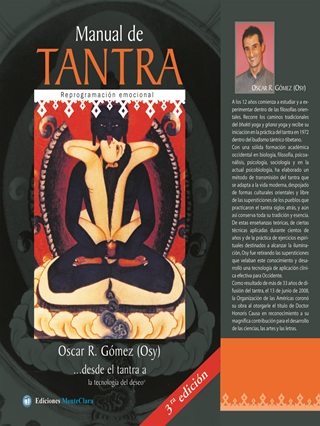
Downloads
Published
Issue
Section
License
Copyright (c) 2026 MenteClara Foundation’s Peer-reviewed Journal

This work is licensed under a Creative Commons Attribution 4.0 International License.
Authors who publish in this journal agree with the following terms:
a. Authors publish under a Creative Commons Acknowledgment 4.0 International license that allows others to share the work with an authorship acknowledgment of the work and the initial publication in this journal.
b. Authors, who retain their rights after publication, are allowed and encouraged to disseminate their work electronically (for example, in institutional repositories or on their own website) before and during the submission process, as it may result in productive exchanges as well as earlier and greater citations of published works (See The Effect of Open Access).
 Since November 1st, 2018, all articles published in this journal are available under a Creative Commons Acknowledgment 4.0 International license.
How to Cite





 View the