Estrategias didácticas mediadas por las tecnologías de la información y la comunicación (TIC) en estudiantes de nivel primario con necesidades educativas especiales
DOI:
https://doi.org/10.32351/rca.v7.270
Palabras clave:
TIC, Educación Especial, Recursos educativos digitales, Educación primariaResumen
El artículo describe la investigación realizada por esta autora con el fin de analizar estrategias didácticas mediadas por las tecnologías de la información y la comunicación (TIC) en el ámbito de las escuelas de educación especial, de nivel primario, de gestión pública, dependientes del Ministerio de Educación de la Ciudad de Buenos Aires. Los hallazgos de la investigación dan cuenta principalmente del potencial de las estrategias didácticas mediadas por TIC que los y las docentes despliegan, dentro y fuera del aula, para estimular y favorecer el aprendizaje de estudiantes con diversas problemáticas en educación especial.Descargas
Referencias
Angeloff, C., Muratore, F., Campo, A. y Savo, M. (2015). Vincul-Arte a un clic. Portal educativo Integrar. http://integrar.bue.edu.ar/integrar/blog/articulo/vincularte-a-un-clic/
Baldissera, A. La escuela infernal. (2016). Portal educativo Integrar. http://integrar.bue.edu.ar/integrar/blog/articulo/la-escuela-infernal-2/
Buckingham, D. (2012). Más allá de la tecnología: aprendizaje infantil en la era digital. Manantial.
Burbules, N. (2011). Entrevista a Nicholás Burbules en Gvirtz, S. y Necuzzi, C., Educación y tecnologías: las voces de los expertos. (1a ed.). ANSES. http://www.oei.es/conectarigualdad.pdf
Buckingham, D. (2006). La educación para los medios en la era de la tecnología digital. (Ponencia). Congreso del décimo aniversario de MED La sapienza di comunicare. Instituto para la educación. Universidad de Londres.
Carreras, J. (2010). Escuelas inclusivas. Un camino para construir entre todos. Investigación y relato de experiencias sobre educación y diversidad. Fundación Par.
Castellano, R. E. & Sánchez Montoya, R. (2011). Laptop, andamiaje para la Educación Especial. Guía Práctica. Computadoras móviles en el currículum. UNESCO http://unesdoc.unesco.org/images/0021/002120/212091s.pdf
Coll, C. (2008). Aprender y enseñar con las TIC: expectativas, realidad y potencialidades. Portal educ.ar. http://www.educ.ar/sitios/educar/recursos/ver?id=70819
DGCyE. (2008). Comisión TES. Dirección de Educación Especial. http://servicios.abc.gov.ar/lainstitucion/sistemaeducativo/educacionespecial/caracterizaciones/comision_tes.pdf
Echeverría, J. (2000). Educación y tecnologías telemáticas. Revista Iberoamericana de Educación, 24. DOI: 10.35362/rie240995.
Fainblum, A. (2004). Discapacidad. Una perspectiva desde el psicoanálisis. Editorial Tekne.
Glaser, B. y A. Strauss (1967). The discovery of grounded theory: estrategies for qualitative research. Aldine Publishing Company.
Gobierno de la Ciudad de Buenos Aires Subsecretaría de Educación (2004) Diseño curricular para la escuela primaria: Segundo ciclo de la escuela primaria/educación general básica, tomo 1. La subsecretaría. Existencias: Diseño Curricular para la escuela primaria (me.gov.ar)
Grané, M. Entrevista a Mariona Grané en Gvirtz, S. y Necuzzi, C. (2011). Educación y tecnologías: las voces de los expertos. (1.a ed.). ANSES. http://www.oei.es/conectarigualdad.pdf
Guijarro, R. B. (1990). La atención a la diversidad en el aula y las adaptaciones del currículum. http://dialnet.unirioja.es/servlet/articulo?codigo=2089575
Liguori, L. (2000). Las nuevas tecnologías de la información y la comunicación en el marco de los viejos problemas y desafíos educativos. En Litwin. E. (Comp.), Tecnología educativa. Política, historia, propuestas (pp.123-150). Paidós.
Lion, C. (2006). Imaginar con tecnologías. Relaciones entre tecnologías y conocimiento. La Crujía
Litwin, E. (2009). Tecnologías educativas en tiempos de internet. Paidós.
Maggio, M. (2012). Enriquecer la enseñanza. Los ambientes con alta disposición tecnológica como oportunidad. Paidós.
Piaget, J. (2005). Inteligencia y afectividad. Aique.
Roma, M. C. (2013). La historieta. Integrar. Recursos pedagógicos. La historieta | Integrar (bue.edu.ar)
Roma, M. C. (2014) Blog escolar. Portal educativo Integrar. http://integrar.bue.edu.ar/integrar/blog/articulo/blog-escolar/
Roma, M. C. (2015). El texto biográfico. La biografía de Neymar. Integrar. Recursos pedagógicos. El texto biográfico: La biografía de Neymar | Integrar (bue.edu.ar)
Roma, M. C. (2018). Estrategias didácticas mediadas por las tecnologías de la información y la comunicación (TIC) en alumnos y alumnas de nivel primario con necesidades educativas especiales. ttp://catalogo.filo.uba.ar/cgi-bin/koha/opac-detail.pl?biblionumber=422582
Sánchez Montoya, R. (2007). Capacidades visibles, tecnologías invisibles: Perspectivas y estudio de casos. Comunicación y pedagogía: Nuevas tecnologías y recursos didácticos, 220, pp. 32-38. http://dialnet.unirioja.es/servlet/articulo?codigo=2333719
Savo, M. (2015). Nos comunicamos por Edmodo. Portal educativo Integrar. http://integrar.bue.edu.ar/integrar/blog/articulo/nos-comunicamos-con-edmodo/?tipo=Mis%20Publicaciones&usr=2024
Vasilachis De Gialdino, I. (1992). Tesis 7. En Métodos cualitativos I, Los problemas teórico-epistemológicos. Centro Editor de América Latina.
Estadísticas de lectura: 2578
Descargas: PDF 923 - HTML 3238 - XML 456 - EPUB 383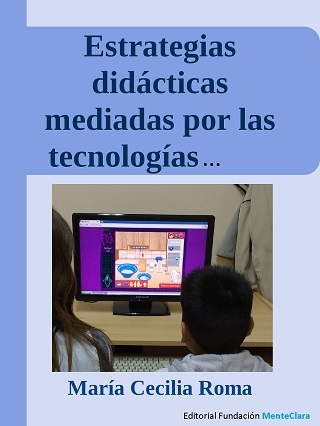
Publicado
Número
Sección
Licencia
Los autores que publican en esta revista están de acuerdo con los siguientes términos:
- Los autores publican bajo una licencia de Creative Commons Reconocimiento 4.0 Internacional que permite a otros compartir el trabajo con un reconocimiento de la autoría del trabajo y la publicación inicial en esta revista.
- Se permite y se anima a los autores, quienes conservan sus derechos luego de la publicación, a difundir sus trabajos electrónicamente (por ejemplo, en repositorios institucionales o en su propio sitio web) antes y durante el proceso de envío, ya que puede dar lugar a intercambios productivos, así como a una citación más temprana y mayor de los trabajos publicados (Véase The Effect of Open Access).

Desde el 1º de noviembre de 2018 todos los artículos de esta revista están disponibles bajo una licencia de Creative Commons Reconocimiento 4.0 Internacional.
Cómo citar





 Consultar