PARENTAL BURNOUT AND THE RESIDUAL LIBERAL WELFARE STATE: THE CHILEAN NEOLIBERAL EXPERIENCE FROM THE FAMILY-CENTRIC MODEL
DOI:
https://doi.org/10.32351/rca.v11.439
Keywords:
parental burnout, welfare regime, familialism, defamilialization, care policiesAbstract
Parental burnout is a mental health problem of growing relevance in Chile, the Latin American country reporting the highest prevalence, where figures rose from 3.9% to 8.5% following the COVID-19 pandemic, well above the global increase. Despite this, the phenomenon is usually interpreted as an individual failure of mothers and fathers, overlooking its structural determinants. This essay analyzes how the familialist and residual-liberal character of the Chilean welfare state relates to parental burnout. To this end, a critical documentary analysis was conducted of three public policy programs addressing childcare —Chile Crece Más, the early childhood education provision of JUNJI and Fundación Integra, and JUNAEB's Habilidades para la Vida program— together with the recently enacted Law No. 21,805, which creates the National System of Support and Care. The analysis articulates the categories of welfare regime, decommodification and defamilialization with the balance between risks and resources model developed within the parental burnout literature. The discussion focuses on how public funding ends up operating asymmetrically, making support resources contingent on certified vulnerability accreditation, while raising normative demands on parental performance without redistributing the material burden of care, and further reinscribing women as default caregivers. The Chile Cuida Law represents a significant normative shift, yet it institutes a conditional defamilialization. It is concluded that parental burnout should be understood as a structural effect of the welfare regime, which calls for depsychologizing and repoliticizing the way it is addressed.
Downloads
References
Acción Educar. (2024). Educación parvularia: institucionalidad y financiamiento. https://accioneducar.cl/wp-content/uploads/2024/01/Educacion-parvularia-institucionalidad-y-financiamiento.pdf
Acuña, M. (2013). El principio de corresponsabilidad parental. Revista de Derecho, 20(2), 21-59. http://dx.doi.org/10.4067/S0718-97532013000200002
Araya-Rojas, P., Santelices, M. P., Oyarce, D., Escobar, J., & Van Bakel, H. J. A. (2024). Parental burnout and coparental cooperation in Chile during lockdown for COVID-19. Psychology, Society & Education, 16(1), 39–48. https://doi.org/10.21071/psye.v16i1.16363
Abud, M., Quiroga, J., & Ugarte, G. (2023). Precondiciones para la construcción de un Estado social en Chile. Economía y Políticas Públicas. Centros de Estudios Públicos. Punto de Referencia. Edición digital N°644. https://coilink.org/20.500.12592/16przc
Barba, C., & Cohen, N. (2011). Perspectiva crítica sobre la cohesión social. Desigualdad y tentativas fallidas de integración social en América Latina. Colección Clacso-Crop. https://biblioteca-repositorio.clacso.edu.ar/handle/CLACSO/13394
Barba, C. (2018). Liberalismo y universalismo en tensión: 25 años de reformas sociales en los regímenes de bienestar de América Latina. In C. Midaglia, G. Ordóñez & E. Valencia (Eds.), Políticas sociales en América Latina en los inicios del siglo XXI: innovaciones, inercias y retrocesos (pp. 75 - 108). CLACSO. https://doi.org/10.2307/j.ctvn96gmn.5
Bauman, Z. (2022). Daños colaterales. Desigualdades sociales en la era global. Fondo Cultura Económica.
Bosch, M. J., Riumalló, M. P., & Urzúa, M. J. (2020). Familia y políticas públicas. ESE Business School de la Universidad de los Andes (Chile). https://mariajose-bosch.ese.cl/wp-content/uploads/2023/11/CTF-NT-ES-20-357.pdf
Cortés, L. (2026). La desigualdad que comienza en la sala cuna. Hogar de Cristo. https://www.hogardecristo.cl/lineas-de-accion/educacion-inicial/desigualdad-jardines-infantiles-vtf-chile/
Corral Talciani, H. (2005). La familia en los 150 años del código civil chileno. Revista Chilena de Derecho, 32(3), 429-438. https://revistachilenadederecho.uc.cl/index.php/Rchd/article/download/73185/56121/212793
Cruz-Martínez, G., Vargas-Faulbaum, L., & Jacobo Velasco, J. (2024). Estado de Bienestar en América Latina: Regímenes de bienestar, trayectorias históricas y arquitecturas de política social. In E. del Pino & M. J. Rubio Lara (Eds.), Estado de Bienestar en la Encrucijada: Políticas sociales en perspectiva comparada (pp.1-28). Tecnos.
Cubillos Celis, P. (2019). Neoliberalismo, focalización e infancia en Chile: 1973-2010. Revista Mexicana de Sociología, 81(3), 611–636. https://doi.org/10.22201/iis.01882503p.2019.3.57946
ChileAtiende. (2026). Jardines infantiles y salas cunas de JUNJI. Gobierno de Chile.
ChileAtiende. (2026). Chile Crece Más (ex Chile Crece Contigo). Ministerio de Desarrollo Social y Familia. https://www.chileatiende.gob.cl/fichas/2161-chile-crece-mas-ex-chile-crece-contigo
Durán Toledo, D. A. (2023). Chile: un estado de bienestar inexistente. UCMaule, 64, 103–116. https://doi.org/10.29035/ucmaule.64.103
Escobar, M., Panesso, C., Pérez, F., Santelices, M., Oyarce, D., & Franco, E. (2025). Validation of the brief parental burnout scale in Chile: A psychometrically robust tool for early detection. Research Square, 1-11. https://doi.org/10.21203/rs.3.rs-6465934/v1
Esping-Andersen, G. (1990). The three worlds of welfare capitalism. Princeton University Press.
Esping-Andersen, G. (1998). Fundamentos sociales de las economías postindustriales. Ariel Sociología.
Fernández, A. E., & Agüero, J. V. (2018). Desfamiliarización del cuidado: un puente desde el malestar individual hacia el bienestar social. Millcayac: Revista Digital de Ciencias Sociales, 5(9), 189-206. https://www.redalyc.org/journal/5258/525866306009/html/
Fundación Integra. (2024). Año parvulario 2025: las familias ya pueden postular a las salas cuna y jardines infantiles. https://integra.cl/ano-parvulario-2025-las-familias-ya-pueden-postular-a-las-salas-cuna-y-jardines-infantiles/
González-Burboa, A., Miranda-Valdebenito, N., Vera-Calzaretta, A., & Arteaga Herrera, O. (2017). Implementación de la política pública para el cuidado de la primera infancia en el contexto chileno: una mirada desde salud al "Chile Crece Contigo". Revista de Salud Pública, 19(5), 711-715. https://doi.org/10.15446/rsap.v19n5.60010
Junta Nacional de Auxilio Escolar y Becas (2026). Habilidades para la Vida. Gobierno de Chile. https://www.junaeb.cl/habilidades-para-la-vida/
Lathrop Gómez, F. (2008). Algunas consideraciones en torno a la custodia compartida de los hijos. Revista Chilena de Derecho Privado, 10, 9-37. https://doi.org/10.32995/S0718-80722008330
Lázaro R., Zapata E., & Martínez B. (2007), Jefas de hogar: cambios en el trabajo y en las relaciones de poder. Política y Cultura, 28, 194-218. https://www.scielo.org.mx/pdf/polcul/n28/n28a9.pdf
Ley N° 21.805 de 2026. Reconoce el derecho al cuidado y crea el Sistema Nacional de Apoyos y Cuidados. 16 de febrero de 2026. Diario Oficial N° 44.377. https://www.bcn.cl/leychile/navegar?idNorma=1227070
Ministerio de Desarrollo Social y Familia. (2026). Sistema Nacional de Apoyos y Cuidados, Chile Cuida. Gobierno de Chile. https://apoyosycuidados.ministeriodesarrollosocial.gob.cl/
Mikolajczak, M., & Roskam, I. (2018). A Theoretical and Clinical Framework for Parental Burnout: The Balance Between Risks and Resources (BR2). Frontiers in Psychology, 9, Artículo 886. https://doi.org/10.3389/fpsyg.2018.00886
Muñoz, M. A. (2022). El trabajo más allá del empleo. Un diálogo político entre la economía feminista y la economía popular. Revista Pilquen, 25(1), 26-48. https://www.redalyc.org/journal/3475/347572702002/html/
Muñoz Rojas, C. (2018). El cuidado como objeto de políticas públicas inclusivas con enfoque de género y de derechos. Revista Estado, Gobierno y Gestión Pública, 15(30), 15-43. https://doi.org/10.5354/0717-8980.2017.49245
Ministerio de Desarrollo Social y Familia. (s.f.). Chile Crece Más. Gobierno de Chile. https://www.midesof.gob.cl/programas-y-beneficios-sociales/chile-crece-mas/
Olhaberry, M., & Sieverson, C. (2022). Desarrollo socio-emocional temprano y regulación emocional. Revista Médica Clínica Las Condes, 33(4), 358–366. https://doi.org/10.1016/j.rmclc.2022.06.002
Orgilés, M., Morales, A., Piqueras, J. A., Marzo, J. C., & Espada, J. P. (2024). Problemas psicológicos en la infancia y adolescencia. Centro de Investigación de la Infancia y la Adolescencia. Universidad Miguel Hernández. https://www.observatoriodelainfancia.es/oia/esp/documentos_ficha.aspx?id=9066
Pérez-Díaz, P. A., & Oyarce Cádiz, D. (2020). Burnout parental en Chile y género: un modelo para comprender el burnout en madres chilenas. Revista de Psicología, 29(1), 1-14. http://dx.doi.org/10.5354/0719-0581.2020.57987
Ren, X., Cai, Y., Wang, J., Zhang, Y., Zhao, J., & Xu, X. (2024). A systematic review of parental burnout and related factors among parents. BMC Public Health, 24, 376. https://doi.org/10.1186/s12889-024-17829-y
Romero Navarro, F. (2009). Coparentalidad y género. Revista de Intervención Psicosocioeducativa en la Desadaptación Social PSE-ds, 2, 11-28. https://ipseds.ulpgc.es/IPSE-ds_Vol_2_2009/2.%20Coparentalidad.pdf
Roskam, I., Brianda, E., & Mikolajczak, M. (2018). A step forward in the conceptualization and measurement of parental burnout: The Parental Burnout Assessment (PBA). Frontiers in Psychology, 9, Article 758. https://doi.org/10.3389/fpsyg.2018.00758
Roskam, I., Aguiar, J., Akgun, E., Arikan, G., Artavia, M., Avalosse, H., Aunola, K., Bader, M., Bahati, C., Barham, E. J., Besson, E., Beyers, W., Boujut, E., Brianda, M. E., Brytek-Matera, A., Carbonneau, N., César, F., Chen, B.-B., dos Santos Elias, L. C., . . . Mikolajczak, M. (2021). Parental burnout around the globe: A 42-country study. Affective Science, 2(1), 58–79. https://doi.org/10.1007/s42761-020-00028-4
Saadati, N., Atashpour, S. S., & Samiei, L. (2024). Psychological Indicators of Parental Burnout in Families with Three or More Children. Mental Health and LifeStyle Journal, 2(1), 36-46. https://doi.org/10.61838/mhlj.2.1.5
Santelices, M. P., Narváez, S., Escobar, M. J., Oyarce, D., & Van Bakel, H. J. A. (2022). Burnout y estrategias de regulación emocional parental: Un estudio en contexto de pandemia por Covid-19 en Chile. Terapia Psicológica, 40(2), 153–170. https://doi.org/10.4067/S0718-48082022000200153
Sunkel, G. (2006). Gestión y Financiamiento de las políticas que afectan a las familias. (Versión preliminar). Cepal. Sala Celso Furtado. https://dds.cepal.org/eventos/presentaciones/2006/1016/Paper_RamirezyPenaloza.pdf
Subsecretaría de Educación Parvularia. (2020). Caracterización de la educación parvularia 2019. Ministerio de Educación. https://parvularia.mineduc.cl/wp-content/uploads/2020/05/N2_MAR_%20Caracterizacion-Educacion-Parvularia-2019.pdf
Ubasart- González, G., & Minteguiaga, A. (2017). Esping-Andersen en América Latina: El estudio de los regímenes de bienestar. Política y Gobierno, 24(1), 213-236. https://www.scielo.org.mx/pdf/pyg/v24n1/1665-2037-pyg-24-01-00213.pdf
Villagómez Ornelas, P. (2026). El rompecabezas del bienestar: perspectivas históricas sobre el capitalismo latinoamericano. Espiral (Guadalajara), 33(95), 199-211. https://doi.org/10.32870/eees.v33i95.7496
Vera Rojas, W. D., De La Barra Urquieta, C., & Montes Maldonado, C. (2018). El enfoque institucional del cuidado en infancia: Chile y Uruguay. Perfiles Latinoamericanos, 26(52). https://doi.org/10.18504/pl2652-013-2018
Yakupova, V., & Suarez, A. (2023). Agotamiento parental, depresión y desarrollo emocional de los preescolares. Frontiers in Psychology, 14, Artículo 1207569. https://doi.org/10.3389/fpsyg.2023.1207569
Estadísticas de lectura: 0
Descargas: PDF (SPANISH) 0 - HTML (SPANISH) 0 - XML (SPANISH) 0 - EPUB (SPANISH) 0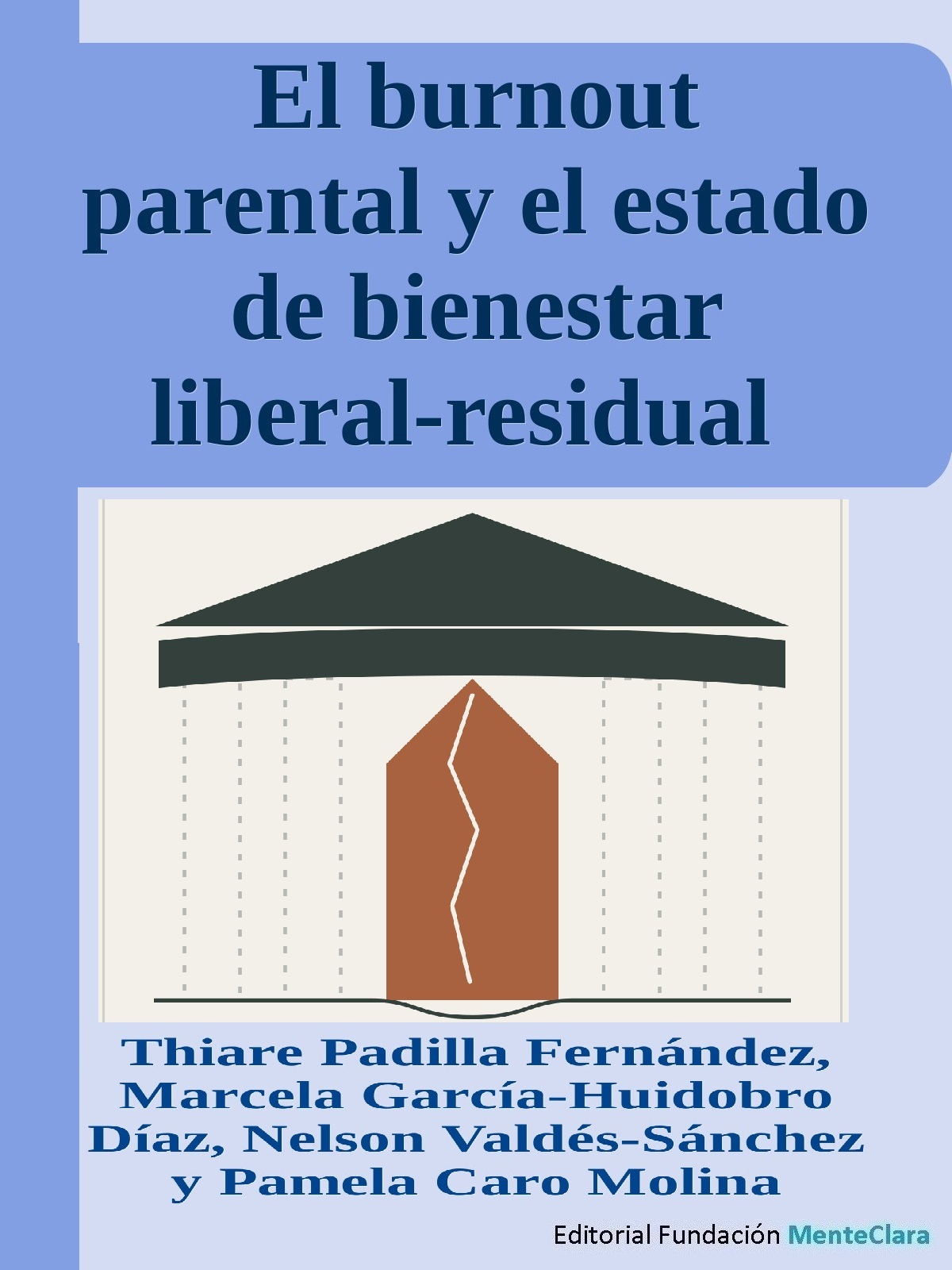
Published
Issue
Section
License
Copyright (c) 2026 MenteClara Foundation’s Peer-reviewed Journal

This work is licensed under a Creative Commons Attribution 4.0 International License.
Authors who publish in this journal agree with the following terms:
a. Authors publish under a Creative Commons Acknowledgment 4.0 International license that allows others to share the work with an authorship acknowledgment of the work and the initial publication in this journal.
b. Authors, who retain their rights after publication, are allowed and encouraged to disseminate their work electronically (for example, in institutional repositories or on their own website) before and during the submission process, as it may result in productive exchanges as well as earlier and greater citations of published works (See The Effect of Open Access).
 Since November 1st, 2018, all articles published in this journal are available under a Creative Commons Acknowledgment 4.0 International license.
How to Cite





 View the