WORKING MEMORY AND NON-INVASIVE NEUROMODULATION: A CRITICAL NARRATIVE REVIEW OF TDCS AND NEUROFEEDBACK IN COGNITIVE REHABILITATION
DOI:
https://doi.org/10.32351/rca.v11.428
Keywords:
working memory, tDCS, neurofeedback, neuromodulation, executive functions, cognitive rehabilitationAbstract
Working memory is an essential cognitive system involved in processes such as attention, learning, reasoning, and executive functions. Alterations in this system have been identified in neuropsychiatric and neurodevelopmental disorders, including attention-deficit/hyperactivity disorder (ADHD), autism spectrum disorder (ASD), schizophrenia, and age-related cognitive decline. In this context, non-invasive neuromodulation techniques, especially transcranial direct current stimulation (tDCS) and neurofeedback, have gained increasing scientific interest due to their potential to modulate brain activity and enhance cognitive performance. The present study aimed to conduct a critical narrative review of the effects of tDCS and neurofeedback on working memory, considering neurophysiological mechanisms, clinical applications, and methodological limitations. The literature search was conducted in the PubMed, Scopus, and PsycINFO databases, including studies published between 2020 and 2024. Findings suggest that tDCS applied over the dorsolateral prefrontal cortex may contribute to improvements in working memory tasks and executive functions. Likewise, neurofeedback has demonstrated promising results in brain self-regulation and attentional modulation. However, important limitations remain, including methodological heterogeneity, small sample sizes, and the scarcity of longitudinal studies. It is concluded that both techniques represent promising tools within applied neuroscience, although greater methodological standardization and long-term clinical validation are still required.
Downloads
References
Baddeley, A. (2012). Working memory: Theories, models, and controversies. Annual Review of Psychology, 63, 1–29. https://doi.org/10.1146/annurev-psych-120710-100422
Brunoni, A. R., & Vanderhasselt, M.-A. (2014). Working memory improvement with non-invasive brain stimulation of the dorsolateral prefrontal cortex: A systematic review and meta-analysis. Brain and Cognition, 86, 1–9. https://doi.org/10.1016/j.bandc.2014.01.008
Cortese, S., et al. (2019). Cognitive training for ADHD. Journal of the American Academy of Child & Adolescent Psychiatry, 58(3), 222–237. https://doi.org/10.1016/j.jaac.2018.11.007
D’Esposito, M., & Postle, B. R. (2015). The cognitive neuroscience of working memory. Annual Review of Psychology, 66, 115–142. https://doi.org/10.1146/annurev-psych-010814-015031
Enriquez-Geppert, S., Huster, R. J., & Herrmann, C. S. (2017). EEG-neurofeedback as a tool to modulate cognition and behavior: A review tutorial. Frontiers in Human Neuroscience, 11, 51. https://doi.org/10.3389/fnhum.2017.00051
Guo, Z., Li, A., & Chen, X. (2023). Long-term effects of repeated multitarget high-definition transcranial direct current stimulation combined with cognitive training on response inhibition gains. Frontiers in Neuroscience, 17, 1107116. https://doi.org/10.3389/fnins.2023.1107116
Kuo, M. F., & Nitsche, M. A. (2012). Effects of transcranial electrical stimulation on cognition. Clinical EEG and Neuroscience, 43(3), 192–199. https://doi.org/10.1177/1550059412444975
Marzbani, H., et al. (2016). Neurofeedback: A comprehensive review. Basic and Clinical Neuroscience, 7(2), 143–158. https://doi.org/10.15412/J.BCN.03070208
Ros, T., Enriquez-Geppert, S., Zotev, V., Young, K. D., Wood, G., Whitfield-Gabrieli, S., & Thibault, R. T. (2020). Consensus on the reporting and experimental design of clinical and cognitive-behavioural neurofeedback studies (CRED-nf checklist). Brain, 143(6), 1674–1685. https://doi.org/10.1093/brain/awaa009
Estadísticas de lectura: 353
Descargas: PDF (SPANISH) 218 - HTML (SPANISH) 36 - XML (SPANISH) 43 - EPUB (SPANISH) 94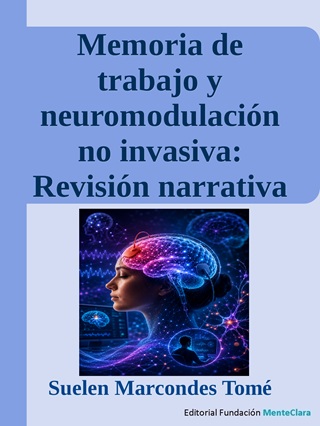
Published
Issue
Section
License
Copyright (c) 2026 MenteClara Foundation’s Peer-reviewed Journal

This work is licensed under a Creative Commons Attribution 4.0 International License.
Authors who publish in this journal agree with the following terms:
a. Authors publish under a Creative Commons Acknowledgment 4.0 International license that allows others to share the work with an authorship acknowledgment of the work and the initial publication in this journal.
b. Authors, who retain their rights after publication, are allowed and encouraged to disseminate their work electronically (for example, in institutional repositories or on their own website) before and during the submission process, as it may result in productive exchanges as well as earlier and greater citations of published works (See The Effect of Open Access).
 Since November 1st, 2018, all articles published in this journal are available under a Creative Commons Acknowledgment 4.0 International license.
How to Cite





 View the