BEYOND FUNCTIONALITY: CRITIQUE OF SYMPTOMATIC ADAPTATION AND PROPOSAL FOR A CONCEPTUAL FRAMEWORK OF STRUCTURAL RESTITUTION DRAWING FROM THE EVOLUTIVE-EXPERIENTIAL METAMODEL OF EMOTIONAL TRAUMA MEV-TE
DOI:
https://doi.org/10.32351/rca.v11.427
Keywords:
Complex trauma, Structural restitution, MEV-TE, Expropriation of resources, Body budgeting, Biographical insolvency, Regulatory sovereignty, Symptomatic adaptationAbstract
Contemporary psychotherapy faces a clinical paradox where the drive for technical efficiency has prioritized symptom reduction over restorative depth, validating states of "dysfunctional homeostasis" as benchmarks for success. This study was conducted to challenge the sufficiency of symptomatic adaptation as a therapeutic goal and to propose, within the framework of the Evolutive-Experiential Metamodel of Emotional Trauma (MEV-TE), a paradigm centered on the structural restitution of the Self. To this end, a synthetic-deductive theoretical investigation was carried out via a Critical Narrative Review, auditing the etiological sufficiency of the Diathesis-Stress, Cognitive, Contextual, and Resilience models. Findings reveal that hegemonic frameworks tend to stabilize costly defensive systems—a phenomenon defined here as “false scarring”—without resolving underlying autonomic dysregulation. Consequently, the mechanism of Expropriation of Internal Resources is formalized to explain the subject’s "biographical insolvency," understood as a chronic deficit in the body budget and a diversion of ATP flow toward defense circuits. The significance of these findings lies in the imperative to transition from a "clinic of correction" toward one of "biological hospitality," establishing that true structural health requires reclaiming the organism’s regulatory sovereignty, ensuring that operational functionality is not financed at the expense of the individual’s neurobiological integrity.
Downloads
References
Apreda, G. A. (2004). Hacia una integración del estatuto epistemológico de la psiquiatría [Tesis de doctorado, Universidad Nacional de La Plata]. SEDICI. https://sedici.unlp.edu.ar/handle/10915/5380
Arnsten, A. F. T. (2009). Stress signalling pathways that impair prefrontal cortex structure and function. Nature Reviews Neuroscience, 10(6), 410–422. https://doi.org/10.1038/nrn2648
Badenoch, B. (2018). The heart of trauma: Healing the embodied mind in the context of relationships. W. W. Norton & Company.
Beck, A. T., Rush, A. J., Shaw, B. F., & Emery, G. (1979). Cognitive therapy of depression. Guilford Press.
Beebe, B., & Lachmann, F. M. (2014). The origins of attachment: Infant research and adult treatment. Routledge.
Belsky, J., & Pluess, M. (2009). Beyond diathesis stress: Differential susceptibility to environmental influences. Psychological Bulletin, 135(6), 885–908. https://doi.org/10.1037/a0017376
Bobba-Alves, N., Juster, R. P., & Picard, M. (2022). The energetic cost of allostasis and allostatic load. Psychoneuroendocrinology, 146, 105951. https://doi.org/10.1016/j.psyneuen.2022.105951
Bonet, J. L., Martino, P., & Ragusa, A. C. (2023). Fisiopatología del estrés y la inflamación en la depresión y la declinación cognitiva: Apuntes para su tratamiento. Vertex Revista Argentina de Psiquiatría, (Suplemento), 2-13.
Cozolino, L. (2017). The neuroscience of psychotherapy: Healing the social brain (3rd ed.). W. W. Norton & Company.
Damasio, A. (2021). Feeling & knowing: Making minds conscious. Pantheon.
Deci, E. L., & Ryan, R. M. (2000). The "what" and "why" of goal pursuits: Human needs and the self-determination of behavior. Psychological Inquiry, 11(4), 227-268. https://doi.org/10.1207/S15327965PLI1104_01
Denzin, N. K. (2012). The research act: A theoretical introduction to sociological methods. AldineTransaction. https://doi.org/10.4324/9781315134543
Deroncele-Acosta, Á., Brito-Garcías, J. G., Sánchez-Trujillo, M. Á., Delgado-Nery, Y. M., & Medina-Zuta, P. (2023). Método de modelación teórico-práctica en ciencias sociales. Revista Universidad y Sociedad, 15(3), 366-384. http://scielo.sld.cu/scielo.php?script=sci_arttext&pid=S2218-36202023000300366
Ecker, B., Ticic, R., & Hulley, L. (2012). Unlocking the emotional brain: Eliminating symptoms at their roots using memory reconsolidation. Routledge.
Feldman Barrett, L. (2017). How emotions are made: The secret life of the brain. Houghton Mifflin Harcourt.
Fisher, J. (2017). Healing the fragmented selves of trauma survivors: Overcoming self-alienation. Routledge.
Ford, J. D., & Courtois, C. A. (Eds.). (2020). Treating complex traumatic stress disorders in adults: Scientific foundations and therapeutic models (2nd ed.). Guilford Press.
García, M. T. C. (2004). Caracterización y crítica del modelo hegemónico vigente. En Salud e interculturalidad en América Latina: perspectivas antropológicas. Abya-Yala.
Giorgi, A. (2009). The descriptive phenomenological method in psychology: A modified Husserlian approach. Duquesne University Press.
Han, B.-C. (2015). The burnout society. Stanford Briefs.
Herman, J. L. (2015). Trauma and recovery: The aftermath of violence—from domestic abuse to political terror (Ed. revisada). Basic Books. https://psycnet.apa.org/record/2015-30136-000
Hobfoll, S. E. (1989). Conservation of resources: A new attempt at conceptualizing stress. American Psychologist, 44(3), 513-524. https://doi.org/10.1037/0003-066X.44.3.513
Huertas, R. (2021). Críticas y alternativas en psiquiatría. Los libros de la Catarata.
Koole, S. L., & Tschacher, W. (2016). Synchrony in psychotherapy: A review and an integrative framework for the therapeutic alliance. Frontiers in Psychology, 7, 862. https://doi.org/10.3389/fpsyg.2016.00862
Laborde, S., Mosley, E., & Thayer, J. F. (2017). Heart rate variability and salivary cortisol alterations in response to relative aerobic exercise training load in high-level athletes. Frontiers in Physiology, 8, 301. https://doi.org/10.3389/fphys.2017.00301
Lanius, R. A., Terpou, B. A., & McKinnon, M. C. (2020). The sense of self in the aftermath of trauma: lessons from the default mode network in posttraumatic stress disorder. European Journal of Psychotraumatology, 11(1), 1807703. https://doi.org/10.1080/20008198.2020.1807703
Márquez, L. M. (2010). Modelo de intervención en crisis. Grupo Luria.
Maturana, H. R., & Varela, F. J. (1994). De máquinas y seres vivos: Autopoiesis, la organización de lo vivo. Editorial Universitaria.
Mau, S. (2019). The metric society: On the quantification of the social. Polity Press.
McEwen, B. S. (2012). Brain on stress: How the social environment gets under the skin. Proceedings of the National Academy of Sciences, 109(Supplement 2), 17180-17185. https://doi.org/10.1073/pnas.1121254109
McNally, R. J. (2003). Remembering trauma. Belknap Press of Harvard University Press.
Meaney, M. J. (2001). Maternal care, gene expression, and the transmission of individual differences in stress reactivity across generations. Annual Review of Neuroscience, 24, 1161-1192. https://doi.org/10.1146/annurev.neuro.24.1.1161
Mendiburu Belzunegui, L. (2003). Bioética y psiquiatría [Investigación de Maestría, Instituto de Ciencias de la Educación de la Universidad de Navarra / Hospital de Bermeo].
Ogden, P., Minton, K., & Pain, C. (2006). Trauma and the body: A sensorimotor approach to psychotherapy. W. W. Norton & Company.
Panksepp, J. (1998). Affective neuroscience: The foundations of human and animal emotions. Oxford University Press.
Parra-Giraldo, M., & Astaíza-Martínez, A. F. (2021). Revisión crítica de las perspectivas sociológicas sobre las psicoterapias: aportes para comprender una de las prácticas más influyentes en los modelos del yo contemporáneos. Revista Colombiana de Ciencias Sociales, 12(2), 870-897. https://doi.org/10.21501/22161201.3551
Perry, B. D. (2009). Examining child maltreatment through a neurodevelopmental lens: Clinical applications of the neurosequential model of therapeutics. Journal of Loss and Trauma, 14(4), 240–255. https://doi.org/10.1080/15325020903004350
Picard, M., & McEwen, B. S. (2018). Psychological stress and mitochondria: A conceptual framework. Psychosomatic Medicine, 80(2), 126–140. https://doi.org/10.1097/PSY.0000000000000544
Porges, S. W. (2011). The Polyvagal Theory: Neurophysiological foundations of emotions, attachment, communication, and self-regulation. W. W. Norton & Company.
Porges, S. W. (2024). Polyvagal Perspectives: Interventions, Practices, and Strategies. W. W. Norton & Company.
Quintana Peña, A. (2006). Metodología de investigación científica cualitativa. En A. Quintana Peña & W. Montgomery (Eds.), Psicología: Tópicos de actualidad (pp. 65-73). Universidad Nacional Mayor de San Marcos.
Raichle, M. E. (2015). The brain's default mode network. Annual Review of Neuroscience, 38, 433–447. https://doi.org/10.1146/annurev-neuro-071013-014030
Ramírez-Navas, J. S. (2022). Diseño, ejecución y redacción de revisiones de la literatura en investigación científica: Una revisión narrativa. Rev. Reciteia, 22, 55-82.
Rose, N. (1999). Governing the soul: The shaping of the private self (2nd ed.). Free Association Books.
Ryan, R. M., & Deci, E. L. (2017). Self-determination theory: Basic psychological needs in motivation, development, and wellness. Guilford Press. https://doi.org/10.1521/978.14625/28806
Schore, A. N. (2019). The development of the unconscious mind. W. W. Norton & Company.
Schore, A. N. (2022). Right brain psychotherapy. W. W. Norton & Company.
Shonkoff, J. P., & Garner, A. S. (2012). The lifelong effects of early childhood adversity and toxic stress. Pediatrics, 129(1), e232–e246. https://doi.org/10.1542/peds.2011-2663
Siegel, D. J. (2020). The developing mind: How relationships and the brain interact to shape who we are (3rd ed.). Guilford Press.
Somano, A. K., & León, A. M. (2020). Métodos teóricos de investigación: Análisis-síntesis, inducción-deducción, abstracto-concreto e histórico-lógico. Universidad de Matanzas.
Southwick, S. M., Charney, D. S., & DePierro, J. M. (2023). Resilience: The science of mastering life’s greatest challenges (3rd ed.). Cambridge University Press. https://doi.org/10.1017/9781009299725
Spence, D. P. (1982). Narrative truth and historical truth: Meaning and interpretation in psychoanalysis. W. W. Norton & Company.
Stolkiner, A. (2021). Prácticas en salud mental. Noveduc.
Sugarman, J. (2015). Neoliberalism and psychological ethics. Journal of Theoretical and Philosophical Psychology, 35(2), 103–116. https://doi.org/10.1037/a0038960
Teicher, M. H., Samson, J. A., Anderson, C. M., & Ohashi, K. (2016). The effects of childhood maltreatment on brain structure, function and connectivity. Nature Reviews Neuroscience, 17(10), 652–666. https://doi.org/10.1038/nrn.2016.111
Thayer, J. F., Ahs, F., Fredrikson, M., Sollers, J. J., & Wager, T. D. (2012). A meta-analysis of heart rate variability and neuroimaging studies: Implications for autonomic regulation and psychosomatic medicine. Neuroscience & Biobehavioral Reviews, 36(2), 747–756. https://doi.org/10.1016/j.neubiorev.2011.11.009
Ungar, M. (2012). Social ecologies and their contribution to resilience. In M. Ungar (Ed.), The social ecology of resilience: A handbook of theory and practice (pp. 13–31). Springer. https://doi.org/10.1007/978-1-4614-0586-3_2
Van der Kolk, B. A. (2015). The body keeps the score: Brain, mind, and body in the healing of trauma. Penguin Books.
Von Bertalanffy, L. (1968). General system theory. New York, 41973(1968), 40.
Wilson, E. O. (1998). Consilience: The unity of knowledge. Vintage Books.
Zubin, J., & Spring, B. (1977). Vulnerability: A new view of schizophrenia. Journal of Abnormal Psychology, 86(2), 103-126. https://doi.org/10.1037/0021-843X.86.2.103
Estadísticas de lectura: 511
Descargas: PDF (SPANISH) 234 - HTML (SPANISH) 39 - XML (SPANISH) 29 - EPUB (SPANISH) 74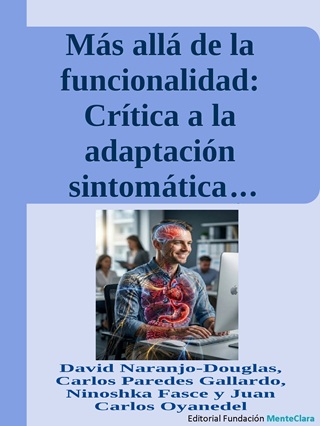
Published
Issue
Section
License
Copyright (c) 2026 MenteClara Foundation’s Peer-reviewed Journal

This work is licensed under a Creative Commons Attribution 4.0 International License.
Authors who publish in this journal agree with the following terms:
a. Authors publish under a Creative Commons Acknowledgment 4.0 International license that allows others to share the work with an authorship acknowledgment of the work and the initial publication in this journal.
b. Authors, who retain their rights after publication, are allowed and encouraged to disseminate their work electronically (for example, in institutional repositories or on their own website) before and during the submission process, as it may result in productive exchanges as well as earlier and greater citations of published works (See The Effect of Open Access).
 Since November 1st, 2018, all articles published in this journal are available under a Creative Commons Acknowledgment 4.0 International license.
How to Cite





 View the