CONNNECTION BETWEEN EMOTIONAL REGULATION AND READING COMPREHENSION IN PRIMARY SCHOOL STUDENTS AND THE PERSPECTIVE OF TEACHERS IN ARGENTINA
DOI:
https://doi.org/10.32351/rca.v7.294
Keywords:
Covid-19, emotional regulation, reading comprehension, kidsAbstract
The study took place in Argentina during the health emergency due to COVID-19, where the educational context was notoriously affected by the pandemic and children experienced high rates of anxiety, anguish, fear and annoyance. The purpose was to know the strategies of emotional regulation and reading comprehension in primary school students and the perspective of teachers regarding both issues. This research is being carried out jointly between the University of Flores (Argentina) and the University of Salamanca (Spain). A qualitative study was carried out on parents and teachers of children between 9 and 12 and it was observed that the less emotional regulation, the less reading comprehension, but this research also opens the field of non-adaptive strategies and reading problems presented by children.
The second study allowed us to know that girls present greater emotional intensity.
Downloads
References
Aldao, A., Nolen-Hoeksema, S., & Schweizer, S. (2010). Emotion-regulation strategies across psychopathology: A meta-analytic review. Clinical psychology review, 30(2), 217-237.
Alzina, R. B. (2003). Educación emocional y competencias básicas para la vida. Revista de investigación educativa, 21(1), 7-43.
Andrés, M.L., Castañeiras, C., Stelzer, F., Canet Juric, L. y Introzzi, I. (2016). Executive functions and Cognitive Reappraisal ability: the relationship in children. Psicología desde el Caribe, 33(2) 169-198. http://dx.doi.org/10.14482/psdc.33.2.7278
Andrés, M. L., Stelzera, F. Vernucci, S., Canet Juric, L., Gallir, J. I., y Navarro Guzmán, J. L. (2017). Emotion regulation and academic skills: Relationship in children aged 9 to 11. Suma Psicología, 24(2), 79-86.
Bisquerra, R. (2011). Educación emocional. Propuestas para educadores y familias. Bilbao: Desclée de Brower.
Ceballos-Marón, N.A. y Sevilla-Vallejo, S. (2020). El Efecto del Aislamiento Social por el Covid-19 en la Conciencia Emocional y en la Comprensión Lectora. Estudio sobre la Incidencia en Alumnos con Trastornos de Aprendizaje y Menor Acceso a las Nuevas Tecnologías. Revista Internacional de Educación para la Justicia Social, 9(3), 1-13.
Eisenberg, N., Spinrad, T. L., & Smith, C. L. (2004). Emotion-related regulation: Its conceptualization, relations to social functioning, and socialization.
Jhon, O. y Gross, J.J. (2007). Individual differences in emotion regulation. In J.J. Gross (Ed). Hadbook of emotion regulation. New York: Guilford Press.
Garnefski, N., Kraaij, V. y Spinhoven, P. (2001). Acontecimientos vitales negativos, regulación emocional cognitiva y problemas emocionales. Personalidad y diferencias individuales , 30 (8), 1311-1327.
Graziano, P., Reavis, R., Keane, S., & Calkins, S. (2007). The Role of Emotion Regulation in Children’s Early Academic Success. Journal of School Psychology, 45, 3-19. http://dx.doi.org/10.1016/j.jsp.2006.09.002
Gross, J.J. (1998 b). The emerging field of emotion regulation: An interrogative review. Review of General Psychology, 2, 271-299. https://doi.org/10.1037/1089-2680.2.3.271
Lewin, L. (2016). El aula afectiva. Claves para el manejo eficaz del aula en un entorno afectivo. Quito. Aguilar Santillana.
Medrano, L.A., Moretti, L., Ortiz, Á., y Pereno, G. (2013). Validación del cuestionario de regulación emocional cognitiva en universitarios de Córdoba, Argentina. Psykhe (Santiago), 22(1), 83- 96. http://dx.doi.org/10.7764/psykhe.22.1.47
Páez, D., Fernández, I., Campos, M., Zubieta, E. y Casullo, M.M. (2006). Apego seguro, vínculos parentales, clima familiar e Inteligencia Emocional: socialización, regulación y bienestar. Ansiedad y Estrés, 12, 2-3.
Panadero, E. y Alonso-Tapia, J. (2014). ¿Cómo autorregulan nuestros alumnos? Modelo de Zimmerman sobre estrategias de aprendizaje. Anales de Psicología/Annaals of Psychology, 30(2), 450-462. https://doi.org/10.6018/analesps.30.2.167221
Reeve, J. (2010). Motivación y Emoción. México: McGraw-Hill.
Reyna, C., & Brussino, S. (2009). Propiedades psicométricas de la escala de comportamiento preescolar y jardín infantil en una muestra de niños argentinos de 3 a 7 años. Psykhe (Santiago), 18(2), 127-140.
Reyna, C., & Brussino, S. (2015). DIFERENCIAS DE EDAD Y GÉNERO EN COMPORTAMIENTO SOCIAL, TEMPERAMENTO Y REGULACIÓN EMOCIONAL EN NIÑOS ARGENTINOS. Acta. colomb. psicol, 18(2), 51-64.
Richards, J. M., & Gross, J. J. (2000). Emotion regulation and memory: the cognitive costs of keeping one's cool. Journal of personality and social psychology, 79(3), 410. https://doi.org/10.1037/0022-3514.79.3.410
Rodríguez-Ceberio, M. (2020). Psicólogos en el frente: la atención durante la crisis del Covid-19. De las emociones tóxicas a la salud psicológica. Archivos de Medicina (Manizales), 21(1).https://doi.org/10.30554/archmed.21.1.3941.2021
Schmeichel, BJ, Volokhov, RN y Demaree, HA (2008). Capacidad de la memoria de trabajo y autorregulación de la expresión y experiencia emocional. Revista de personalidad y psicología social, 95 (6), 1526.
Sevilla-Vallejo, S. y Ceballos-Marón, N.A. (2020). Theoretical and Applied Study of the Psychological and Educational Effects of Lockdown in Primary School Students in Argentina. Social Sciences & Humanities Open 2, 1-6. https://doi.org/10.1016/j.ssaho.2020.100039
Solano Pizarro, P., González-Pienda, J. A., González-Pumariega Solis, S., & Núñez Pérez, J. C. (2004). Autorregulación del aprendizaje a partir de textos.
Thompson, R.A. (1994). Emotional regulation: A theme in search of definition. In Nathan A. Fox, (Ed.), The Development of Emotion Regulation: Biological and behavioral Aspects. Monographs of Society of Research of Child Development, 59, 25 - https://doi.org/10.2307/1166137
Estadísticas de lectura: 3468
Descargas: PDF (SPANISH) 1419 - HTML (SPANISH) 1328 - XML (SPANISH) 420 - EPUB (SPANISH) 352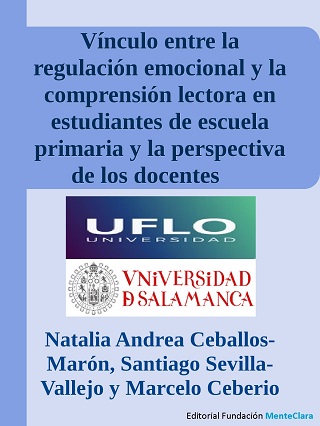
Published
Issue
Section
License
Authors who publish in this journal agree with the following terms:
a. Authors publish under a Creative Commons Acknowledgment 4.0 International license that allows others to share the work with an authorship acknowledgment of the work and the initial publication in this journal.
b. Authors, who retain their rights after publication, are allowed and encouraged to disseminate their work electronically (for example, in institutional repositories or on their own website) before and during the submission process, as it may result in productive exchanges as well as earlier and greater citations of published works (See The Effect of Open Access).
 Since November 1st, 2018, all articles published in this journal are available under a Creative Commons Acknowledgment 4.0 International license.
How to Cite





 View the