NEURODIDACTIC IN THE TEACHING AND LEARNING PROCESSES, A NEW PARADIGM IN EDUCATION?
DOI:
https://doi.org/10.32351/rca.v7.268
Keywords:
Neurodidactics, learning, teaching, paradigm, neuroscience, neurobiology, brain, pedagogy, educationAbstract
This article is a complete reworking of a paper presented in 2015, at the V International Conference on Education Administration CIAE, held in San José, Costa Rica, with the title "Neurodidactics: towards a new educational paradigm". For the elaboration of this article some sources and rethinking of ideas are introduced. Neurodidactics is a pedagogical approach resulting from research in the field of neuroscience. The problem and objective that is assumed in this article is to discuss and analyze whether neurodidactics can be referred a paradigm in education and, at the same time, reflect on the importance of neurodidactics in the teaching and learning processes. The approach is qualitative and the research technique is documentary. The review of the literature is non-systematic. The selection of sources is subject to the author's discretion.Downloads
References
Adrover, D., Muñoz, E., Sánchez, I., & Miranda, R. (2017). Neurobiología de los sistemas de aprendizaje y memoria. En D. R. Ripoll, Neurociencia cognitiva (págs. 411-438). Madrid: Panamericana.
Blaschke, J. (2014). Cerebro 2.0. . Barcelona: Robinbook.
Buxarrais, , M., & Martínez, , M. (2015). Retos educativos para el siglo XXI: autonomía, responsabilidad, neurociencia y aprendizaje. Barcelona: Ediciones Octaedro .
Casasola Rivera, W. (2010). Una aproximación a la noción de paradigma. InformaTEC, 304.
Forés Miravalles, M., & Ligioiz Vázquez, M. (2015). Descubrir la Neurodidáctica: aprender desde, en y para la vida. Cataluña: AOC.
Inostroza, F. (2018). Neuroeducación social: hacia una pedagogía emocionalmente inclusiva. Chile: Ril editores.
Kuhn, T. (2004). La estructura de las revoluciones científicas. México: Fondo de Cultura Económica.
Landívar, A. (2012). Neuroeducación: educación para jóvenes bajo la lupa de María Montessori. Córdoba: Brujas.
Mora, F. (2016). Cuando el cerebro juega con las ideas. Madrid: Alianza Editorial.
Navarro Macías, R. (5 de Marzo de 2020). Fuera neuromitos Ni el cableado cerebral se completa a los tres años ni sobreestimular al niño le hace más listo. La Vanguardia. Recuperado el 1 de junio de 2020, de https://www.lavanguardia.com/vivo/mamas-y-papas/20200305/473676833247/mitos-cerebro-ninos.html
Ortiz, T. (2015). Neurociencia y educación. Madrid: Alianza editorial.
Pérez, M. (2014). Cerebro que aprende: cómo apasionarnos con el conocimiento para transformar nuestra vida. Buenos Aires: Autoria Sherpa.
Pherez, G., Vargas, S., & Jerez, J. (2018). Neuroaprendizaje, una propuesta educativa: herramientas para mejorar la praxis del docente. Civilizar Ciencias Sociales y Humanas, 18(34), 149-166. doi: https://doi.org/10.22518/usergioa/jour/ccsh/2018.1/a10
Portellano, J. A. (2005). Introducción a la neuropsicología. España:. Madrid: McGraw-Hill.
Portellano, J., & García, J. (2014). Neuropsicología de la atención, las funciones ejecutivas y la memoria. Madrid: SÍNTESIS.
Rodríguez de Ávila, U. (2020). 15 minutos de clase es suficiente! Psicobiología, Electrofisiología y Neuroeducación de la Atención Sostenida. Santa Marta: Ediciones Unimagdalena.
Uchitel, O. (2007). El lenguaje de las neuronas. Buenos Aires: Eudeba.
Ugaz Cayao, S., Fernández Cosavalente, H., Ugaz Cachay, L., Vásquez Vásquez, F., & Quiroz Aldave, E. (2019). La neurobiología aplicada: Bases del neurodesarrollo y aprendizaje. SCIí‰NDO, 22(1), 169-173. doi: https://doi.org/10.17268/sciendo.2019.022
Estadísticas de lectura: 6456
Descargas: PDF (SPANISH) 2282 - HTML (SPANISH) 4081 - XML (SPANISH) 800 - EPUB (SPANISH) 471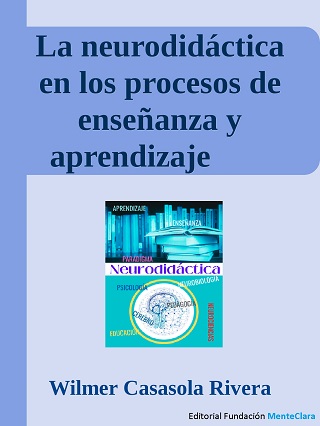
Published
Issue
Section
License
Authors who publish in this journal agree with the following terms:
a. Authors publish under a Creative Commons Acknowledgment 4.0 International license that allows others to share the work with an authorship acknowledgment of the work and the initial publication in this journal.
b. Authors, who retain their rights after publication, are allowed and encouraged to disseminate their work electronically (for example, in institutional repositories or on their own website) before and during the submission process, as it may result in productive exchanges as well as earlier and greater citations of published works (See The Effect of Open Access).
 Since November 1st, 2018, all articles published in this journal are available under a Creative Commons Acknowledgment 4.0 International license.
How to Cite





 View the