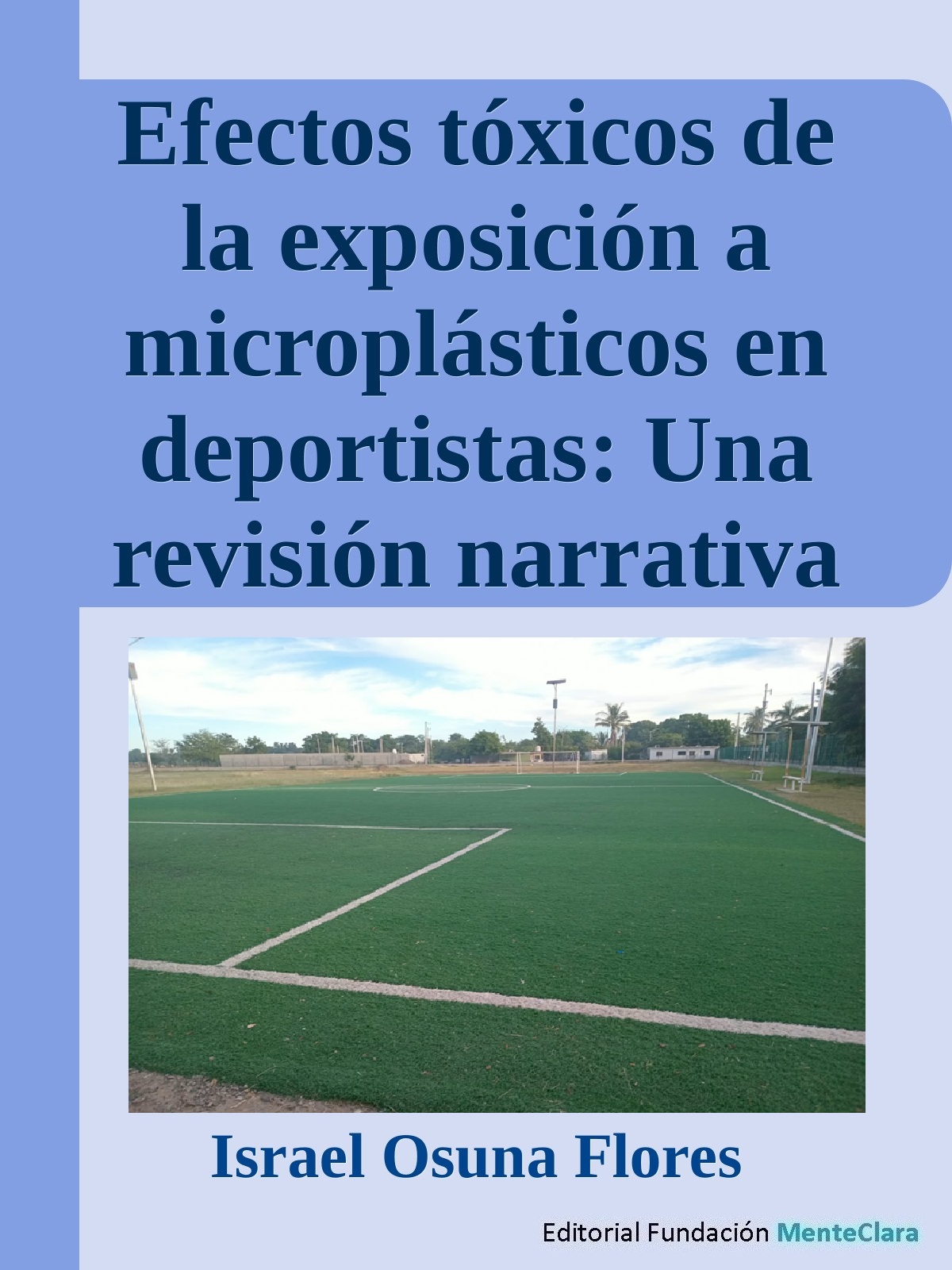
Efectos tóxicos de la exposición a microplásticos en deportistas: Una revisión narrativa
DOI:
https://doi.org/10.32351/rca.v11.475
Palabras clave:
microplásticos, toxicidad, deportistas, estrés oxidativo, inflamación, rendimiento físicoResumen
Los microplásticos constituyen uno de los contaminantes emergentes de mayor preocupación para la salud pública y el medio ambiente debido a su amplia distribución, persistencia y capacidad para ingresar en los organismos vivos. La exposición humana se presenta principalmente mediante la ingestión de agua y alimentos, la inhalación de partículas suspendidas y en contacto con materiales sintéticos. En el ámbito deportivo, esta exposición puede elevarse a consecuencia del uso de superficies de césped artificial, ropa deportiva elaborada con fibras sintéticas y una mayor ventilación pulmonar durante la actividad física intensa., los deportistas son un grupo potencialmente vulnerable debido a su elevada ventilación pulmonar durante el ejercicio, elevado consumo de agua y alimentos, y exposición frecuente a ambientes contaminados. El objetivo de esta revisión es analizar los posibles efectos tóxicos de los microplásticos sobre sistemas fisiológicos relacionados con el rendimiento deportivo. La evidencia disponible indica que los MPs pueden inducir estrés oxidativo, alteraciones inmunológicas, inflamación sistémica, disfunción endocrina y cambios en la microbiota intestinal. Estos mecanismos podrían afectar procesos fundamentales para el deportista como la recuperación muscular, capacidad antioxidante, adaptación al entrenamiento y función cardiorrespiratoria. Aún hacen falta estudios longitudinales en atletas para establecer relaciones causales entre exposición a microplásticos y disminución del rendimiento físico.
Descargas
Referencias
Allen, S., Allen, D., Phoenix, V. R., Le Roux, G., Durántez Jiménez, P., Simonneau, A., Binet, S., & Galop, D. (2020). Atmospheric transport and deposition of microplastics in a remote mountain catchment. Nature Geoscience, 12(1), 339–344. https://doi.org/10.1038/s41561-019-0335-5
Andrady, A. L. (2011). Microplastics in the marine environment. Marine Pollution Bulletin, 62(8), 1596–1605. https://doi.org/10.1016/j.marpolbul.2011.05.030
Campanale, C., Massarelli, C., Savino, I., Locaputo, V., & Uricchio, V. F. (2020). A detailed review study on potential effects of microplastics and additives of concern on human health. International Journal of Environmental Research and Public Health, 17(4), 1212. https://doi.org/10.3390/ijerph17041212
Chamas, A., Moon, H., Zheng, J., Qiu, Y., Tabassum, T., Jang, J. H., Abu-Omar, M., Scott, S. L., & Suh, S. (2020). Degradation rates of plastics in the environment. ACS Sustainable Chemistry & Engineering, 8(9), 3494–3511. https://doi.org/10.1021/acssuschemeng.9b06635
Chartres, N., Cooper, C. B., Bland, G., Pelch, K. E., Gandhi, S. A., BakenRa, A., & Woodruff, T. J. (2024). Effects of microplastic exposure on human digestive, reproductive, and respiratory health: A rapid systematic review. Environmental Science & Technology, 58(52), 22843–22864 https://pubs.acs.org/esthag/article/58/52/22843/152872/Effects-of-Microplastic-Exposure-on-Human
Choi, J., Kim, H., Ahn, Y. R., Kim, M., Yu, S., Kim, N., Lim, S. Y., Park, J. A., Ha, S. J., Lim, K. S., & Kim, H. O. (2024). Recent advances in microbial and enzymatic engineering for the biodegradation of micro- and nanoplastics. RSC advances, 14(14), 9943–9966. https://doi.org/10.1039/d4ra00844h
Cowger, W., Gray, A., Christiansen, S. H., DeFrond, H., Deshpande, A. D., Hemabessiere, L., Lee, E., Mill, L., Munno, K., Ossmann, B. E., Pittroff, M., Rochman, C., Sarau, G., Tarby, S., & Primpke, S. (2020). Critical Review of Processing and Classification Techniques for Images and Spectra in Microplastic Research. Applied spectroscopy, 74(9), 989–1010. https://doi.org/10.1177/0003702820929064
da Silva, M. R. F., Souza, K. S., Motteran, F., de Araújo, L. C. A., Singh, R., Bhadouria, R., & de Oliveira, M. B. M. (2024). Exploring biodegradative efficiency: A systematic review on the main microplastic-degrading bacteria. Frontiers in Microbiology, 15(1), 1360844. https://doi.org/10.3389/fmicb.2024.1360844
De Falco, F., Di Pace, E., Cocca, M., & Avella, M. (2019). The contribution of washing processes of synthetic clothes to microplastic pollution. Scientific reports, 9(1), 6633. https://doi.org/10.1038/s41598-019-43023-x
Deng, Y., Zhang, Y., Lemos, B., & Ren, H. (2017). Tissue accumulation of microplastics in mice and biomarker responses suggest widespread health risks of exposure. Scientific Reports, 7(1), 46687. https://www.nature.com/articles/srep46687
Gallo, F., Fossi, C., Weber, R., Santillo, D., Sousa, J., Ingram, I., Nadal, A., & Romano, D. (2018). Marine litter plastics and microplastics and their toxic chemicals components: The need for urgent preventive measures. Environmental Sciences Europe, 30(13). https://doi.org/10.1186/s12302-018-0139-z
Geyer, R., Jambeck, J. R., & Law, K. L. (2017). Production, use, and fate of all plastics ever made. Science Advances, 3(7), e1700782. https://doi.org/10.1126/sciadv.1700782
Hwang, J., Choi, D., Han, S., Choi, J., & Hong, J. (2019). An assessment of the toxicity of polypropylene microplastics in human derived cells. The Science of the total environment, 684, 657–669. https://doi.org/10.1016/j.scitotenv.2019.05.071
Ivleva, N. P. (2021). Chemical analysis of microplastics and nanoplastics: Challenges, advanced methods, and perspectives. Chemical Reviews, 121(19), 11886–11936. https://doi.org/10.1021/acs.chemrev.1c00178
Jenner, L. C., Rotchell, J. M., Bennett, R. T., Cowen, M., Tentzeris, V., & Sadofsky, L. R. (2022). Detection of microplastics in human lung tissue using μFTIR spectroscopy. Science of The Total Environment, 831, 154907. https://doi.org/10.1016/j.scitotenv.2022.154907
Jiao, X., Cao, Q., & Deng, Z. (2025). Microplastics and exercise: Impacts on performance and physiological health. Frontiers in Sports and Active Living, 7(1), 1611255. https://doi.org/10.3389/fspor.2025.1611255
Kadac-Czapska, K., Ośko, J., Knez, E., & Grembecka, M. (2024). Microplastics and Oxidative Stress—Current Problems and Prospects. Antioxidants, 13(5), 579. https://doi.org/10.3390/antiox13050579
Kistler, W., Villiger, M., Villiger, B., Yazici, D., Pat, Y., Mitamura, Y., Ardicli, S., Skolnick, S., Dhir, R., Akdis, M., Nadeau, K., Ogulur, I., & Akdis, C. A. (2024). Epithelial barrier theory in the context of nutrition and environmental exposure in athletes. Allergy, 79(11), 2912–2923. https://doi.org/10.1111/all.16221
Kovacs, K., Bodis, J., & Vass, R. A. (2026). Microplastics, endocrine disruptors, and oxidative stress: Mechanisms and health implications. International Journal of Molecular Sciences, 27(1), 399. https://doi.org/10.3390/ijms27010399
Leslie, H. A., van Velzen, M. J. M., Brandsma, S. H., Vethaak, A. D., Garcia-Vallejo, J. J., & Lamoree, M. H. (2022). Discovery and quantification of plastic particle pollution in human blood. Environment International, 163, 107199. https://doi.org/10.1016/j.envint.2022.107199
Lalruatmawii, J., Verma, I., Dubey, I., Vigneshwaran, G., Nalla, S. V., Gautam, R. K., Bhardwaj, S., & Kushwaha, S. (2026). Irisin and exercise ameliorate the polyethylene microplastics–induced blood–testis barrier disruption via PGC-1α activation and AMPK/Nrf2/HO-1 signaling. Journal of Applied Toxicology. https://doi.org/10.1002/jat.70113
Li, Y., Chen, L., Zhou, N., Chen, Y., Ling, Z., & Xiang, P. (2024). Microplastics in the human body: A comprehensive review of exposure, distribution, migration mechanisms, and toxicity. Science of the Total Environment, 946, 174215. https://doi.org/10.1016/j.scitotenv.2024.174215
Prata, J. C. (2018). Airborne microplastics: Consequences to human health? Environmental Pollution, 234, 115–126. https://doi.org/10.1016/j.envpol.2017.11.043
Prata, J. C., da Costa, J. P., Lopes, I., Duarte, A. C., & Rocha-Santos, T. (2021). Environmental exposure to microplastics: An overview on possible human health effects. Science of the Total Environment, 702, 134455. https://doi.org/10.1016/j.scitotenv.2019.134455
Ragusa, A., Svelato, A., Santacroce, C., Catalano, P., Notarstefano, V., Carnevali, O., Papa, F., Rongioletti, M. C. A., Baiocco, F., Draghi, S., D'Amore, E., Rinaldo, D., Matta, M., & Giorgini, E. (2021). Plasticenta: First evidence of microplastics in human placenta. Environment International, 146, 106274. https://doi.org/10.1016/j.envint.2020.106274
Rochman, C. M., Hoh, E., Kurobe, T., & Teh, S. J. (2014). Ingested plastic transfers hazardous chemicals to fish and induces hepatic stress. Scientific Reports, 3, 3263. https://doi.org/10.1038/srep03263
Schwaferts, C., Niessner, R., Elsner, M., & Ivleva, N. P. (2020). Methods for the analysis of submicrometer- and nanoplastic particles in the environment. Trends in Analytical Chemistry, 112, 115893. https://doi.org/10.1016/j.trac.2018.12.014
Stock, V., Böhmert, L., Lisicki, Z., Block, R., Cara-Carmona, J., Pack, L. K., Selb, R., et al. (2019). Uptake and effects of orally ingested polystyrene microplastic particles in vitro and in vivo. Archives of Toxicology, 93, 1817–1833. https://doi.org/10.1007/s00204-019-02478-7
Tang, K. H. D. (2024). A review of the toxic effects of microplastics based on studies on mammals and mammalian cell lines. Environmental Science: Advances 3(12), 1669–1678 https://doi.org/10.1039/D4VA00227J
United Nations Environment Programme. (2023). Turning off the Tap: How the world can end plastic pollution and create a circular economy. Nairobi: UNEP. https://www.unep.org/resources/turning-off-tap-end-plastic-pollution-create-circular-economy
Vethaak, A. D., & Legler, J. (2021). Microplastics and human health. Science, 371(6530), 672–674. https://doi.org/10.1126/science.abe5041
Wright, S. L., & Kelly, F. J. (2017). Plastic and human health: A micro issue? Environmental Science & Technology, 51(12), 6634–6647. https://doi.org/10.1021/acs.est.7b00423
Xie, J., Gowen, A., Xu, W., & Xu, J. (2024). Analysing micro- and nanoplastics with cutting-edge infrared spectroscopy techniques: A critical review. Analytical Methods, 16(15), 2177–2197. https://doi.org/10.1039/D3AY01808C
Xu, H., Xu, B., Wang, H., Tao, R., Chen, R., Cheng, Y., Zheng, Z., Sun, D., & Li, X. (2026). Lifestyle modulation of xenobiotic stress: Aerobic exercise attenuates nanoplastic-associated neuroendocrine dysfunction via a gut–ovary–brain continuum. The FASEB Journal, 40(10), e71891. https://doi.org/10.1096/fj.202600941R
Zahid, H., Afzal, N., Arif, M. M., Zahid, M., Nawab, S., Qasim, M. M., Alvi, F. N., Nazir, S., Perveen, I., Abbas, N., Saleem, Y., Mazhar, S., Nawaz, S., Faridi, T. A., Awan, H. M. A., Syed, Q., & Abidi, S. H. I. (2024). Microorganism-mediated biodegradation for effective management and/or removal of micro-plastics from the environment: A comprehensive review. Archives of Microbiology, 206(4), 198. https://doi.org/10.1007/s00203-024-03904-w
Zhao, J., Lan, R., Tan, H., Wang, J., Ma, Y., Chen, Q., Jiang, F., Wang, Z., & Xing, B. (2025). Detection and characterization of microplastics and nanoplastics in biological samples. Nature Reviews Bioengineering, 3(12), 1019–1033. https://doi.org/10.1038/s44222-025-00335-0
Publicado
Número
Sección
Licencia
Derechos de autor 2026 Revista Científica Arbitrada de la Fundación MenteClara

Esta obra está bajo una licencia internacional Creative Commons Atribución 4.0.
Los autores que publican en esta revista están de acuerdo con los siguientes términos:
- Los autores publican bajo una licencia de Creative Commons Reconocimiento 4.0 Internacional que permite a otros compartir el trabajo con un reconocimiento de la autoría del trabajo y la publicación inicial en esta revista.
- Se permite y se anima a los autores, quienes conservan sus derechos luego de la publicación, a difundir sus trabajos electrónicamente (por ejemplo, en repositorios institucionales o en su propio sitio web) antes y durante el proceso de envío, ya que puede dar lugar a intercambios productivos, así como a una citación más temprana y mayor de los trabajos publicados (Véase The Effect of Open Access).

Desde el 1º de noviembre de 2018 todos los artículos de esta revista están disponibles bajo una licencia de Creative Commons Reconocimiento 4.0 Internacional.
Cómo citar





 Consultar