TENSIONS BETWEEN DOCUMENTARY PRESERVATION AND ENVIRONMENTAL KNOWLEDGE
DOI:
https://doi.org/10.32351/rca.v11.474
Keywords:
environmental knowledge, epistemological paradox, documentary preservation, practical continuity, situated learning, environmental changeAbstract
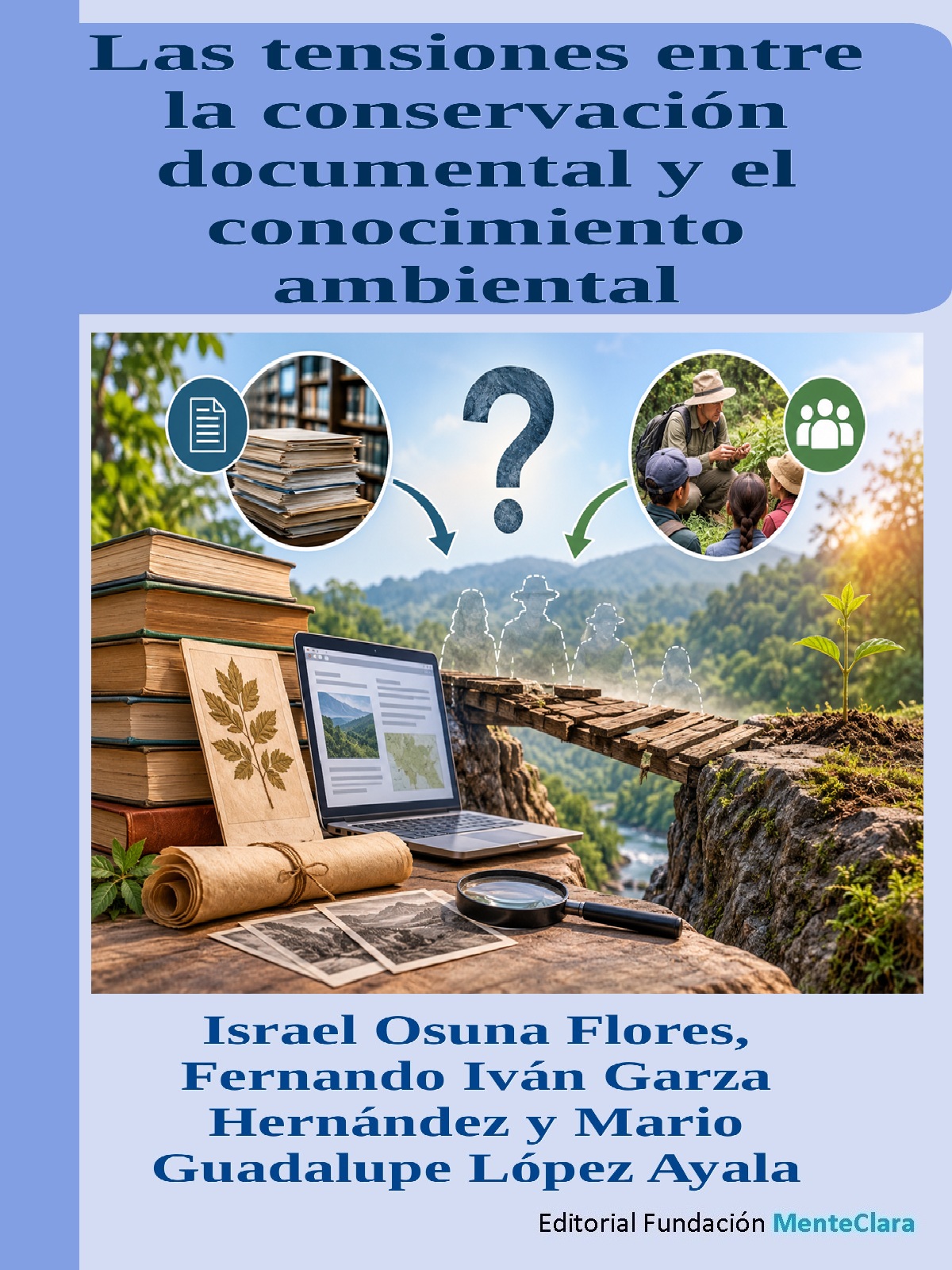
The preservation of environmental knowledge through documents, records, and testimonies does not necessarily guarantee the continuity of the practices through which such knowledge is produced, used, and transmitted. This article examines the epistemological paradox that may arise when documentary availability increases while opportunities to practice, learn, and revise ecological knowledge diminish. Its objective is to propose analytical criteria for distinguishing documentary preservation, knowledge attributed to participants, and practical continuity, thereby avoiding unjustified inferences across these dimensions. Methodologically, the study employs a philosophical-conceptual analysis grounded in specialized literature on situated knowledge, embodied cognition, learning, and environmental change, through argumentative reconstruction, conceptual differentiation, and the evaluation of objections. The analysis resulted in a set of criteria for distinguishing restrictions on practice and transmission, limitations of applicability, processes of adaptation or reconstruction, and contextually delimited knowledge loss. The article concludes that preserving records does not, in itself, demonstrate practical continuity, just as the interruption of activities does not necessarily establish knowledge loss. Its contribution is a revisable analytical framework for examining the relationships between documentation, knowledge, and practice, with implications for environmental research and initiatives aimed at preserving and transmitting knowledge.
Downloads
References
Fernández-Llamazares, Á., Díaz-Reviriego, I., Luz, A. C., Cabeza, M., Pyhälä, A., & Reyes-García, V. (2015). Rapid ecosystem change challenges the adaptive capacity of local environmental knowledge. Global Environmental Change, 31, 272–284. https://doi.org/10.1016/j.gloenvcha.2015.02.001
Hutchins, E. (1995). Cognition in the wild. MIT Press. https://doi.org/10.7551/mitpress/1881.001.0001
Ingold, T. (2000). The perception of the environment: Essays on livelihood, dwelling and skill. Routledge.
Jaakkola, E. (2020). Designing conceptual articles: Four approaches. AMS Review, 10, 18–26. https://doi.org/10.1007/s13162-020-00161-0
Lauer, M., & Aswani, S. (2009). Indigenous ecological knowledge as situated practices: Understanding fishers’ knowledge in the Western Solomon Islands. American Anthropologist, 111(3), 317–329. https://doi.org/10.1111/j.1548-1433.2009.01135.x
Lauer, M., & Aswani, S. (2010). Indigenous knowledge and long-term ecological change: Detection, interpretation, and responses to changing ecological conditions in Pacific Island communities. Environmental Management, 45(5), 985–997. https://doi.org/10.1007/s00267-010-9471-9
Lave, J., & Wenger, E. (1991). Situated learning: Legitimate peripheral participation. Cambridge University Press. https://doi.org/10.1017/CBO9780511815355
Lyver, P. O’B., Timoti, P., Davis, T., & Tylianakis, J. M. (2019). Biocultural hysteresis inhibits adaptation to environmental change. Trends in Ecology & Evolution, 34(9), 771–780. https://doi.org/10.1016/j.tree.2019.04.002
MacInnis, D. J. (2011). A framework for conceptual contributions in marketing. Journal of Marketing, 75(4), 136–154. https://doi.org/10.1509/jmkg.75.4.136
Maliao, R. J., & Tóthmérész, B. (2026). Expert grief: Epistemic injustice and the paradox of knowledge in social-ecological systems. Global Environmental Change, 100, Article 103219. https://doi.org/10.1016/j.gloenvcha.2026.103219
Siqueiros-García, J. M., Manuel-Navarrete, D., Eakin, H., Mojica, L., Charli-Joseph, L., Pérez-Belmont, P., & Ruizpalacios, B. (2022). Sense of agency, affectivity and social-ecological degradation: An enactive and phenomenological approach. Frontiers in Psychology, 13, Article 911092. https://doi.org/10.3389/fpsyg.2022.911092
Stanley, J., & Williamson, T. (2001). Knowing how. The Journal of Philosophy, 98(8), 411–444. https://doi.org/10.2307/2678403
Tengö, M., Brondizio, E. S., Elmqvist, T., Malmer, P., & Spierenburg, M. (2014). Connecting diverse knowledge systems for enhanced ecosystem governance: The multiple evidence base approach. Ambio, 43, 579–591. https://doi.org/10.1007/s13280-014-0501-3
Toulmin, S. E. (2003). The uses of argument (Updated ed.). Cambridge University Press. https://doi.org/10.1017/CBO9780511840005
Varela, F. J., Thompson, E., & Rosch, E. (1991). The embodied mind: Cognitive science and human experience. MIT Press.
Downloads
Published
Issue
Section
License
Copyright (c) 2026 MenteClara Foundation’s Peer-reviewed Journal

This work is licensed under a Creative Commons Attribution 4.0 International License.
Authors who publish in this journal agree with the following terms:
a. Authors publish under a Creative Commons Acknowledgment 4.0 International license that allows others to share the work with an authorship acknowledgment of the work and the initial publication in this journal.
b. Authors, who retain their rights after publication, are allowed and encouraged to disseminate their work electronically (for example, in institutional repositories or on their own website) before and during the submission process, as it may result in productive exchanges as well as earlier and greater citations of published works (See The Effect of Open Access).
 Since November 1st, 2018, all articles published in this journal are available under a Creative Commons Acknowledgment 4.0 International license.
How to Cite





 View the