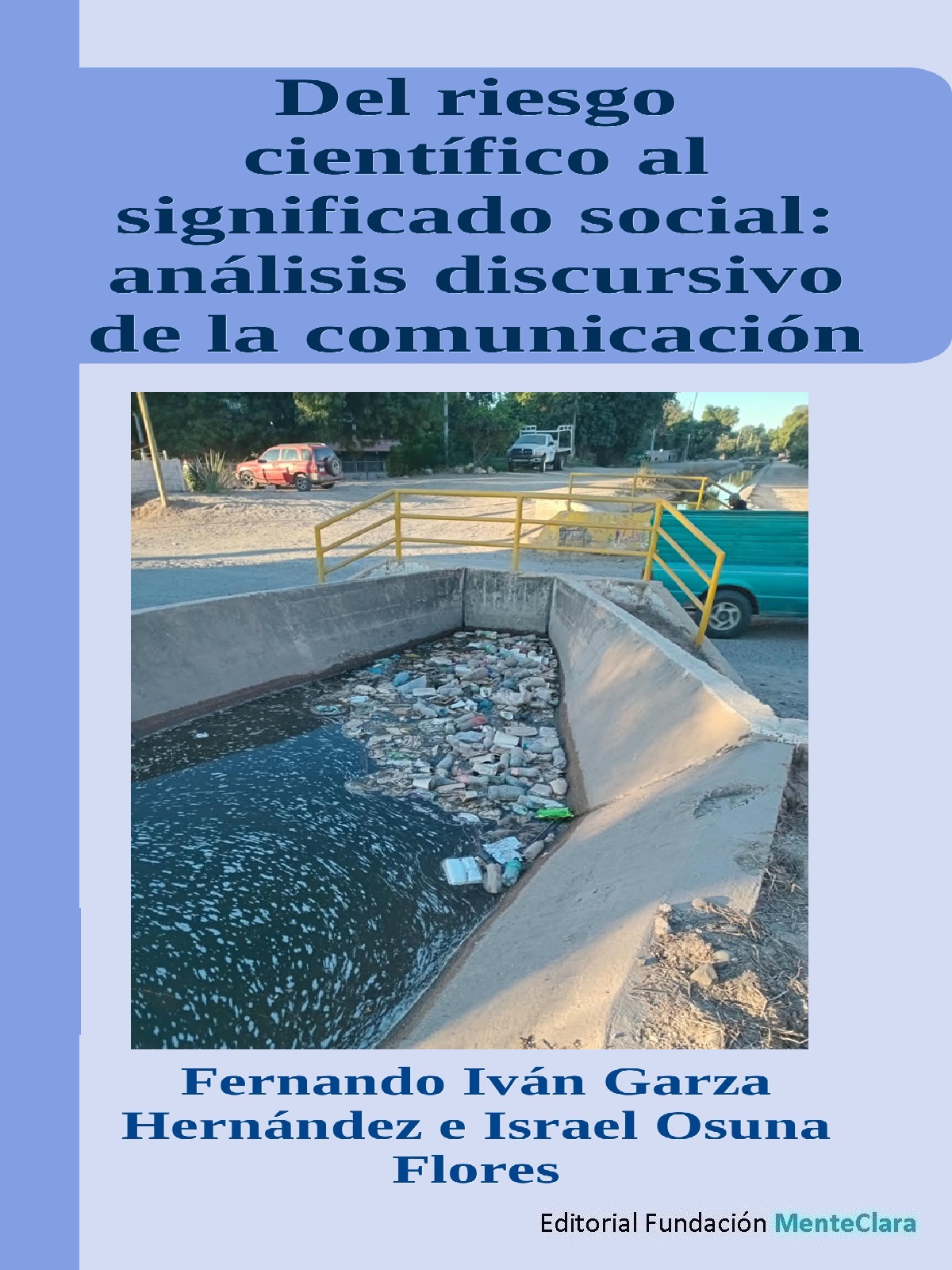
FROM SCIENTIFIC RISK TO SOCIAL MEANING: DISCOURSE ANALYSIS OF COMMUNICATION ABOUT MICROPLASTICS AND BIOPLASTICS
DOI:
https://doi.org/10.32351/rca.v11.467
Keywords:
bioplastics, microplastics, science communication, discourse analysis, biodegradability, semantic-epistemic reconfigurationAbstract
Public communication of the environmental properties of bioplastics requires translating technical and scientific concepts into non-specialist discourse. This exploratory qualitative documentary study examines how conditions underpinning statements about biodegradability, compostability and persistent microplastics are retained or reformulated. A pilot corpus of public communications by three manufacturers (BASF, NatureWorks and Novamont) was compared with relevant scientific and technical documentation. The analysis distinguishes between conceptual preservation, the association of technical attributes with environmental values, and potential semantic-epistemic reconfigurations. Some communications explicitly identify standards and application conditions, whereas others emphasize environmental benefits that require additional contextual verification. The study does not establish that these statements are false or misleading. Its contribution is a provisional comparative procedure for assessing the alignment between public claims and their conditions of scientific validity. The limited, non-representative corpus and the pending specialist assessment restrict the scope of the findings.
Downloads
References
Afshar, S. V., Boldrin, A., Astrup, T. F., Daugaard, A. E., & Hartmann, N. B. (2024). Degradation of biodegradable plastics in waste management systems and the open environment: A critical review. Journal of Cleaner Production, 434, Artículo 140000. https://doi.org/10.1016/j.jclepro.2023.140000
Ali, W., Ali, H., Gillani, S., Zinck, P., & Souissi, S. (2023). Polylactic acid synthesis, biodegradability, conversion to microplastics and toxicity: A review. Environmental Chemistry Letters, 21, 1761–1786. https://doi.org/10.1007/s10311-023-01564-8
BASF. (2024, 25 de junio). Biopolímero compostable industrial para cuerdas y rafias de invernadero. https://www.basf.com/es/es/media/news-releases/2024/Biopolimero-compostable-industrial-para-cuerdas-y-rafias-de-invernadero
BASF. (s. f.). ecovio® (PBAT, PLA) – Polímero compostable certificado con contenido de base biológica. https://plastics-rubber.basf.com/southamerica/es/performance_polymers/products/ecovio
Bowen, G. A. (2009). Document analysis as a qualitative research method. Qualitative Research Journal, 9(2), 27–40. https://doi.org/10.3316/QRJ0902027
Calsamiglia, H. (2003). Popularization discourse. Discourse Studies, 5(2). https://doi.org/10.1177/1461445603005002307
Calsamiglia, H., & van Dijk, T. A. (2004). Popularization discourse and knowledge about the genome. Discourse & Society, 15(4), 369–389. https://doi.org/10.1177/0957926504043705
Catarino, A. I., et al. (2021). Risk posed by microplastics: Scientific evidence and public perception. Current Opinion in Environmental Science & Health. https://www.sciencedirect.com/science/article/pii/S2452223621000237
Comisión Europea. (2022). EU policy framework on biobased, biodegradable and compostable plastics (COM/2022/682 final). https://eur-lex.europa.eu/legal-content/EN/TXT/?uri=CELEX:52022DC0682
Cowger, W., Booth, A. M., Hamilton, B. M., Thaysen, C., Primpke, S., Munno, K., Lusher, A. L., Dehaut, A., Vaz, V. P., Liboiron, M., Devriese, L. I., Hermabessiere, L., Rochman, C., Athey, S. N., Lynch, J. M., De Frond, H., Gray, A., Jones, O. A. H., Brander, S., ... Nel, H. (2020). Reporting guidelines to increase the reproducibility and comparability of research on microplastics. Applied Spectroscopy, 74(9), 1066–1077. https://doi.org/10.1177/0003702820930292
de Freitas Netto, S. V., Sobral, M. F. F., Ribeiro, A. R. B., & Soares, G. R. L. (2020). Concepts and forms of greenwashing: A systematic review. Environmental Sciences Europe, 32, 19. https://doi.org/10.1186/s12302-020-0300-3
Delmas, M. A., & Burbano, V. C. (2011). The drivers of greenwashing. California Management Review, 54(1), 64–87. https://business.columbia.edu/faculty/research/drivers-greenwashing
Emadian, S. M., Onay, T. T., & Demirel, B. (2017). Biodegradation of bioplastics in natural environments. Waste Management, 59, 526–536. https://www.sciencedirect.com/science/article/pii/S0956053X1630561X
Entman, R. M. (1993). Framing: Toward clarification of a fractured paradigm. Journal of Communication, 43(4), 51–58. https://doi.org/10.1111/j.1460-2466.1993.tb01304.x
Fairclough, N. (1992). Discourse and social change. Polity Press. https://www.wiley.com/en-us/Discourse+and+Social+Change-p-9780745612188
Falzarano, M., Marìn, A., Cabedo, L., Polettini, A., Pomi, R., Rossi, A., & Zonfa, T. (2024). Alternative end-of-life options for disposable bioplastic products: Degradation and ecotoxicity assessment in compost and soil. Chemosphere, 362, Article 142648. https://doi.org/10.1016/j.chemosphere.2024.142648
Haider, T. P., Völker, C., Kramm, J., Landfester, K., & Wurm, F. R. (2019). Plastics of the future? The impact of biodegradable polymers on the environment and on society. Angewandte Chemie International Edition, 58(1), 50–62. https://doi.org/10.1002/anie.201805766
Hajilou, N., Mostafayi, S. S., Yarin, A. L., & Shokuhfar, T. (2025). A comparative review on biodegradation of poly(lactic acid) in soil, compost, water, and wastewater environments: Incorporating mathematical modeling perspectives. AppliedChem, 5(1), Article 1. https://doi.org/10.3390/appliedchem5010001
Hartmann, N. B., Hüffer, T., Thompson, R. C., Hassellöv, M., Verschoor, A., Daugaard, A. E., Rist, S., Karlsson, T., Brennholt, N., Cole, M., Herrling, M. P., Hess, M. C., Ivleva, N. P., Lusher, A. L., & Wagner, M. (2019). Are we speaking the same language? Recommendations for a definition and categorization framework for plastic debris. Environmental Science & Technology, 53(3), 1039–1047. https://doi.org/10.1021/acs.est.8b05297
HYDRA Marine Sciences. (2024). PeToPLA metastudy: Technical summary. https://natureworksllc.com/getContentAsset/5ed0c97b-88ad-484f-a5a3-f8bc4d6b8047/53ffd608-340f-457b-b656-6b8cc0000bd4/2024_06_24_PeToPLA-Metastudy_Technical-Summary_Public.pdf?language=en
International Organization for Standardization. (2026). ISO 14021:2026: Environmental statements and programmes for products—Self-declared environmental claims. https://www.iso.org/standard/14021
Kramm, J., Steinhoff, S., Werschmöller, S., Völker, B., & Völker, C. (2022). Explaining risk perception of microplastics: Results from a representative survey in Germany. Global Environmental Change, 73, Article 102485. https://doi.org/10.1016/j.gloenvcha.2022.102485
Krippendorff, K. (2018). Content analysis: An introduction to its methodology (4th ed.). SAGE. https://www.sagepub.com/shop/buy-a-book/content-analysis-4-258450
Law, K. L., & Narayan, R. (2022). Reducing environmental plastic pollution by designing polymer materials for managed end-of-life. Nature Reviews Materials, 7, 104–116. https://doi.org/10.1038/s41578-021-00382-0
Lambert, S., & Wagner, M. (2017). Environmental performance of bio-based and biodegradable plastics: The road ahead. Chemical Society Reviews, 46, 6855–6871. https://doi.org/10.1039/C7CS00149E
Lavagnolo, M. C., Poli, V., Zampini, A. M., & Grossule, V. (2024). Biodegradability of bioplastics in different aquatic environments: A systematic review. Journal of Environmental Sciences, 142, 169–181. https://doi.org/10.1016/j.jes.2023.06.013
Lyon, T. P., & Montgomery, A. W. (2015). The means and end of greenwash. Organization & Environment, 28(2), 223–249. https://doi.org/10.1177/1086026615575332
Narancic, T., & O’Connor, K. E. (2019). Plastic waste as a global challenge: Are biodegradable plastics the answer to the plastic waste problem? Microbiology, 165. https://doi.org/10.1099/mic.0.000749
Narancic, T., Verstichel, S., Chaganti, S. R., Morales-Gamez, L., Kenny, S. T., De Wilde, B., Padamati, R. B., & O’Connor, K. E. (2018). Biodegradable plastic blends create new possibilities for end-of-life management of plastics but they are not a panacea for plastic pollution. Environmental Science & Technology, 52(18), 10441–10452. https://doi.org/10.1021/acs.est.8b02963
NatureWorks. (s. f.-a). Composting. https://natureworksllc.com/sustainability/end-of-life-opportunities/composting
NatureWorks. (s. f.-b). PLA and microplastics. https://natureworksllc.com/sustainability/circular-economy/pla-and-microplastics
Nisbet, M. C., & Scheufele, D. A. (2009). What’s next for science communication? Promising directions and lingering distractions. American Journal of Botany, 96(10), 1767–1778. https://doi.org/10.3732/ajb.0900041
Novamont. (s. f.). Mater-Bi. https://www.novamont.com/eng/mater-bi
Novamont. (2026, 15 de enero). MATER-BI takes on a new look: Novamont unveils its rebranding and communication campaign. https://www.novamont.com/eng/read-press-release/mater-bi-takes-on-a-new-look-novamont-unveils-its-rebranding-and-communication-campaign/
OCDE. (2022). Global plastics outlook: Economic drivers, environmental impacts and policy options. OECD Publishing. https://www.oecd.org/en/publications/global-plastics-outlook_de747aef-en.html
Osuna-Flores, I., Armenta-López, A. R., & Verdugo-Contreras, X. E. (2026). Microplásticos derivados de bioplásticos: Implicaciones ambientales y desafíos para su gestión sostenible. Una revisión narrativa. Revista Interdisciplinaria de Ingeniería Sustentable y Desarrollo Social, 12(1), 321–347. https://revista-riisds.mx/index.php/RIISDS/article/view/438
Parlamento Europeo y Consejo de la Unión Europea. (2024). Directiva (UE) 2024/825, de 28 de febrero de 2024, sobre empoderamiento de los consumidores para la transición ecológica. https://eur-lex.europa.eu/eli/dir/2024/825
PNUMA. (2023). Turning off the tap: How the world can end plastic pollution and create a circular economy. https://www.unep.org/resources/turning-off-tap-end-plastic-pollution-create-circular-economy
Pop, V., Ozunu, A., Petrescu, D. C., Stan, A.-D., & Petrescu-Mag, R. M. (2023). The influence of media narratives on microplastics risk perception. PeerJ, 11, Article e16338. https://doi.org/10.7717/peerj.16338
Schönbauer, S., & Müller, R. (2021). A risky object? How microplastics are represented in the German media. Science Communication. https://doi.org/10.1177/10755470211030519
Schreier, M. (2012). Qualitative content analysis in practice. SAGE. https://www.sagepub.com/shop/buy-a-book/qualitative-content-analysis-in-practice-1-234633
Tong, H., Zhong, X., Duan, Z., Yi, X., Cheng, F., Xu, W., & Yang, X. (2022). Micro- and nanoplastics released from biodegradable and conventional plastics during degradation: Formation, aging factors, and toxicity. Science of the Total Environment, 833, Article 155275. https://doi.org/10.1016/j.scitotenv.2022.155275
Völker, C., Kramm, J., & Wagner, M. (2020). On the creation of risk: Framing of microplastics risks in science and media. Global Challenges, 4, 1900010. https://doi.org/10.1002/gch2.201900010
Downloads
Published
Issue
Section
License
Copyright (c) 2026 MenteClara Foundation’s Peer-reviewed Journal

This work is licensed under a Creative Commons Attribution 4.0 International License.
Authors who publish in this journal agree with the following terms:
a. Authors publish under a Creative Commons Acknowledgment 4.0 International license that allows others to share the work with an authorship acknowledgment of the work and the initial publication in this journal.
b. Authors, who retain their rights after publication, are allowed and encouraged to disseminate their work electronically (for example, in institutional repositories or on their own website) before and during the submission process, as it may result in productive exchanges as well as earlier and greater citations of published works (See The Effect of Open Access).
 Since November 1st, 2018, all articles published in this journal are available under a Creative Commons Acknowledgment 4.0 International license.
How to Cite





 View the