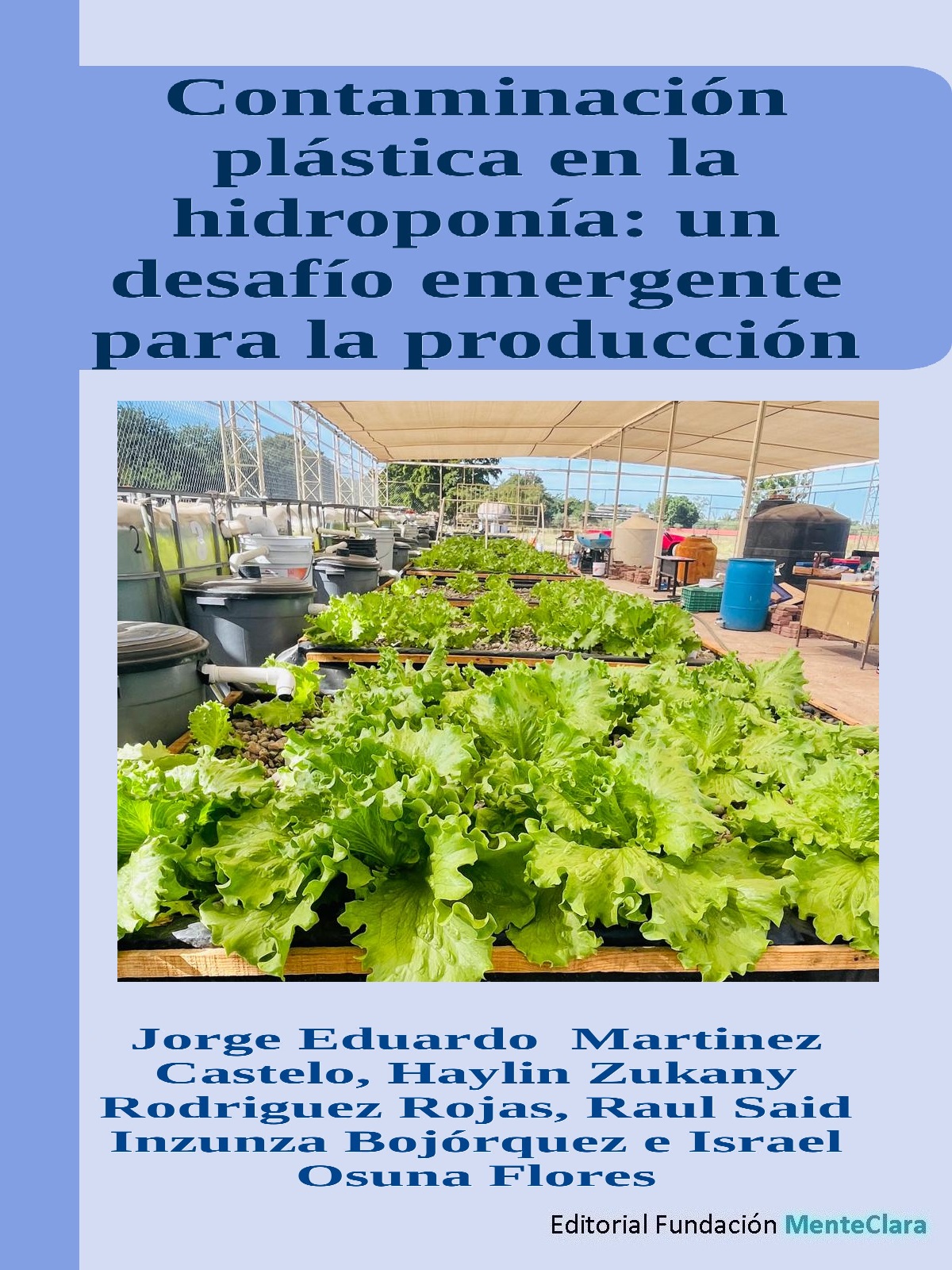
Contaminación plástica en la hidroponía: un desafío emergente para la producción agrícola sostenible
DOI:
https://doi.org/10.32351/rca.v11.459
Palabras clave:
Hidroponía, microplásticos, nanoplásticos, absorción vegetal, inocuidad alimentariaResumen
La hidroponía es un sistema productivo que es eficiente en agua y espacio, aunque la relación que guarda con materiales plásticos está generando liberación y acumulación de microplásticos (MP) y nanoplásticos (NP) en las soluciones nutritivas. Se analiza la contaminación por MP y NP en sistemas hidropónicos, las cuales incluyen fuentes de emisión, mecanismos de absorción vegetal, consecuencias fisiológicas e implicaciones para la inocuidad alimentaria. Se hizo una revisión bibliográfica de tipo analítico y descriptiva entre los años de 2020–2026, utilizando bases de datos mediante palabras clave en inglés y español. Los resultados muestran que los MP/NP se liberan principalmente de tuberías de PVC, tanques de HDPE, sustratos de poliuretano y agua contaminada. Partículas menores a 200 nm atraviesan tejidos radiculares por rutas apoplásticas y el modo crack-entry, y se trasladan por el xilema hacia órganos comestibles, como se ha confirmado en lechuga, tomate y rábano. Los efectos fisiológicos incluyen acumulación de ROS, peroxidación lipídica, secuestro de nutrientes (Fe, Zn, Cu) y reducción de biomasa. Además, los MP/NP actúan como vectores de ftalatos, bisfenol A, pesticidas y microorganismos patógenos. En México, se han documentado MP en acuíferos usados para riego, deposición atmosférica y alimentos. Se concluye que los sistemas hidropónicos, pese a su discurso de sostenibilidad, representan un posible vector de transferencia de MP/NP hacia la cadena alimentaria.
Descargas
Referencias
Adamczyk, S., Zantis, L. J., van Loon, S., van Gestel, C. A. M., Bosker, T., Hurley, R., Nizzetto, L., Adamczyk, B., y Velmala, S. (2024). Biodegradable microplastics induce profound changes in lettuce (Lactuca sativa) defense mechanisms and to some extent deteriorate growth traits. Environmental Pollution, 363, 125307. https://doi.org/10.1016/j.envpol.2024.125307
Armenta López, A. R., & Osuna Flores, I. (2026). Plasticultura en México: Impactos Ambientales y Desafíos para la Sostenibilidad. Revista Científica Arbitrada de la Fundación MenteClara, 11, 425. https://doi.org/10.32351/rca.v11.425
Bryant, M. T., Rossi, L., Mu, R., Cao, Z., y Ma, X. (2025). Synergistic effects of polystyrene nanoplastics and cadmium on the metabolic processes and their accumulation in hydroponically grown lettuce (Lactuca sativa). Journal of Agricultural and Food Chemistry, 73(26), 16157–16164. https://doi.org/10.1021/acs.jafc.5c03215
Caro-Martínez, D. M., Niño-Torres, C. A., Charruau, P., Rendón-von Osten, J., Castelblanco-Martínez, D. N., Rios Mendoza, L. M., Frausto-Martínez, O., y Blanco-Parra, M. del P. (2025). The state of microplastic pollution in México: A review and evolving perspectives. Science of the Total Environment, 988, 179772. https://doi.org/10.1016/j.scitotenv.2025.179772
European Commission. (2023). Microplastics pollution: Regulatory framework and research priorities. https://environment.ec.europa.eu/topics/plastics/microplastics_en
Flores-García, E. M., Ramírez-Romero, P., Muthuswamy-Ponniah, J., Lakshmi-Jeyakumar, S. S., y Muñoz-Nájera, M. A. (2026). Microplastics in groundwater of two rural communities in Mexico. Tecnología y Ciencias del Agua, 17(3), 55–99. https://doi.org/10.24850/j-tyca-2026-03-03
García-León, I., Guadarrama-Guzmán, P., Hernández-Ramírez, A. G., Martínez-Vázquez, A. V., Quiroz-Velásquez, J. D. C., y Estrada-Ortiz, K. S. (2026). Microplastic contamination in irrigation canals of a major agricultural region: A fluorescence-based monitoring study in Reynosa, Mexico. Environmental Monitoring & Assessment, 198(7). https://doi.org/10.1007/s10661-026-15563-z
González, O., Hernández, M., y Ramírez, J. (2021). Residuos agroplásticos generados por la agricultura protegida y su contaminación por plaguicidas. Bio Ciencias, 8, 1–15. https://doi.org/10.15741/338
Hassinger-Lino, G. R., Garcia, J., Maestro-Gaitán, I., Munoz, M., y Reguera, M. (2026). Ultrafine polystyrene nanoplastics penetrate roots and induce organelle damage and extensive transcriptomic reprogramming in Arabidopsis thaliana. Environmental Pollution, 403, 128382. https://doi.org/10.1016/j.envpol.2026.128382
Heinen, E., Cizdziel, J. V., Olubusoye, B. S., Moore, M. T., y Witthaus, L. M. (2026). Microplastic pollution in agricultural waters in the Mississippi Delta. Journal of Xenobiotics, 16(3), 81. https://doi.org/10.3390/jox16030081
Jia, L., Liu, L., Zhang, Y., Fu, W., Liu, X., Wang, Q., Tanveer, M., y Huang, L. (2023). Microplastic stress in plants: Effects on plant growth and their remediations. Frontiers in Plant Science, 14, 1226484. https://doi.org/10.3389/fpls.2023.1226484
Jiang, J.-J., Hanun, J. N., Chen, K.-Y., Hassan, F., Liu, K.-T., Hung, Y.-H., y Chang, T.-W. (2023). Current levels and composition profiles of microplastics in irrigation water. Environmental Pollution, 318, 120858. https://doi.org/10.1016/j.envpol.2022.120858
Jiang, M., Zhao, W., Liang, Q., Cai, M., Fan, X., Jiang, Y., Li, T., Wang, Y., Peng, C., y Liu, J. (2024). Advances in physiological and ecological effects of microplastic on crop. Journal of Soil Science and Plant Nutrition, 24(2), 1741–1760. https://doi.org/10.1007/s42729-024-01752-7
Kajal, S., y Thakur, S. (2024). Coexistence of microplastics and heavy metals in soil: Occurrence, transport, key interactions and effect on plants. Environmental Research, 262, 119960. https://doi.org/10.1016/j.envres.2024.119960
Kumar, V., Sharma, N., Umesh, M., Gupta, P., Sharma, P., Basheer, T., Dasarahally Huligowda, L. K., Thomas, J., Bhagat, S. K., y Pasrija, R. (2024). Microplastics in food: Occurrence, toxicity, green analytical detection methods and future challenges. Green Analytical Chemistry, 11, 100152. https://doi.org/10.1016/j.greeac.2024.100152
Kutralam-Muniasamy, G., Pérez-Guevara, F., Elizalde-Martínez, I., y Shruti, V. C. (2020). Branded milks – Are they immune from microplastics contamination? Science of the Total Environment, 714, 136823. https://doi.org/10.1016/j.scitotenv.2020.136823
Li, L., Luo, Y., Li, R., Zhou, Q., Peijnenburg, W. J. G. M., Yin, N., Yang, J., Tu, C., y Zhang, Y. (2020). Effective uptake of submicrometre plastics by crop plants via a crack-entry mode. Nature Sustainability, 3(11), 929–937. https://doi.org/10.1038/s41893-020-0567-9
Liu, H., y Chen, P. (2018). Microplastics in freshwater systems: A review on occurrence, environmental effects, and methods for microplastics detection. Water Research, 137, 362–374. https://doi.org/10.1016/j.watres.2017.12.056
Liu, Y., et al. (2023). Apoplastic and symplastic pathways of nanoplastic transport in plant roots. Plant, Cell & Environment, 46(8), 2456–2470. https://doi.org/10.1111/pce.14620
López-Pérez, M. E., Camarena-Martínez, S., y Reyes-Castro, S. (2026). Microplásticos en la agricultura: consecuencias para la salud del suelo y la seguridad de los alimentos cultivados. NaturaLEEza, 33(1). https://www.naturaleeza.ugto.mx/index.php/ntz/article/view/56
López-Velázquez, K., López-Sánchez, A., Castillo-Quevedo, C., y Cabellos-Quiroz, J. L. (2026). First evidence of microplastics in bottled water sold in Mexico. ChemRxiv. https://doi.org/10.26434/chemrxiv-2026-89bkg
Méndez, A., Pérez, L., y Soto, R. (2023). First insight into microplastic groundwater pollution in Latin America: The case of a coastal aquifer in Northwest Mexico. Environmental Science and Pollution Research, 30, 1–13. https://doi.org/10.1007/s11356-023-27461-9
Nizzetto, L., Binda, G., Hurley, R., Baann, C., Selonen, S., Velmala, S., y van Gestel, C. A. M. (2024). The pathology of hype, hyperbole and publication bias is creating an unwarranted concern towards biodegradable mulch films, Journal of Hazardous Materials, 471, 133690. https://doi.org/10.1016/j.jhazmat.2024.133690
Peralta-Peláez, L. A., et al. (2023). Microplásticos en playas de la zona de influencia del Parque Nacional Sistema Arrecifal Veracruzano, México. Hidrobiológica, 33(2), 231–242. https://doi.org/10.24275/khdd6042
Qi, Y., Yang, X., Pelaez, A. M., Lwanga, E. H., Beriot, N., Gertsen, H., Garbeva, P., y Geissen, V. (2018). Macro- and micro-plastics in soil-plant system: Effects of plastic mulch film residues on wheat growth. Science of the Total Environment, 645, 1048–1056. https://doi.org/10.1016/j.scitotenv.2018.07.229
Rillig, M. C., Lehmann, A., de Souza Machado, A. A., y Yang, G. (2019). Microplastic effects on plants. New Phytologist, 223(3), 1066–1070. https://doi.org/10.1111/nph.15794
Roy, T., Dey, T. K., y Jamal, M. (2023). Microplastic/nanoplastic toxicity in plants: an imminent concern. Environmental monitoring and assessment, 195(1), 27. https://doi.org/10.1007/s10661-022-10654-z
Roy, R., Hossain, A., Sultana, S., Deb, B., Ahmod, M. M., & Sarker, T. (2024). Microplastics increase cadmium absorption and impair nutrient uptake and growth in red amaranth (Amaranthus tricolor L.) in the presence of cadmium and biochar. BMC Plant Biology, 24, Article 608. https://doi.org/10.1186/s12870-024-05312-0
Shruti, V. C., Kutralam-Muniasamy, G., Pérez-Guevara, F., Roy, P. D., y Martínez, I. E. (2022). Occurrence and characteristics of atmospheric microplastics in Mexico City. Science of The Total Environment, 847, 157601. https://doi.org/10.1016/j.scitotenv.2022.157601
Sun, L., Wang, X., Zhao, H., Wang, Z., Zhao, Y., Huang, H., Yang, R., Wang, S., y Zhao, W. (2023). Micro/nanoplastics: A potential threat to crops. Vegetable Research, 3, Article 18. https://doi.org/10.48130/VR-2023-0018
Sun, X., Li, W., Pan, J., Jia, T., Chen, J., Zhou, Y., Li, R., Qin, M., Liu, Z., García-Caparrós, P., Liu, P., Shi, Q., y Yu, T. (2025). Visual tracking and quantitative analysis of polystyrene nanoplastics uptake and transport across various tomato varieties. Journal of Agricultural and Food Chemistry, 73(51). https://doi.org/10.1021/acs.jafc.5c13778
Taiz, L., Zeiger, E., Møller, I. M., y Murphy, A. (2015). Plant physiology and development (6th ed.). Sinauer Associates.
Wang, W., Ge, J., Yu, X., & Li, H. (2020). Environmental fate and impacts of microplastics in soil ecosystems: Progress and perspective. Science of the Total Environment, 708, Article 134841. https://doi.org/10.1016/j.scitotenv.2019.134841
WHO. (2023). Dietary and inhalation exposure to nano- and microplastic particles and potential implications for human health. World Health Organization. https://www.who.int/publications/i/item/9789240054608
Yu, J., Chen, J., Li, Q., Ren, P., Tang, Y., Huang, R., Lu, Y., y Chen, K. (2024). Toxicity and fate of cadmium in hydroponically cultivated lettuce (Lactuca sativa L.) influenced by microplastics. Ecotoxicology and Environmental Safety, 278, 116422. https://doi.org/10.1016/j.ecoenv.2024.116422
Zantis, L. J., Borchi, C., Vijver, M. G., Peijnenburg, W., Di Lonardo, S., y Bosker, T. (2023). Nano- and microplastics commonly cause adverse impacts on plants at environmentally relevant levels: A systematic review. Science of the Total Environment, 867, 161211. https://doi.org/10.1016/j.scitotenv.2022.161211
Zhang, X., Lin, T., y Wang, X. (2022). Investigation of microplastics release behavior from ozone-exposed plastic pipe materials. Environmental Pollution, 296, 118758. https://doi.org/10.1016/j.envpol.2021.118758
Zubair, M., Ahmad, S., Zhao, X., y Ge, L. (2026). Microplastics and nanoplastics in agricultural and horticultural crops: Uptake pathways, multilevel responses, and challenges for risk assessment. Horticultural Plant Journal. Advance online publication. https://doi.org/10.1016/j.hpj.2026.06.001
Publicado
Número
Sección
Licencia
Derechos de autor 2026 Revista Científica Arbitrada de la Fundación MenteClara

Esta obra está bajo una licencia internacional Creative Commons Atribución 4.0.
Los autores que publican en esta revista están de acuerdo con los siguientes términos:
- Los autores publican bajo una licencia de Creative Commons Reconocimiento 4.0 Internacional que permite a otros compartir el trabajo con un reconocimiento de la autoría del trabajo y la publicación inicial en esta revista.
- Se permite y se anima a los autores, quienes conservan sus derechos luego de la publicación, a difundir sus trabajos electrónicamente (por ejemplo, en repositorios institucionales o en su propio sitio web) antes y durante el proceso de envío, ya que puede dar lugar a intercambios productivos, así como a una citación más temprana y mayor de los trabajos publicados (Véase The Effect of Open Access).

Desde el 1º de noviembre de 2018 todos los artículos de esta revista están disponibles bajo una licencia de Creative Commons Reconocimiento 4.0 Internacional.
Cómo citar





 Consultar