POST-TRAUMATIC STRESS AND GROWTH DURING THE COVID-19 PANDEMIC
DOI:
https://doi.org/10.32351/rca.v7.306
Keywords:
posttraumatic stress, post-traumatic growth, Covid-19, pandemicAbstract
From the emergence of Covid-19, humanity had to face changes in which the health and life of itself and loved ones were put at stake. This historical fact translated into a traumatic situation worldwide that affected issues related to mental health. In this work, the effects of the pandemic in different sectors of society will be surveyed, both the adverse effects —such as post-traumatic stress— and the possible positive consequences that the fact of going through a situation of these characteristics can generate in people —the growth post-traumatic—. With this objective, a theoretical investigation was carried out on articles in scientific databases. They showed that there are factors associated with developing post-traumatic stress such as low social support, working in unsafe places with great workload, social disconnection, losing a loved one, having economic losses, anxiety and psychiatric history; however, there are also factors that predispose people to experience post-traumatic growth, such as receiving support from friends and family, compassion and social security, having positive beliefs and exercising deliberate rumination. The importance of these findings lies in the possibility of alleviating the negative consequences of the traumatic situations generated by the pandemic and of generating conditions that favor the positive ones.Downloads
References
Carson, J., Gunda, A., Qasim, K., Allen, R., Bradley, M., & Prescott, J. (2021). Losing a Loved One During the Covid-19 Pandemic: An On-Line Survey Looking at the Effects on Traumatic Stress, Coping and Post-Traumatic Growth. Omega (Westport). Retrieved from https://pubmed.ncbi.nlm.nih.gov/34637339/
d’Ettorre, G., Ceccarelli , G., Santinelli, L., Vassalini, P., Innocenti, G. P., Alessandri, F., . . . Tarsitani, L. (2021). Post-Traumatic Stress Symptoms in Healthcare Workers Dealing with the COVID-19 Pandemic: A Systematic Review. Int. J. Environ. Res. Public Health, 18(2), 601. doi:10.3390/ijerph18020601
Ikizer, G., Karancia, A. N., Gul, E., & Dilekler, I. (2021). Post-traumatic stress, growth, and depreciation during the COVID-19 pandemic: evidence from Turkey. European Journal of Psychotraumatology, 1(12). doi:10.1080/20008198.2021.1872966
Janiri, D., Carfì, A., Kotzalidis, G. D., Bernabei, R., Landi, F., & Sani, G. (2021). Posttraumatic Stress Disorder in Patients After Severe COVID-19 Infection. JAMA Psychiatry, 5(78), 567-569. doi:10.1001/jamapsychiatry.2021.0109
Kaseda, E. T., & Levine, J. A. (2020). Post-traumatic stress disorder: A differential diagnostic consideration for COVID-19 survivors. The Clinical Neuropsychologist(34), 7-8. doi:10.1080/13854046.2020.1811894
Matos, M., McEwan, K., Kanovský, M., Halamová, J., Steindl, S. R., Ferreira, N., . . . Gilbert, P. (2021). The role of social connection on the experience of COVID-19 related post-traumatic growth and stress. PLOS ONE, 12(16). doi:https://doi.org/10.1371/journal.pone.0261384
Park, C., Wilt, J. A., Russell, B. S., & Fendrich, M. (2022). Does perceived post-traumatic growth predict better psychological adjustment during the COVID-19 pandemic? Results from a national longitudinal survey in the USA. Journal of Psychiatric Research, 146, 179-185. doi:https://doi.org/10.1016/j.jpsychires.2021.12.040
Peng, X., Zhao, H., Yang, Y., Rao, Z.-l., Hu, D., & He, Q. (2021). Post-traumatic Growth Level and Its Influencing Factors Among Frontline Nurses During the COVID-19 Pandemic. Frontiers in Psychiatry, 12. doi: https://doi.org/10.3389/fpsyt.2021.632360
Taku, K., Tedeschi, R. G., Shakespeare-Finch, J., Krosch, D., David, G., Kehl, D., . . . G. Calhoun, L. (2021). Posttraumatic growth (PTG) and posttraumatic depreciation (PTD) across ten countries: Global validation of the PTG-PTDtheoretical model. Personality and Individual Differences, 169. doi:https://doi.org/10.1016/j.paid.2020.110222
Tedeschi, R. G., & Calhoun , L. G. (1996). The Posttraumatic Growth Inventory: Measuring the positive legacy of trauma. Journal of Traumatic Stress, 9, 455-471. doi:10.1007/BF02103658
Vazquez, C., Valiente, C., García, F. E., Contreras, A., Peinado, V., Trucharte, A., & Bentall , R. P. (2021). Post-Traumatic Growth and Stress-Related Responses During the COVID-19 Pandemic in a National Representative Sample: The Role of Positive Core Beliefs About the World and Others. Journal of Happiness Studies, 22, 2915–2935. doi:https://doi.org/10.1007/s10902-020-00352-3
Yan, S., Yang, J., Ye, M., Chen, S., Xie, C., Huang, J., & Liu, H. (2021). Post-traumatic Growth and Related Influencing Factors in Discharged COVID-19 Patients: A Cross-Sectional Study. Frontiers in Psychology. doi: https://doi.org/10.3389/fpsyg.2021.658307
Estadísticas de lectura: 2064
Descargas: PDF (SPANISH) 773 - HTML (SPANISH) 579 - XML (SPANISH) 344 - EPUB (SPANISH) 303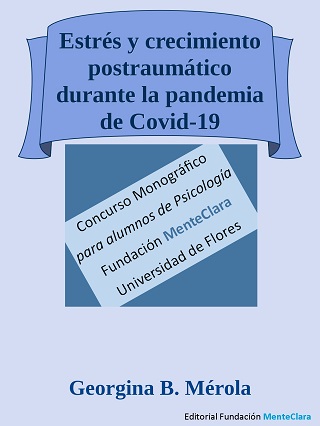
Published
Issue
Section
License
Authors who publish in this journal agree with the following terms:
a. Authors publish under a Creative Commons Acknowledgment 4.0 International license that allows others to share the work with an authorship acknowledgment of the work and the initial publication in this journal.
b. Authors, who retain their rights after publication, are allowed and encouraged to disseminate their work electronically (for example, in institutional repositories or on their own website) before and during the submission process, as it may result in productive exchanges as well as earlier and greater citations of published works (See The Effect of Open Access).
 Since November 1st, 2018, all articles published in this journal are available under a Creative Commons Acknowledgment 4.0 International license.
How to Cite





 View the