“NEURO” TERRITORY: TENSIONS AND PATHWAYS TOWARD WELL-BEING AND SOCIAL COHESION
DOI:
https://doi.org/10.32351/rca.v11.435
Keywords:
neurodiversity, public policy, social cohesion, territory, well-beingAbstract
In contexts where territorial inequality and bodily and cognitive norms shape access to resources, opportunities, and legitimate forms of participation, it is necessary to examine how space contributes to the exclusion of autistic people. This theoretical article develops a critical reflection and proposes the notion of “neuro territory” as a tool for analyzing the relationship between the production of space, well-being, social cohesion, and neurodiversity. Through an interdisciplinary analysis of literature on territory, disability, neurodiversity, and public policy, with particular attention to the Chilean context, the article brings together socio-relational, decolonial, and critical perspectives. The analysis shows that planning, territorial design, and public policy reproduce neurotypical criteria of habitability that create material, sensory, symbolic, and participatory barriers. It argues that inclusion cannot be reduced to technical adjustments but requires questioning the norms that hierarchize ways of perceiving, communicating, and inhabiting space. The notion of “neuro territory” provides a framework for recognizing neurodiversity as a constitutive dimension of social life and for guiding the development of territories grounded in sensory accessibility, meaningful participation, universal design, and approaches that move beyond paternalistic assistance.
Palabras Claves: bienestar; cohesión social; neurodiversidad; políticas públicas; territorio.
Keywords: neurodiversity; public policy; social cohesion; territory; well-being.
Downloads
References
Atkinson, S., Bagnall, A.-M., Corcoran, R., South, J., & Curtis, S. (2020). Being well together: Individual subjective and community wellbeing. Journal of Happiness Studies, 21(5), 1903–1921. https://doi.org/10.1007/s10902-019-00146-2
Bagatell, N. (2007). Orchestrating voices: Autism, identity and the power of discourse. Disability & Society, 22(4), 413–426. https://doi.org/10.1080/09687590701337967
Botha, M. (2020). Autistic community connectedness as a buffer against the effects of minority stress [Doctoral dissertation, University of Surrey]. https://doi.org/10.15126/THESIS.00854098
Botha, M., & Frost, D. M. (2020). Extending the minority stress model to understand mental health problems experienced by the autistic population. Society and Mental Health, 10(1), 20–34. https://doi.org/10.1177/2156869318804297
Botha, M., Hanlon, J., & Williams, G. L. (2023). Does language matter? Identity-first versus person-first language use in autism research. Journal of Autism and Developmental Disorders, 53(2), 870–878. https://doi.org/10.1007/s10803-020-04858-w
Boys, J. (Ed.). (2017). Disability, space, architecture: A reader. Routledge.
Campbell, F. K. (2009). Contours of ableism: The production of disability and abledness. Palgrave Macmillan.
Casaú Guirao, A., Hernández Garre, J. M., & de Maya Sánchez, B. (2021). El cuerpo negado: Discapacidad como pretexto de la no-existencia. Antropología Experimental, 20, 405–417. https://doi.org/10.17561/rae.v20.30
Castillo, G. (2020). El territorio como apropiación sociopolítica del espacio: Entre la desterritorialización y la multiterritorialidad. Investigaciones Geográficas, (103), 1–17. https://doi.org/10.14350/rig.60127
Edwards, C., Love, A. M. A., Cai, R. Y., Tutton, T., Beardsley, E., & Gibbs, V. (2025). Autistic-led insights on airport accessibility: A retrospective analysis of environmental assessments. Autism, 29(8), 2151–2162. https://doi.org/10.1177/13623613251337200
Fraser, N. (2000). Rethinking recognition. New Left Review, 3, 107–120. https://newleftreview.org/issues/ii3/articles/nancy-fraser-rethinking-recognition
Giménez, G. (2005). Territorio e identidad: Breve introducción a la geografía cultural. Trayectorias, 7(17), 8–24. https://www.redalyc.org/articulo.oa?id=60722197004
Haesbaert, R. (2013). Del mito de la desterritorialización a la multiterritorialidad. Cultura y Representaciones Sociales, 8(15), 9–42. https://www.culturayrs.unam.mx/index.php/CRS/article/view/401
Harvey, D. (2003). Espacios de esperanza (C. Piña Aldao, Trad.). Akal.
Imrie, R. (1996). Disability and the city: International perspectives. Paul Chapman Publishing.
Imrie, R. (2012). Universalism, universal design and equitable access to the built environment. Disability & Rehabilitation, 34(10), 873–882. https://doi.org/10.3109/09638288.2011.624250
Kitchin, R. (1998). ‘Out of place’, ‘knowing one’s place’: Space, power and exclusion of disabled people. Disability & Society, 13(3), 343–356. https://doi.org/10.1080/09687599826678
Lefebvre, H. (2013). La producción del espacio. Capitán Swing.
Ley N.º 21.545. Establece la promoción de la inclusión, la atención integral y la protección de los derechos de las personas con trastorno del espectro autista en el ámbito social, de salud y educación. (2023). Diario Oficial de la República de Chile. https://www.bcn.cl/leychile/navegar?idNorma=1190123
Llanos-Hernández, L. (2010). El concepto del territorio y la investigación en ciencias sociales. Agricultura, Sociedad y Desarrollo, 7(3), 207–220. https://www.scielo.org.mx/scielo.php?script=sci_arttext&pid=S1870-54722010000300001
Lugones, M. (2008). Colonialidad y género. Tabula Rasa, (9), 73–101. https://doi.org/10.25058/20112742.340
Maldonado-Torres, N. (2007). On the coloniality of being: Contributions to the development of a concept. Cultural Studies, 21(2–3), 240–270. https://doi.org/10.1080/09502380601162548
Meyer, I. H. (2003). Prejudice, social stress, and mental health in lesbian, gay, and bisexual populations: Conceptual issues and research evidence. Psychological Bulletin, 129(5), 674–697. https://doi.org/10.1037/0033-2909.129.5.674
Milner, P., & Kelly, B. (2009). Community participation and inclusion: People with disabilities defining their place. Disability & Society, 24(1), 47–62. https://doi.org/10.1080/09687590802535410
Milton, D. E. M. (2012). On the ontological status of autism: The ‘double empathy problem’. Disability & Society, 27(6), 883–887. https://doi.org/10.1080/09687599.2012.710008
Morales, C., Pérez, R., Riffo Pérez, L., & Williner, A. (2021). Desarrollo territorial sostenible y nuevas ciudadanías: Consideraciones sobre políticas públicas para un mundo en transformación. Comisión Económica para América Latina y el Caribe. https://www.cepal.org/es/publicaciones/46579-desarrollo-territorial-sostenible-nuevas-ciudadanias-consideraciones-politicas
Nussbaum, M. C. (2012). Crear capacidades: Propuesta para el desarrollo humano. Paidós.
Pellicano, E., Dinsmore, A., & Charman, T. (2014). What should autism research focus upon? Community views and priorities from the United Kingdom. Autism, 18(7), 756–770. https://doi.org/10.1177/1362361314529627
Programa de las Naciones Unidas para el Desarrollo. (2021). Plan estratégico del PNUD 2022–2025. https://www.undp.org/sites/g/files/zskgke326/files/2021-10/UNDP-Strategic-Plan-2022-2025-SP.pdf
Robertson, A. E., & Simmons, D. R. (2015). The sensory experiences of adults with autism spectrum disorder: A qualitative analysis. Perception, 44(5), 569–586. https://doi.org/10.1068/p7833
Robertson, S. M., & Ne’eman, A. D. (2008). Autistic acceptance, the college campus, and technology: Growth of neurodiversity in society and academia. Disability Studies Quarterly, 28(4). https://doi.org/10.18061/dsq.v28i4.146
Runswick-Cole, K. (2014). ‘Us’ and ‘them’: The limits and possibilities of a ‘politics of neurodiversity’ in neoliberal times. Disability & Society, 29(7), 1117–1129. https://doi.org/10.1080/09687599.2014.910107
Santos, M. (2000). La naturaleza del espacio: Técnica y tiempo, razón y emoción. Ariel. https://hdl.handle.net/20.500.12365/17634
Segato, R. L. (2018). Contra-pedagogías de la crueldad. Prometeo Libros.
Sen, A. (2000). Desarrollo y libertad. Planeta.
Soja, E. W. (2010). Seeking spatial justice. University of Minnesota Press.
Steinfeld, E., & Maisel, J. (2012). Universal design: Creating inclusive environments. Wiley.
Suazo Paredes, B. (2021). Lo político desde lo común en organizaciones del campo discapacidad: El caso del Colectivo Autismo Chile entre 2011 y 2019 [Tesis de magíster, Universidad de Chile]. Repositorio Académico de la Universidad de Chile. https://repositorio.uchile.cl/handle/2250/189946
Tajfel, H., & Turner, J. C. (1979). An integrative theory of intergroup conflict. In W. G. Austin & S. Worchel (Eds.), The social psychology of intergroup relations (pp. 33–47). Brooks/Cole.
Walker, N. (2021). Neuroqueer heresies: Notes on the neurodiversity paradigm, autistic empowerment, and postnormal possibilities. Autonomous Press.
Walsh, C. (Ed.). (2013). Pedagogías decoloniales: Prácticas insurgentes de resistir, (re)existir y (re)vivir (Tomo I). Ediciones Abya-Yala.
Young, I. M. (2000). Inclusion and democracy. Oxford University Press.
Estadísticas de lectura: 113
Descargas: PDF (SPANISH) 36 - HTML (SPANISH) 14 - XML (SPANISH) 2 - EPUB (SPANISH) 5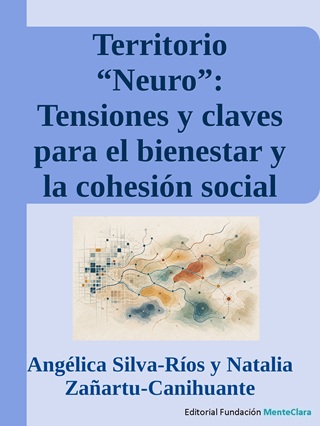
Published
Issue
Section
License
Copyright (c) 2026 MenteClara Foundation’s Peer-reviewed Journal

This work is licensed under a Creative Commons Attribution 4.0 International License.
Authors who publish in this journal agree with the following terms:
a. Authors publish under a Creative Commons Acknowledgment 4.0 International license that allows others to share the work with an authorship acknowledgment of the work and the initial publication in this journal.
b. Authors, who retain their rights after publication, are allowed and encouraged to disseminate their work electronically (for example, in institutional repositories or on their own website) before and during the submission process, as it may result in productive exchanges as well as earlier and greater citations of published works (See The Effect of Open Access).
 Since November 1st, 2018, all articles published in this journal are available under a Creative Commons Acknowledgment 4.0 International license.
How to Cite





 View the