Infidelity: Main Characteristics and Dynamics of an Extradyadic Relationship. A Systematic Review
DOI:
https://doi.org/10.32351/rca.v11.415
Keywords:
couple, lover, unfaithfulAbstract
Infidelity is the breach of an agreement of sexual or emotional exclusivity within a monogamous romantic relationship. This study conducted a Systematic Review aimed at examining and synthesizing scientific evidence on the main individual and relational characteristics of extradyadic relationships. The PRISMA method was used, with searches in databases such as Scielo, Redalyc, PubMed, Dialnet, and Science Direct, for articles published between 2005 and 2025.
Results from 19 units of analysis (n = 2399 UF) described characteristics of infidelity in both men and women. An important finding is that infidelity often occurs in negative relational contexts, but it can also be understood as an expression of freedom and empowerment. Additionally, the study highlights an empirical gap regarding the characteristics of lovers who maintain relationships with married individuals.
Downloads
References
Aguilar, Y. P., Valdez Medina, J. L., González Arratia, N. I., & González, S. (2013). Los roles de género de los hombres y las mujeres en el México contemporáneo. Enseñanza e Investigación en Psicología, 18(2), 207–224. https://www.redalyc.org/pdf/292/29228336001.pdf
Agunbiade, O. M., & Gilbert, L. (2020). “The night comes early for a woman”: Menopause and sexual activities among urban older Yoruba men and women in Ibadan, Nigeria. J Women Aging, 32(5), 491–516. https://doi.org/10.1080/08952841.2019.1593772
Allan, G. (2004). Being unfaithful: His and her affairs. En J Duncombe, K. Harrison, G, Allan, & D. Marsden (Eds.), The state of affairs: Explorations in infidelity and commitment (pp. 170-199). New Jersey: Erlbaum
Arent, M., (2009). (In)fidelidade feminina: entre a fantasia e a realidade. Psicologia Clínica, 21(1), 153-167. https://www.redalyc.org/pdf/2910/291022019011.pdf
Balenciaga, I. (2013). La figura de la persona amante en la infidelidad: la otra cara del narcisismo. En Retratos ocultos. Psicología de la infidelidad. Terapia (pp.189-220). Círculo Rojo
Barta, W. D., & Kiene, S. M. (2005). Motivations for infidelity in heterosexual dating couples: The roles of gender, personality differences, and sociosexual orientation. Journal of Social and Personal Relationships, 22(3), 339–360.
Ben-Ze’ev, A. (2004). Love Online. Emotions on Internet. Cambridge University Press.
Bernstein, E. (2007). Temporarily Yours: Intimacy, Authenticity, and the Commerce of Sex. The University of Chicago Press.
Buss, D. M. (1994). The evolution of desire: Strategies of human mating. Basic Books.
Buss, D. (2005). La evolución del deseo: estrategias del emparejamiento humano. Alianza.
Butzer, B., & Campbell, L. (2008). Adult attachment, sexual satisfaction, and relationship satisfaction: A study of married couples. Personal Relationships, 15, 141–154. https://doi.org/10.1111/j.1475-6811.2007.00189.x
Camacho, J. (2004). Fidelidad e infidelidad en las relaciones de pareja. Buenos Aires. https://www.fundacionforo.com/uploads/pdfs/archivo42.pdf
Campbell, J. T., Viegas de Moraes Leme, L. F., & Gesselman, A. N. (2025). Infidelity among parents in committed relationships during the COVID-19 pandemic. PLOS ONE, 20(8), e0329015. https://doi.org/10.1371/journal.pone.0329015
Caton, N. R., & Horan, S. M. (2019). Deceptive Affectionate Messages: Mate Retention Deployed Under the Threat of Partner Infidelity. Evol Psychol, 17(3), 1474704919867902. https://doi.org/10.1177/147470491986790
Coop Gordon, K., & Mitchell, E. A. (2020). Infidelity in the time of COVID-19. Family Process, 59(3), 956–966. https://europepmc.org/backend/ptpmcrender.fcgi?accid=PMC7361516&blobtype=pdf
DeWall, C. N., Lambert, N. M., Slotter, E. B., Pond Jr., R. S., Deckman, T., Finkel, E. J., Fincham, F. D., et al. (2011). So far away from one’s partner, yet so close to romantic alternatives. Journal of Personality and Social Psychology, 101, 1302–1316. https://psycnet.apa.org/buy/2011-22079-001
De Weiss, S. P., Díaz-Loving, R., & Palos, P. A. (2014). Conducta sexual, infidelidad y amor en relación a sexo, edad y número de años de la relación. V Lustros de Investigación en la Psicología Social en México, 105. https://www.researchgate.net/profile/Rolando-Loving/publication/333855782_V_Lustros_de_investigacion_en_la_Psicologia_Social_en_Mexico/links/5d092fad458515ea1a70986d/V-Lustros-de-investigacion-en-la-Psicologia-Social-en-Mexico.pdf#page=120
Drigotas, S. M., Safstrom, C. A., & Gentilia, T. (1999). An investment model prediction of dating infidelity. Journal of Personality and Social Psychology, 77(3), 509–524. https://doi.org/10.1037/0022-3514.77.3.509
Escudero, J. M. M. (2015). La responsabilidad civil extracontractual por daños morales en la relación conyugal. REDUR(13), 111–128. https://dialnet.unirioja.es/servlet/articulo?codigo=5365492
Figueredo, A. J., Kirsner, B. R., & Tal, I. (2002). Amigos y amantes: los valores relativos de trueque de diferentes tipos de compañeros en el intercambio social. Actualidades en Psicología, 18(105), 25–32. https://www.redalyc.org/comocitar.oa?id=133218158002
Fincham, F. D., & May, R. W. (2017). Infidelity in romantic relationships. Current Opinion in Psychology, 13, 70–74. https://doi.org/10.1016/j.copsyc.2016.03.008
Fisher, H. (1992). Anatomy of love: The natural history of monogamy, adultery, and divorce. W. W. Norton.
Fuentes Cuiñas, A. A. (2013). Percepción de la infidelidad en el Área Metropolitana de Buenos Aires. V Congreso Internacional de Investigación y Práctica Profesional en Psicología. Facultad de Psicología, Universidad de Buenos Aires. https://www.researchgate.net/profile/Alejandra-Fuentes-Cuinas/publication/280683878_Infidelidad_-_Congreso_UBA/links/55c1304f08aed621de1541f3/Infidelidad-Congreso-UBA.pdf
García, M. C. (2021). Entre la familia y el amor. REIS: Revista Española de Investigaciones Sociológicas, (175), 47–62. https://dialnet.unirioja.es/servlet/articulo?codigo=7985835
Giusti, E. (1982). El arte de separarse. Alhambra Mexicana.
Grant, M. J., & Booth, A. (2009). A typology of reviews: An analysis of 14 review types and associated methodologies. Health Information & Libraries Journal, 26(2), 91–108.
Harris, M. (1989). Our kind: The evolution of human life and culture. Harper & Row.
Horan, S. M., & Dillow, M. R. (2009). Deceivers and emotion: The relationships among deceptive message type, relational qualities, and guilt and shame. Atlantic Journal of Communication, 17(4), 149-165. https://doi.org/10.1080/15456870903156126
Hurtado Cáceres, E. L. (2024). Trabajo, socioafectividad, poder y cuerpo: Aproximaciones a las relaciones de sugar daddies y sugar babies en Bogotá [Tesis doctoral. Universidad de Rosario]. Archivo digital. https://repository.urosario.edu.co/server/api/core/bitstreams/ff4d572d-651a-4f6e-bc41-e674f5ce7fbf/content
Knopp, K., Scott, S., Ritchie, L., Rhoades, G. K., Markman, H. J., & Stanley, S. M. (2017). Once a Cheater, Always a Cheater? Serial Infidelity Across Subsequent Relationships. Arch Sex Behav, 46(8), 2301–2311. https://doi.org/10.1007/s10508-017-1018-1
Kobak, R. D., & Hazan, C. (1991). Attachment in marriage. Journal of Personality and Social Psychology, 60, 861–869.
Lamprinakos, G., Santos, D., Stavraki, M., Brinol, P., Magrizos, S., & Petty, R. E. (2024). Power can increase but also decrease cheating depending on what thoughts are validated. Journal of Experimental Social Psychology, 111. https://www.sciencedirect.com/science/article/pii/S002210312300135X?via%3Dihub
Lawson (1988). Adultery: An analysis of love and betrayal. Nueva York, Nueva York: Basic Books.
Lemaire (1986). La pareja humana: su vida, su muerte, su estructura. Fondo de Cultura Económica.
Li, T., & Chan, D. K.-S. (2012). How anxious and avoidant attachment affect romantic relationship quality. European Journal of Social Psychology, 42, 406–419. https://doi.org/10.1002/ejsp.1842
Liu, N., Lu, Z., & Xie, Y. (2021). Factors affecting the public acceptance of extramarital sex in China. International Journal of Environmental Research and Public Health, 18(11), 5767. https://doi.org/10.3390/ijerph18115767
Luke, N. (2005). Confronting the “sugar daddy” stereotype: age and economic asymmetries and risky sexual behavior in urban Kenya. Int Fam Plan Perspect, 31(1), 6–14. https://doi.org/10.1363/3100605
Mairal, J. B. (2015). Una forma de dependencia emocional: el “síndrome de Fortunata”. Papeles del Psicólogo, 36(2), 145–152. https://www.redalyc.org/articulo.oa?id=77839628008
Maddox Shaw, A. M., Rhoades, G. K., Allen, E. S., Stanley, S. M., & Markman, H. J. (2013). Predictors of extradyadic sexual involvement in unmarried opposite-sex relationships. J Sex Res, 50(6), 598–610. https://doi.org/10.1080/00224499.2012.666816
Macedo, M. V. (2014). Estudio sobre infidelidad en la pareja. Alternativas en Psicología, 6(30), 36–49. https://pepsic.bvsalud.org/pdf/alpsi/v18n30/n30a03.pdf
Martins, A., Pereira, M., Andrade, R., Dattilio, F. M., Narciso, I., & Canavarro, M. C. (2016). Infidelity in dating relationships. Archives of Sexual Behavior, 45, 193–205. https://link.springer.com/article/10.1007/s10508-015-0576-3
Mayorga Zapata, D. S. (2015). Rasgos de personalidad y su influencia en la infidelidad [Tesis de grado. Universidad Técnica de Ambato]
Methley, A. M., Campbell, S., Chew-Graham, C., McNally, R., & Cheraghi-Sohi, S. (2014). PICO, PICOS and SPIDER: A comparison study of specificity and sensitivity in three search tools for qualitative systematic reviews. BMC Health Services Research, 14, 579. https://doi.org/10.1007/s10508-015-0576-3
McNulty, J. K., & Widman, L. (2014). Sexual narcissism and infidelity in early marriage. Archives of Sexual Behavior, 43(7), 1315–1325. https://doi.org/10.1007/s10508-014-0282-6
Mitchell, S. (2003). Can love last? The fate of romance over time. W. W. Norton & Co.
Olson, M. M., Russell, C. S., Kessler, M. H., & Miller, R. B. (2002). Emotional processes following disclosure of an extramarital affair. Journal of Marital and Family Therapy, 28, 423–435. https://doi.org/10.1111/j.1752-0606.2002.tb00367.x
Page, M. J., McKenzie, J. E., Bossuyt, P. M., Boutron, I., Hoffmann, T. C., Mulrow, C. D., Shamseer, L., Moher, D. (2021). The PRISMA 2020 statement: An updated guideline for reporting systematic reviews. BMJ, 372(71). https://doi.org/10.1136/bmj.n7
Pollet, T. V., & Saxton, T. K. (2020). Jealousy as a function of rival characteristics. Personality and Social Psychology Bulletin. https://doi.org/10.1177/0146167220904512
Proaño Landázuri, S. M., & Villagómez Vega, M. D. (2015). Factores que influyen en la satisfacción sexual de las mujeres postmenopáusicas atendidas en consulta externa de ginecología y medicina interna del hospital de Especialidades Eugenio Espejo en los meses de septiembre y octubre del 2015 [Tesis de doctorado. Universidad Católica del Ecuador]. Archivo digital. https://repositorio.puce.edu.ec/server/api/core/bitstreams/f9a70ef2-2102-4940-a888-a69e78610f35/content
Punset, E. (2007). El viaje al amor. Destino.
Rodríguez Morales, Z. I. (2024). Extraconyugalidad y emociones en parejas adultas de Colima y Guadalajara: un abordaje cuantitativo. Estudios Sociológicos, 42. https://www.redalyc.org/journal/598/59877640047/
Romero, S., Rivera, R., & Díaz-Loving, R. (2007). Desarrollo del Inventario Multidimensional de Infidelidad (IMIN). Revista Iberoamericana de Diagnóstico y Evaluación en Psicología, 23(1), 121–148. https://www.redalyc.org/pdf/4596/459645446008.pdf
Romero, A, García, M y Cruz, C (2012). Perspectiva femenina de la infidelidad. La psicología social en México. XIV, 403-407.
Rosalvo, M. Z. (1979). A mulher, a cultura e a sociedade: uma revisão teórica. A mulher, a cultura e a sociedade. Rio de Janeiro: Paz e Terra, 33-64.
Rother, E. T. (2007). Revisión sistemática X Revisión narrativa. Acta Paulista de Enfermagem, 20, v–vi. https://doi.org/10.1590/S0103-21002007000200001
Russell, V. M., Baker, L. R., & McNulty, J. K. (2013). Attachment insecurity and infidelity in marriage: Do studies of dating relationships really inform us about marriage? Journal of Family Psychology, 27(2), 242–251. https://doi.org/10.1037/a0032118
Selterman, D., Joel, S., & Dale, V. (2023). No Remorse: Sexual Infidelity Is Not Clearly Linked with Relationship Satisfaction or Well-Being in Ashley Madison Users. Arch Sex Behav, 52(6), 2561–2573. https://doi.org/10.1007/s10508-023-02573-y
Sternberg R. El triángulo del amor. (1989). Paidos.
Sternberg, R. (2000). La experiencia del amor. Paidós.
Swidler, A. (2001). Talk of love: How culture matters. University of Chicago Press.
Tagler, M. J., & Jeffers, H. M. (2013). Sex differences in attitudes toward partner infidelity. Evol Psychol, 11(4), 821–832. https://doi.org/10.1177/147470491301100407
Tan, S. A., Ang, S. M., Pung, P. W., Teoh, X. Y., & Ooh, S. L. (2025). Sex life dissatisfaction contributes to intention toward infidelity among Malaysians: Relationship satisfaction as a mediator. BMC Psychology, 13(1), 68. https://doi.org/10.1186/s40359-025-02414-8
Thompson, A. P. (1983). Extramarital sex: A review of the research literature. Journal of Sex Research, 19, 1–22.
Tordjman, G. (1989). La pareja, realidades, problemas y perspectivas de la vida en común. Grijalbo.
Valadez, B. (2011). Crecen infidelidades y divorcios en México. MILENIO.
Valdez Medina, J. L., González Colín, B., Maya Martínez, M. U., Aguilar Montes de Oca, Y. P., González Arratia López Fuentes, N. I., & Torres Muñoz, M. A. (2013). Las causas que llevan a la infidelidad: un análisis por sexo. Acta de Investigación Psicológica, 3(3), 1271–1280. https://doi.org/10.1016/S2007-4719(13)70966-9
Yáñez Castañeda, K., & Rocha Sánchez, T. E. (2014). Experiencias y significados de la infidelidad femenina. Psicología Iberoamericana, 22(2), 25–35. https://www.redalyc.org/comocitar.oa?id=133938134004
Estadísticas de lectura: 1457
Descargas: PDF (SPANISH) 782 - HTML (SPANISH) 1456 - XML (SPANISH) 1463 - EPUB (SPANISH) 133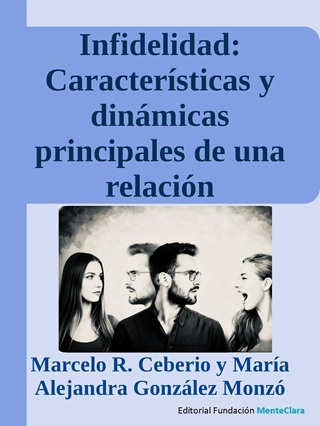
Published
Issue
Section
License
Copyright (c) 2026 MenteClara Foundation’s Peer-reviewed Journal

This work is licensed under a Creative Commons Attribution 4.0 International License.
Authors who publish in this journal agree with the following terms:
a. Authors publish under a Creative Commons Acknowledgment 4.0 International license that allows others to share the work with an authorship acknowledgment of the work and the initial publication in this journal.
b. Authors, who retain their rights after publication, are allowed and encouraged to disseminate their work electronically (for example, in institutional repositories or on their own website) before and during the submission process, as it may result in productive exchanges as well as earlier and greater citations of published works (See The Effect of Open Access).
 Since November 1st, 2018, all articles published in this journal are available under a Creative Commons Acknowledgment 4.0 International license.
How to Cite





 View the