PROMOTING PSYCHOLOGICAL WELL-BEING: THE SYNERGY OF CHARACTER STRENGTHS AND FLOW STATES
DOI:
https://doi.org/10.32351/rca.v10.401
Keywords:
Character strengths, flow states, positive psychology, psychological well-being, emotional self-regulation, resilienceAbstract
This article is framed within the paradigm of positive psychology, adopting a salutogenic perspective to examine the functional relationship between two key variables in the study of psychological well-being: flow states and character strengths. Its relevance lies in the growing need to identify psychological resources that foster emotional self-regulation, adaptive coping, and subjective well-being across occupational, academic, and sociocultural contexts. From a dynamic conception of mental health, recent empirical findings are analyzed, addressing how certain character strengths—such as hope, self-regulation, gratitude, and perseverance—positively influence the emergence and sustainability of flow. Flow is understood as an optimal psychological state characterized by intrinsic satisfaction, deep concentration, and high engagement in task performance. The evidence is structured around three key axes: research focused on flow states, studies addressing character strengths, and works exploring their combined effect. The findings indicate that both variables act as facilitators of mental health by enhancing perceived self-efficacy, resilience, and task commitment. Likewise, their applicability to professional, adolescent, and university populations is emphasized, highlighting their potential as core elements of preventive and psychoeducational interventions. It is concluded that the empirical and conceptual integration of these variables may strengthen programs aimed at promoting psychological well-being throughout different stages of life.
Downloads
References
Antonovsky, A. (1996). The Salutogenic model as a theory to guide health promotion. Health Promotion International, 11(1), 11-18.
Belykh, A., & Jiménez-Vásquez, M. S. (2023). Fortalezas de carácter en estudiantes universitarios: efecto pandémico y alteridad. Revista INFAD De Psicología. International Journal of Developmental and Educational Psychology., 2(10), 181-192. Obtenido de https://revista.infad.eu/index.php/IJODAEP/article/view/2500
Caro, P., Román, H., & Armijo, L. (2021). Mujeres en altos cargos en minería en Chile. Agencia y tensiones de género. Convergencia, 28(1), 1-29. Obtenido de https://www.scielo.org.mx/scielo.php?pid=S1405-14352021000100003&script=sci_arttext
Cobo Rendon, R., Parra, J. A., & García Álvarez, D. (2021). Análisis psicométrico del perfil de bienestar «PERMA-Profiler» en una muestra de estudiantes de Psicología. Anuario de Psicología. /The UB Journal of Psychology, 51(1), 35-44. Obtenido de https://revistes.ub.edu/index.php/Anuario-psicologia/article/view/anpsic2021.51.5/33575
Cuenca Ruano, P., García Martínez, S., Ferriz Valero, A., & Tortosa Martínez, J. (2021). Análisis comparativo de los perfiles motivacionales y el Estado de Flow entre una metodología tradicional y la metodología Flipped Classroom en estudiantes de Educación Física. Revista INFAD de Psicología. International Journal of Developmental and Educational Psychology, 39(1), 338-344. Obtenido de https://dialnet.unirioja.es/servlet/articulo?codigo=7595357
Garassini Chávez, M. E., & Aldana Zarate, H. M. (2022). Un modelo de desarrollo de habilidades socioemocionales: la experiencia de la comunidad educativa de UNICA. Plumilla Educativa, 29(1), 69-97. Obtenido de https://revistasum.umanizales.edu.co/ojs/index.php/plumillaeducativa/article/view/4543/7204
García Álvarez, D., Galiz, D., & Peña, H. (2023). Fortalezas del carácter, malestar emocional y procrastinación académica de estudiantes de Psicología. REVISTA DE ESTUDIOS E INVESTIGACIÓN EN PSICOLOGÍA Y EDUCACIÓN, 10(2), 262-281. Obtenido de https://ruc.udc.es/dspace/bitstream/handle/2183/34679/6-9847-GarciaAlvarez-GalizPe%c3%b1a.pdf?sequence=1&isAllowed=y
Grinhauz, A. S., Azzara, S. H., Frascaroli, C. C., & Elkouss, M. G. (2025). ¿Pueden las fortalezas del carácter relacionarse con la adaptación a la universidad? Una investigación en estudiantes del Área Metropolitana y Gran Buenos Aires. Psicodebate,, 25(1), 49-67. Obtenido de https://dspace.palermo.edu/ojs/index.php/psicodebate/article/view/11626/21478
Hernández Rincón, S. P., Aguilar Bustamante, M. C., & Peña-Sarmiento, M. (2022). Aportes de la psicología positiva a la creación y soporte de organizaciones saludables: revisión de alcance. Estudios Gerenciales, 38(1), 250-260. Obtenido de https://www.redalyc.org/articulo.oa?id=21272987009
Paz, G. O., Correa Freisztav, M., D'Amelio, T. A., & Bronzuoli Gallicchio, M. L. (2024). Estado de flow como medida de rendimiento en Esports. Interdisciplinaria, 41(1), 14-15. Obtenido de https://www.ciipme-conicet.gov.ar/ojs/index.php?journal=interdisciplinaria&page=article&op=view&path[]=1150
Reyes-Sosa, H., Salcido Otáñez, Y. E., & Burgos Dávila, C. J. (2024). Flow en deportistas universitarios mexicanos: su relación con aspectos intrínsecos y extrínsecos en la práctica deportiva. Revista de Psicología del Deporte, 33(1), 45-60. Obtenido de https://www.redalyc.org/journal/1332/133277980003/133277980003.pdf
Riccetti, A., Franco Álvarez, E., Coteron López, J., & Gómez, V. (2021). Estado de flow e intención de práctica de actividad física en adolescentes argentinos. Revista de Psicología (PUCP), 39(1), 289-310. Obtenido de http://www.scielo.org.pe/scielo.php?pid=S0254-92472021000100289&script=sci_abstract&tlng=fr
Sanabria Valdés, C. A., & Trejo Sánchez, K. (2025). Formación docente en fortalezas del carácter frente al estrés laboral. REVISTA BOLETÍN REDIPE, 14(6), 92-103. Obtenido de https://revista.redipe.org/index.php/1/article/view/2265/2261
Estadísticas de lectura: 780
Descargas: PDF (SPANISH) 427 - HTML (SPANISH) 827 - XML (SPANISH) 61 - EPUB (SPANISH) 128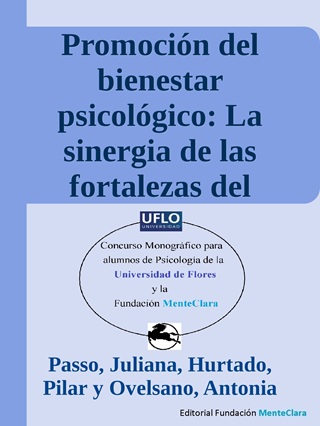
Published
Issue
Section
License
Authors who publish in this journal agree with the following terms:
a. Authors publish under a Creative Commons Acknowledgment 4.0 International license that allows others to share the work with an authorship acknowledgment of the work and the initial publication in this journal.
b. Authors, who retain their rights after publication, are allowed and encouraged to disseminate their work electronically (for example, in institutional repositories or on their own website) before and during the submission process, as it may result in productive exchanges as well as earlier and greater citations of published works (See The Effect of Open Access).
 Since November 1st, 2018, all articles published in this journal are available under a Creative Commons Acknowledgment 4.0 International license.
How to Cite





 View the