NETWORKS THAT COUNT. SYSTEMATIC REVIEW ON SUBJECTIVE WELL-BEING AND PERCEIVED SOCIAL SUPPORT IN ADOLESCENCE
DOI:
https://doi.org/10.32351/rca.v8.337
Keywords:
Subjective well-being, Perceived social support, Adolescence, NetworkAbstract
The following article presents a literature review around the concepts of subjective well-being and perceived social support. The search was carried out in Google Scholar and it was considered that they were works presented in journals of academic prestige. In addition, some research was investigated that established relationships between these concepts in adolescence. The work was carried out within the framework of an evaluative proposal for the subject Health Psychology, whose axis focuses on the approach of concepts of Positive Psychology. In this sense, it is of interest to note that this branch of psychology proposes the study of those factors that promote and enhance optimal psychological functioning. Conceptual definitions were contrasted around subjective well-being and perceived social support, outlining possible psychometric measurement instruments for both concepts. Finally, there was a difficulty in finding articles that related both constructs around this population, raising some questions regarding the adequacy of the instruments.Downloads
References
Aspiazu, L., Esnaola, I., & Sarasa, M. (2016). Apoyo Social y bienestar subjetivo en la adolescencia. Psicología y Educación: Presente y Futuro, 230-243. http://hdl.handle.net/10045/63898
Calleja, N., & Mason, T. (2020). Escala de Bienestar Subjetivo (EBA-20 y EBA-8): Construcción y Validación. Revista Iberoamericana de Diagnóstico y Evaluación, 2(55), 185-201. https://doi.org/10.21865/RIDEP55.2
Gancedo, N. (2008). Historia de la psicología positiva. Antecedentes, aportes y proyecciones. En M. M. Casullo, Prácticas en psicología positiva (págs. 11-38). Buenos Aires: Lugar editorial.
Gutiérrez, M., & Romero, I. (2014). Resiliencia, bienestar subjetivo y actitudes de los adolescentes hacia el consumo de drogas en Angola. Anales de psicología, 30(2), 608-619. doi:http://dx.doi.org/10.6018/analesps.30.2.148131
Jiménez-Rosario, M. N., Esnaola, I., & Axpe, I. (2021). Capacidad predictiva del apoyo social percibido sobre el bienestar subjetivo en el alumnado de educación secundaria. Revista de Psicología y Educación,, 1(16), 31-43. doi:https://doi.org/10.23923/rpye2021.01.200
Matrángolo, G., Simkin, H., & Azzollini, S. (2022). Evidencia de Validez de la Escala Multidimensional de Apoyo Social Percibido (EMASP) en población adulta argentina. Rev. CES Psico, 15(1), 163-181. doi:https://dx.doi.org/10.21615/cesp.6009
Méndez, P., & Barra, E. (2008). Apoyo social percibido en adolescentes infractores de ley y no infractores. Rev. PSYKHE,, 17(1), 59-64.
Rodríguez-Fernández, A., Ramos-Díaz, E., Ros, I., Fernández-Zabala, A., & Revuelta, L. (2016). Bienestar subjetivo en la adolescencia: el papel de la resiliencia, el autoconcepto y el apoyo social percibido. Suma psicológica, 23(1),60-69. https://doi.org/10.1016/j.sumpsi.2016.02.002
Sánchez-Aragón, R. (2020). Bienestar subjetivo: el papel de la rumia, optimismo, resiliencia y capacidad de recibir apoyo. Ciencias Psicológicas, 14(2), e2222. doi:https://doi.org/10.22235/cp.v14i2.2222
Trujillo Mendoza, H., Martos Perales, F., & González-Cabrera, J. (2012). Adaptación al español del cuestionario Interpersonal Support Evaluation List (ISEL). Universitas Psychologica, 11(3), 969-978.
Estadísticas de lectura: 2435
Descargas: PDF (SPANISH) 1130 - HTML (SPANISH) 763 - XML (SPANISH) 346 - EPUB (SPANISH) 235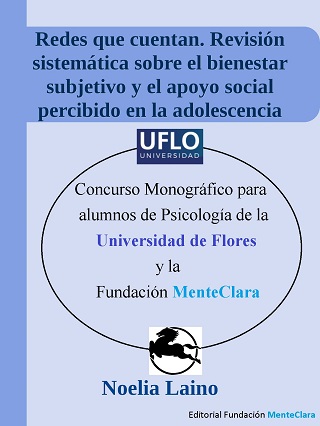
Published
Issue
Section
License
Authors who publish in this journal agree with the following terms:
a. Authors publish under a Creative Commons Acknowledgment 4.0 International license that allows others to share the work with an authorship acknowledgment of the work and the initial publication in this journal.
b. Authors, who retain their rights after publication, are allowed and encouraged to disseminate their work electronically (for example, in institutional repositories or on their own website) before and during the submission process, as it may result in productive exchanges as well as earlier and greater citations of published works (See The Effect of Open Access).
 Since November 1st, 2018, all articles published in this journal are available under a Creative Commons Acknowledgment 4.0 International license.
How to Cite





 View the