Listening to the Call for Social Justice: On Ambedkarite Women’s Songs and Poetic Expressions from Maharashtra, India
DOI:
https://doi.org/10.32351/rca.v8.336
Keywords:
Artistic activism, Caste, Gender, Culture, Maharashtra, Jalasa, AmbedkariteAbstract
This paper attempts to engage with the artistic activism of Ambedkarite feminists from Maharashtra. It tries to analyze some of the modes of their artistic engagement within the other forms of activism of Dalits in Maharashtra in particular and India in general. Drawing on Marathi sources, one of the core interests of the paper is to delve into the social-political worlds of women activists that propagate Ambedkar’s core principles of liberty, equality and fraternity. At the same time, the ways in which Dalit women reflect on the questions of caste, gender and patriarchy will be analyzed in the context of the field of artistic (re)production of culture as a counter culture to the mainstream culture of India. Cultural practices of Maharashtra will be analyzed as a departure from the conventional folklore readings in order to differentiate its structured dispositions, bodily nuances and so on. Distinct art forms and poetic engagements among the marginalized sections will be subjected to close reading as well, especially the genres of Ovi, Powadas, Jalasa, Buddhageet and Bheemgeet. It thus turned into the weapons of the Dalits to unleash their political tirade against the Brahmanic culture. Hence it creates spaces for ontological and epistemic investigations within the rubric of Dalit culture. Thus, the primary and secondary sources and narratives will be deployed while researching artistic activism of Ambedkarite women in the context of songs and poetic expressions. This paper tries to explore the artistic activism of Ambedkarite feminists from Maharashtra.
Downloads
References
Ajotikar, Rasika. (2018). “Our song impure, our voice polluted: Conversations with activist and musician, Shital Sathe” Feminist Review 119(1): 154–162.
Ambedkar, B.R.(1987). (Reprinted) “Revolution and counter revolution”. Babasaheb Ambedkar Writings and Speeches, complied by Vasant Moon, Vol. 3. Government of Maharashtra Publication: Mumbai.
Ambedkar B.R. (1989). (Reprinted) “Castes in India: Their Mechanism, Genesis and Development”, Babasaheb Ambedkar Writings and Speeches, complied by Vasant Moon, Vol. I. Government of Maharashtra Publication: Mumbai.
Alone, Yashodatta S. (2017). “Language, Representation and Protected Ignorance”. Guftugu March 29. Retrieved 2nd August, 2022 (https://guftugu.in/2017/03/29/language-representation-protected-ignorance-ys-alone/).
Benjamin, Walter. (1968). “Theses on the Philosophy of History”, In, Illuminations, Translated by Harry Zohn, Edited and with an introduction by Hannah Arendt, pp.253-264,New York: Schocken Books.
Bhadarge Parvati. (2022). Peoples archives of rural India (PARI) Retrieved 10th September,2022 (https://ruralindiaonline.org/en/articles/remembering-bhimrao-and-ramabai-ambedkar/).
Bhat-Behere, Anagha. (2017). “We stood up against the establishment”, An Interview with Raja Dhale, Journal of Postcolonial Writing 53(1-2) :138-146.
Bhave V.K.(2010).Maharashtracha SamajikItihas : Peshaweakalin Maharshtra, Varada Publication: Pune.
Borkhade, Radha (1996). “A Diamond is born of Dalit Lineage”, Peoples archives of rural India (PARI)Retrieved 10th September, 2022 (https://ruralindiaonline.org/en/articles/songs-of-gratitude-chants-of-celebration/).
Chude-Sokei, Louis.(1994). “Post-nationalist geographies: rasta, rega and reinventing Africa”, African Arts 27(4) :80-84.
Crowley, Thomas. (2020).“Leisure, Festival, Revolution: Ambedkarite Productions of Space”, October 31. CASTE: A Global Journal on Social Exclusion 1(2): 31-50. https://doi.org/10.26812/caste.v1i2.199
Daynes, Sarah. (2010). Time and Memory in Reggae Music: The Politics of Hope, Manchester and New York: Manchester University Press.
Dube, Saurab (2013) “Unsettling Art: Caste, Gender and Dalit Expression”, Retrieved 10th January, 2023.https://www.opendemocracy.net/en/openindia/unsettling-art-caste-gender-and-dalit-expression/
Gavai, P.A. (1981).Peshaweakaleen Gulamgiri Va Asprishyata, Prachr Prakashan, Kolhapur.
Guru, Gopal. (1997).Dalit Cultural Movement and Dialectics of Dalit Movement in Maharashtra, Mumbai: Vikas Adhyan Kendra.
Guru, Gopal. 1994. “Politics of Culture in Maharashtra”, Economic and Political Weekly 29 (41): 2700.
Ingole, Prashant. (2020).“Intersecting Dalit and Cultural Studies: De-Brahmanizing the Disciplinary Space”, CASTE: A Global Journal on Social Exclusion 1 (2): 91-106. https://doi.org/10.26812/caste.v1i2.177
Lippard, Lucy.(1984). “Trojan Horses, Activist art and Power” in, Brian Wallis edited Art after Modernism: Rethinking Representation, New York, Boston, MIT press.
Maitreeya, Yogesh. (2019).“Why songs are sabotaged? Dalits and Their Music”, October 29. Retrieved on 4th August, 2022 (https://indianculturalforum.in/2019/10/29/why-songs-are-sabotaged-dalits-and-their-music/)
Maitreeya, Yogesh. (2019). “Wamandada Kardak: Singing a casteless republic into being” ,October 19.Retrieved on 15th August, 2022(https://indianculturalforum.in/2019/10/19/wamandada-kardak-singing-a-casteless-republic-into-being/).
Maitreeya, Yogesh.(2019).“How Bhimrao Kardak and his troupe brought Ambedkar in his song”,India Cultural Forum , November 26. Retrieved 6th August, 2022 (https://indianculturalforum.in/2019/11/26/how-bhimrao-kardak-and-his-troupe-brought-ambedkar-in-song/).
Maitreeya, Yogesh. (2020).“Dalit women as active participants in Ambedkarite Movement”, January 8.India Cultural Forum ,Retrieved 10th August,2022 (https://indianculturalforum.in/2020/01/08/dalit-women-as-active-participants-in-ambedkarite-movement/).
Maitreeya, Yogesh. (2020). “Shinde-shahi: Music more important than philosophy”, India Cultural Forum, January 31. Retrieved 16th August, 2022(https://indianculturalforum.in/2020/01/31/shindeshahi-music-more-important-than-philosophy/).
Neelakandan, Sanil M.(2018). “Critique of the Un/ known: On the Mediation of 'the Dominant" Analysis", Diotima’s: A Journal of New Readings' Special Issue on Mythopoesis: Reconstructing Subjugated Knowledge. (9):49-58.
Novetzke, Christian Lee. (2011).“The Brahmin Double: The Brahmanical Construction of Anti-brahmanism and Anti-Caste Sentiments in the Religious Cultures of Precolonial Maharashtra”, South Asian History and Culture, 2 (2):231-252.
Novetzke, Christian Lee. (2007) “Bhakti and its Public “, International Journal of Hindu Studies 11(3) :255-272.
O’ Hanlon, Rosalind. (1985). Caste, Conflict and Ideology, Cambridge University Press.
Omvedt, Gail. (1979). Cultural Revolt in a Colonial Society: The Non-Brahman Movement in Western India: 1873 to 1930, Scientific Socialist Education Trust. Bombay.
Omvedt,Gail. (2004). Jotirao Phule and the Ideology of Social Revolution in India, Critical quest, New Delhi.
Paik,S. (2022). The Vulgarity of Caste: Dalits, Sexuality and Humanity in Modern India, California: Stanford University Press.
Panikkar, K N. (2011).“Progressive Cultural Movement in India: A Critical Appraisal”, Social Scientist,39 (11/12):14-25.
Prakash, Brahma. (2019). Cultural Labour: Conceptualizing the ‘Folk Performance in India, New Delhi: Oxford University Press.
Perry, Marc D. (2016). Negro Soy Yo:Hip Hop and Raced Citizenship in Neoliberal Cuba, Durham and London: Duke University Press.
Pollock, S. (1998). “The Cosmopolitan Vernacular “Journal of Asian Studies ,57 (1):6-37.
Rege, Sharmila. (1995).“The hegemonic appropriation of sexuality: The case of Lavani performers “, Contribution to Indian Sociology 29 (1&2): 23-38.
Rege, Sharmila. (2000) .“Understanding Popular Culture: The Satyashodhak and Genesh Mela in Maharashtra”, Sociological Bulletin 49 (2): 193-210.
Sharma, S. (2017). “More than A Dalit Singer”, The Age, February 27th Retrieved dated 25th February, 2023. (https://www.asianage.com/entertainment/in-other-news/270217/more-than-a-dalit-singer.html)
Sahai, S.(2020). “ Ginni Mahi’s fresh take on Punjabi Music” , The Hindu, January 30th Retrieved dated 25th February, 2023. (https://www.thehindu.com/entertainment/music/ginni-mahis-fresh-take-on-punjabi-music/article30692064.ece)
Shinde, Lilabai. (2017). Peoples archives of rural India (PARI). Retrieved 18th August, 2022. (https://ruralindiaonline.org/en/articles/ambedkar-lives-on-in-rural-womens-songs/)
Shipley, Lisley and Mey-Yen Moriuchi. (2023). (edited) The Routledge Companion to Art and Activism in the Twenty-First Century, New York and London: Routledge.
Singh, Lata. (2017). Raising the Curtain: Recasting Women Performers in India, Hyderabad: Orient BlackSwan.
Sonavane, Kusum.(2018). “In the land of the Bharat, He gave the Slogan of Equality”. Retrieved 16th August, 2022(https://ruralindiaonline.org/en/articles/bhimraya-moved-heaven-and-earth/).
Thakur, Bhagwan.(2005). Ambedkari Jalase ,Sugava Prakashan ,Pune.
Thorat, Aasha. (2002). “Lokgeetathil Umatnara Ambedkari chalvaliche Padsasaad”in Phule Ambedkari Stree Chalval edited by Meenkshi Moon, Samata Prakashan, Nagpur,
Weibel, Peter. (2015).“People, Politics, and Power,” In, Peter Weibel(edited) global activism: Art and Conflict in the 21st Century, Cambridge, MA: MIT Press.
Zelliot, Eleanor and Rohini Mokashi-Punekar. (2005) . Untouchable Saints: An Indian Phenomenon, New Delhi: Manohar Publication.lizando sus masculinidades en Santiago de Chile. Revista de Psicologia, 25(2), 1-18.
Estadísticas de lectura: 2897
Descargas: PDF 552 - HTML 444 - XML 3807 - EPUB 287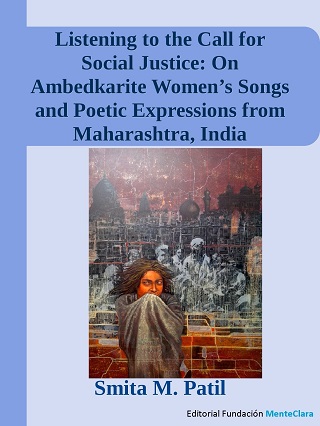
Published
Issue
Section
License
Authors who publish in this journal agree with the following terms:
a. Authors publish under a Creative Commons Acknowledgment 4.0 International license that allows others to share the work with an authorship acknowledgment of the work and the initial publication in this journal.
b. Authors, who retain their rights after publication, are allowed and encouraged to disseminate their work electronically (for example, in institutional repositories or on their own website) before and during the submission process, as it may result in productive exchanges as well as earlier and greater citations of published works (See The Effect of Open Access).
 Since November 1st, 2018, all articles published in this journal are available under a Creative Commons Acknowledgment 4.0 International license.
How to Cite





 View the