OPTIMISM AND SELF-ESTEEM STUDY ON THE USE OF SOCIAL MEDIA AMONGST YOUNG TEENAGERS
DOI:
https://doi.org/10.32351/rca.v7.260
Keywords:
Optimism, self-esteem, social networks, emotional well-being, social relationshipsAbstract
In recent years, social media have had a great impact on the conformation of teenagers and their emotional well-being. Psychology studies the concepts of self-esteem and optimism, which are key factors in the search to improve well-being or maintain a good level of it. That is why this research will investigate how optimism and self-esteem are correlated in the teenagers’ cognitive conformation process, addressing the impact on both variables and how social media influence these variables, which is the objective. Based on the above, it is concluded that optimism is a great tool that can be used when a negative event occurs that directly affects self-esteem and self-concept; the aim is to isolate them or make them less recurrent. Because social networks evolve so rapidly it is suggested to stay updated in this area to be able to counteract the negative effects of living in a digital age.
Downloads
References
Appel, H., Gerlach, A., & Crusius, J. (2016). The interplay between Facebook use, social comparison, envy and depression. Current opinion in psychology, 9, 44-49. https://doi.org/10.1016/j.copsyc.2015.10.006
De Meza, D., & Dawson, C. (2021). Neither an optimist nor a pessimist Be: mistaken expectations lower well-being. Personality and Social Psychology Bulletin, 47(4), 540-550. https://doi.org/10.1177/0146167220934577
Fagundes, L. S., Marot, T. A., & Natividade, J. C. (2021). Use of Instagram, Social Comparison, and Personality as Predictors of Self-Esteem. Psico-USF, 25, 711-724. https://doi.org/10.1590/1413/82712020250410
Ferrer, C. (2020). El optimismo y su relación con el bienestar psicológico. Revista Científica Arbitrada de la Fundación MenteClara, 5(199). https://doi.org/10.32351/rca.v5.199
García, C., Díaz, M., Rodríguez, A. M., & Vallerino, V. T. (2018). El optimismo como contribución a la resiliencia deportiva. Revista iberoamericana de psicología del ejercicio y el deporte, 13(1), 131-136. https://dialnet.unirioja.es/servlet/articulo?codigo=6195001
González, P. R., Mesa, Y. M., Zayas, A., & Molinero, R. G. (2018). Relación entre la autoestima y la satisfación con la visa en una muestra de estudiantes universitarios. International Journal of Developmental and Educational Psychology, 2(1), 67-76. https://www.redalyc.org/articulo.oa?id=349856003007
Harris, M. A., & Orth, U. (2020). The link between self-esteem and social relationships: A meta-analysis of longitudinal studies. Journal of personality and social psychology, 119(6), 1459-1477. https://doi.org/10.1037/pspp0000265
Keles, B., McCrae, N., & Grealish, A. (2020). A systematic review: the influence of social media on depression, anxiety and psychological distress in adolescents. International Journal of Adolescence and Youth, 25(1), 79-93. https://doi.org/10.7759/cureus.8627
León Gualda, G., & Lacunza, A. B. (2020). Autoestima y habilidades sociales en niños y niñas del Gran San Miguel de Tucumán, Argentina. Revista Argentina de Salud Pública, 11(42), 22-31. https://www.scielo.org.ar/scieloOrg/php/articleXML.php?pid=S1853-810X2020000100022&lang=es
Moreno, Y., & Marrero, R. J. (2015). Optimismo y autoestima como predictores de bienestar personal: diferencias de género. Revista Mexicana de Psicología, 32(1), 27-36. https://www.redalyc.org/articulo.oa?id=243045363004
Pérez, S. P., Costa, M. A., Moreno, A. D., López, I. C., López, P. M., Zamorano, M. A., & Rubio, M. J. (2021). Optimismo disposicional y estrés: claves para promover el bienestar psicológico. Papeles del Psicólogo, 42(2), 135-142. https://doi.org/10.23923/pap.psicol2021.2953
Romero Rodríguez, J. M., & Aznar Díaz, I. (2019). Análisis de la adicción al smartphone en estudiantes universitarios. Factores influyentes y correlación con la autoestima. RED. Revista de Educación a Distancia, 19(60), 6-0. https://doi.org/10.6018/red/60/08
Trzesniewski, K. H., Donnellan, M. B., & Robins, R. W. (2003). Stability of self-esteem across the life span. Journal of personality and social psychology, 84(1), 205-220. https://doi.org/10.1037//0022-3514.84.1.205
Estadísticas de lectura: 10187
Descargas: PDF (SPANISH) 2953 - HTML (SPANISH) 2489 - XML (SPANISH) 611 - EPUB (SPANISH) 362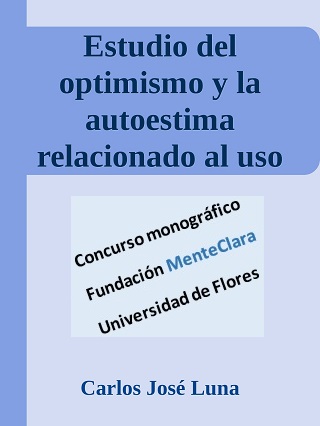
Published
Issue
Section
License
Authors who publish in this journal agree with the following terms:
a. Authors publish under a Creative Commons Acknowledgment 4.0 International license that allows others to share the work with an authorship acknowledgment of the work and the initial publication in this journal.
b. Authors, who retain their rights after publication, are allowed and encouraged to disseminate their work electronically (for example, in institutional repositories or on their own website) before and during the submission process, as it may result in productive exchanges as well as earlier and greater citations of published works (See The Effect of Open Access).
 Since November 1st, 2018, all articles published in this journal are available under a Creative Commons Acknowledgment 4.0 International license.
How to Cite





 View the