CORRELATION BETWEEN HAPPINES AND COPING STRATEGIES
DOI:
https://doi.org/10.32351/rca.v6.236
Keywords:
Happiness, Coping Strategies, Adaptive, Maladaptive, Well BeingAbstract
During this investigation it has been developed a narrative review about the Happiness and Coping Strategies variables, allowing us to establish that the implementation of coping may allow any subject to a state of happyness. For this mean, the concept of Happyness has been defined as an unidimensional construct with any constitutive especification that departs from a philosophichal conceptualization (Eudaimonia and Hedonism), which eventually would arrive to the psichological field as a sum of benefits for the mental and phisical health. On the other side, the second variable, Coping Strategies, was described as a set of answers and manners oriented to evolutive and ambiental demands, being classified as either Adaptive (meant for the resolution of taks via constructive means) or Maladaptive (those which have an orientation towards risk or evasive copping). It was determined that an appropriate development about emotional intelligence would allow the subject to have a more efficient control of his/her emotions when opting for coping strategy, making it easier for the subject to fully comprehend the task at hand due to the intervenering nature of the coping itself, reaching to the conclusion that Coping Strategies affects people Happyness, generating benefits for their mental and biological status.Downloads
References
Dominguez Bolaños, R., & Cruz Ibarra, E. (2017). La psicología positiva: Un nuevo enfoque para el estudio de la felicidad. Razón y Palababra, 660-679.
Echuburúa, E., & Amor, P. (2019). Traumatic Memories: Adaptive and Maladaptive Coping Strategies. Terapia psicológica, 71-80.
Gabini, S. (2019). Felicidad en el trabajo: Breve actualizacion desde la psicologia positiva. Revista de Psicología, 69-75.
Millán-Franco et al., M. (2020). Inteligencia emocional y felicidad subjetiva en estudiantes de Trabajo Social (Emotional intelligence and subjective happiness in social work students). Alternativas. Cuadernos de Trabajo Social, 117-132.
Moyano Díaz et al., E. (2018). Escala de Felicidad para Adultos (EFPA). Terapia psicológica, 37-49.
Moyano-Díaz et al., E. (2017). Afrontamiento, salud mental y felicidad bajo huelga y ocupación universitaria. Arquivos brasileiros de Psicología, 153-167.
Salavera Bordás, C., & Usán Supervía, P. (2017). Repercusión de las estrategias de afrontamiento de estrés en la felicidad de los alumnos de Secundaria. Revista Electrónica Interuniversitaria de Formación del Profesorado, 65-77.
Sicre, E., & Casari, L. (2019). Estrategias de afrontamiento en estudiantes de Psicología. Revista de Psicología, 61-72.
Uribe Urzola et al. (2018). La importancia de las estrategias de afrontamiento en el bienestar psicológico en una muestra escolarizada de adolescentes. Psicogente, 440-457.
Estadísticas de lectura: 1334
Descargas: PDF (SPANISH) 597 - HTML (SPANISH) 517 - XML (SPANISH) 255 - EPUB (SPANISH) 280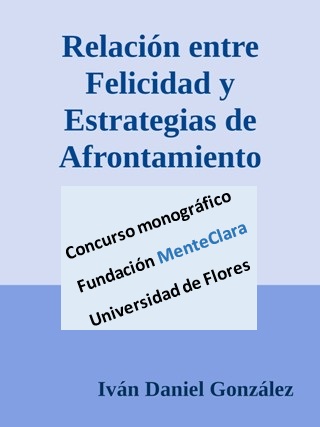
Published
Issue
Section
License
Authors who publish in this journal agree with the following terms:
a. Authors publish under a Creative Commons Acknowledgment 4.0 International license that allows others to share the work with an authorship acknowledgment of the work and the initial publication in this journal.
b. Authors, who retain their rights after publication, are allowed and encouraged to disseminate their work electronically (for example, in institutional repositories or on their own website) before and during the submission process, as it may result in productive exchanges as well as earlier and greater citations of published works (See The Effect of Open Access).
 Since November 1st, 2018, all articles published in this journal are available under a Creative Commons Acknowledgment 4.0 International license.
How to Cite





 View the