TANTRA OR YOGA. CLINICAL STUDIES, SECTION 3: COMPARATIVE PAPER
DOI:
https://doi.org/10.32351/rca.v2.2.32
Keywords:
clinical study, tantra, tantric, yoga, theravada, vipassana, mahayana, zen, mindfulness, vajrayana, EEG, ECG, IRMf, neuroimagining, neurophysiology, immunology, endocrinology, psychologyAbstract
Several clinical studies show how tantric practices and exercises of Vedic traditions - such as yoga- or Theravada or Mahayana Buddhists - have a significant psychobiological impact. This study compares the neurophysiological correlates of the practices called tantric and non-tantric meditations by a qualitative systematic review of the data collected. It was evidenced that the tantric practices produce increase in the sympathetic activity, the state of "phasic alertness" and in the performance in visual cognitive tasks. They promote greater alertness and lower propensity to sleep, generate an increase in cognitive activity and metabolic modifications contrary to those that are verified of non-tantric as a result of the relaxation induced by these practices. In contrast, non-tantric creams create a better relaxation response with increased parasympathetic activity and inhibition of the sympathetic system, inducing a deep rest hypometabolic state where the practitioner remains awake and his attention on "tonic alertness" with corresponding symptoms to that hypometabolic state -hypotonia, decreased oxygen consumption, heart rate and blood lactate concentration- change in normal endocrine function, increased phenylalanine concentration in advanced meditators, increased plasma prolactin levels, a five-fold increase in arginine vasopressin plasma levels, while thyroid stimulating hormone decreases chronically and acutely. This neurophysiological difference corresponds to the differences found in the investigated texts which point out that: the tantric ones aim to increase alertness or an awakened quality of the mind and warn against excessive calm and on the contrary, the writings and instructions of meditation of the Vedic tradition, yoga, Theravada or Mahayana aim to achieve stillness and calmness. We indicate future clinical research from a more interdisciplinary approach and incorporating the theoretical / philosophical framework of the different types of meditation.
Downloads
References
Acri A. (2016) «Chapter 1. Introduction: Esoteric Buddhist Networks along the Maritime Silk Routes, 7th– 13th Century AD», in Esoteric Buddhism in Mediaeval Maritime Asia: Networks of Masters, Texts, Icons, Singapore: ISEAS Publishing, 2016, pp. 1–26.
Akira, Hirakawa (1993), Paul Groner, ed., History of Indian Buddhism, Translated by Paul Groner, Delhi: Motilal Banarsidass Publishers
Amihai I., Kozhevnikov M. (2014). Arousal vs. Relaxation: A Comparison of the Neurophysiological and Cognitive Correlates of Vajrayana and Theravada Meditative Practices. PLoS ONE, 9(7), e102990. http://doi.org/10.1371/journal.pone.0102990 https://www.ncbi.nlm.nih.gov/pubmed/25051268
Basu, R. L. (2016). ASPECTOS CIENTÍFICOS Y BENEFICIOSOS DEL CULTO TANTRICO. Revista Científica Arbitrada de la Fundación MenteClara| Tantra, 1(2), 26-49. http://fundacionmenteclara.org.ar/revista/index.php/RCA/article/view/15
Batista JC, Souza AL, Ferreira HA, Canova F, Grassi-Kassisse DM (2014). “Acute and Chronic Effects of Tantric Yoga Practice on Distress Index” in J Altern Complement Med. 2015 Nov;21(11):681-5. doi: 10.1089/acm.2014.0383. Epub 2015 Aug 6. http://www.ncbi.nlm.nih.gov/pubmed/26248115
Becerra, Gastón (2011). «Tantric buddhism in Buenos Aires: A case study of secular religiosity among young people.». The International Journal of Religion and Spirituality in Society. 1 (2), 97-102. http://ijn.cgpublisher.com/product/pub.200/prod.25
Benson H., Rosner B. A., Marzetta B. R., Klemchuk H. P. (1974) Decreased blood pressure in borderline hypertensive subjects who practiced meditation. Journal of Chronic Diseases. 1974;27(3):163–169. doi: 10.1016/0021-9681(74)90083-6.
Benson H., Lehmann J. W., Malhotra M. S., Goldman R. F., Hopkins J., Epstein M. D. (1982) Body temperature changes during the practice of g Tum-mo yoga. Nature. 1982;295(5846):234–236. doi: 10.1038/295234a0.
Benson H, Malhotra MS, Goldman RF, Jacobs GD, Hopkins PJ (1990) Three case reports of the metabolic and electroencephalographic changes during advanced Buddhist meditation techniques. Behavioral Medicine 16(2):90-5 • January 1990 DOI:10.1080/08964289.1990.9934596 http://www.ncbi.nlm.nih.gov/pubmed/2194593
Bhikkhu B. (2012) The Numerical Discourses of the Buddha: A Translation of the Anguttara Nikaya. Boston, Mass, USA: Wisdom Publications; 2012.
Bodhi B (2012) The numerical discourses of the Buddha: a translation of the Anguttara Nikaya. Boston, U.S.A.: Wisdom Publications. pp. 1287–1288 (IV.1410).
Brewer J. A., Worhunsky P. D., Gray J. R., Tang Y.-Y., Weber J., Kober H. (2011) Meditation experience is associated with differences in default mode network activity and connectivity. Proceedings of the National Academy of Sciences of the United States of America. 2011;108(50):20254–20259. doi: 10.1073/pnas.1112029108.
Britton, W. B., Lindahl, J. R., Cahn, B. R., Davis, J. H., & Goldman, R. E. (2014). Awakening is not a metaphor: the effects of Buddhist meditation practices on basic wakefulness. Annals of the New York Academy of Sciences, 1307(1), 64-81.
Buckner R. L., Andrews-Hanna J. R., Schacter D. L. (2008) The brain's default network: anatomy, function, and relevance to disease. Annals of the New York Academy of Sciences. 2008;1124:1–38. doi: 10.1196/annals.1440.011.
Buksbazen J. D. (2002) Zen Meditation in Plain English. 1st. Boston, Mass, USA: Wisdom Publications; 2002.
Chhaya, M. (2009). Dalai Lama. Hombre, monje, místico. Grijalbo.
Chiesa A., Serretti A. (2009) Mindfulness-based stress reduction for stress management in healthy people: a review and meta-analysis. The Journal of Alternative and Complementary Medicine. 2009;15(5):593–600. doi: 10.1089/acm.2008.0495.
Corby J. C., Roth W. T., Zarcone V. P., Jr., Kopell B. S. (1978) Psychophysiological correlates of the practice of Tantric Yoga meditation. Archives of General Psychiatry. 1978;35(5):571–577. doi: 10.1001/archpsyc.1978.01770290053005.
El laberinto del Tíbet - El camino del Tantra. Una producción de Canal + TVE https://youtu.be/bxiGmmbT2-0
Evans-Wentz W. Y. Tibetan Yoga and Secret Doctorines. Varanisa, India: Pilgrims Publishing; 2002.
Fremantle, F. (1971). A Critical Study of the Guhyasamaja Tantra. London: University of London Library.
Gómez, O. R. (2016). Antonio de Montserrat–La Ruta de la Seda y los caminos secretos del Tantra. Revista Científica Arbitrada de la Fundación MenteClara| Tantra, 1(1), 5-20. http://fundacionmenteclara.org.ar/revista/index.php/RCA/article/view/8
Gómez, O. R. (2017). ANÁLISIS CRÍTICO DEL KULARNAVA TANTRA-PARTE 1-UN PRÓLOGO VICIADO DE SEXUALIDAD REPRIMIDA. Revista Científica Arbitrada de la Fundación MenteClara| Tantra, 2(1), 114-141. http://fundacionmenteclara.org.ar/revista/index.php/RCA/article/view/26
Holmes DS., (1984) Meditation and somatic arousal reduction. American Psychologist. 1984;39:1–10.
Kozhevnikov M, Elliott J, Shephard J, Gramann K (2013) Neurocognitive and Somatic Components of Temperature Increases during g-Tummo Meditation: Legend and Reality. PLoS ONE 8(3): e58244. doi:10.1371/journal.pone.0058244 http://www.ncbi.nlm.nih.gov/pubmed/23555572
Kutz I., Borysenko J. Z., Benson H. 1985 Meditation and psychotherapy: a rationale for the integration of dynamic psychotherapy, the relaxation response, and mindfulness meditation. The American Journal of Psychiatry. 1985;142(1):1–8. doi: 10.1176/ajp.142.1.1
Lutz, A., Greischar, L. L., Rawlings, N. B., Ricard, M., & Davidson, R. J. (2004). Long-term meditators self-induce high-amplitude gamma synchrony during mental practice. Proceedings of the National Academy of Sciences of the United States of America, 101(46), 16369–16373. http://doi.org/10.1073/pnas.0407401101
Rinpoche T. U. As It Is. Vol. 2. Hong Kong: Ranjung Yeshe Publications; 1999.
Shiva, L. (VII d.C). Kularnava Tantra o Urdhvaamnaaya Tantra (Reimpresión del original conservado en el Rajshahi College en Sanskrit in Bengali typeset with Bengali Translation). (U. K. Das, Ed.) Calcuta, India: Ranjit Saha, NavBharat Publishers 1976.
Snellgrove, D. (2011). The Hevajra Tantra: A Critical Study. Orchid Press, ISBN 978-9745241282.
Telles S., Desiraju T. (1993) Autonomic changes in Brahmakumaris Raja yoga meditation. International Journal of Psychophysiology. 1993;15(2):147–152. doi: 10.1016/0167-8760(93)90072-W.
Travis, F. y Shear, J. (2010) "Focused attention, open monitoring and automatic self-transcending: Categories to organize meditations from Vedic, Buddhist and Chinese traditions" Consciousness and Cognition Volume 19, Issue 4, December 2010, Pages 1110-1118 https://doi.org/10.1016/j.concog.2010.01.007
Vishnu, S. (1910). Pancha Tantra- Hindi-. Bombay, India: Srivenketeshwar Steem Press.
Wu S. D., Lo P. C. Inward-attention meditation increases parasympathetic activity: a study based on heart rate variability. Biomedical Research. 2008;29(5):245–250. doi:10.2220/biomedres.29.245. http://www.ncbi.nlm.nih.gov/pubmed/18997439
Yeshe Thubten Introduction to Tantra: A Vision of Totality. Wisdom Publications, 1987
Zeidan F., Martucci K. T., Kraft R., McHaffie J. G., Coghill R. C. (2014) Neural correlates of mindfulness meditation-related anxiety relief. Scandinavica. 2014;9:751–759.
Estadísticas de lectura: 3441
Descargas: PDF (SPANISH) 938 - HTML (SPANISH) 1407 - XML (SPANISH) 916 - EPUB (SPANISH) 230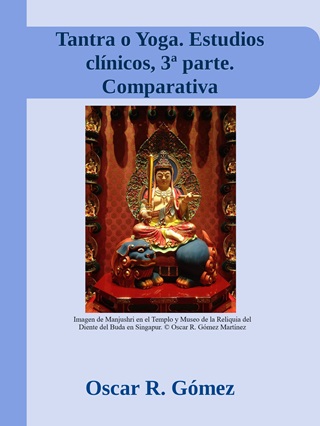
Published
Issue
Section
License
Authors who publish in this journal agree with the following terms:
a. Authors publish under a Creative Commons Acknowledgment 4.0 International license that allows others to share the work with an authorship acknowledgment of the work and the initial publication in this journal.
b. Authors, who retain their rights after publication, are allowed and encouraged to disseminate their work electronically (for example, in institutional repositories or on their own website) before and during the submission process, as it may result in productive exchanges as well as earlier and greater citations of published works (See The Effect of Open Access).
 Since November 1st, 2018, all articles published in this journal are available under a Creative Commons Acknowledgment 4.0 International license.
How to Cite





 View the