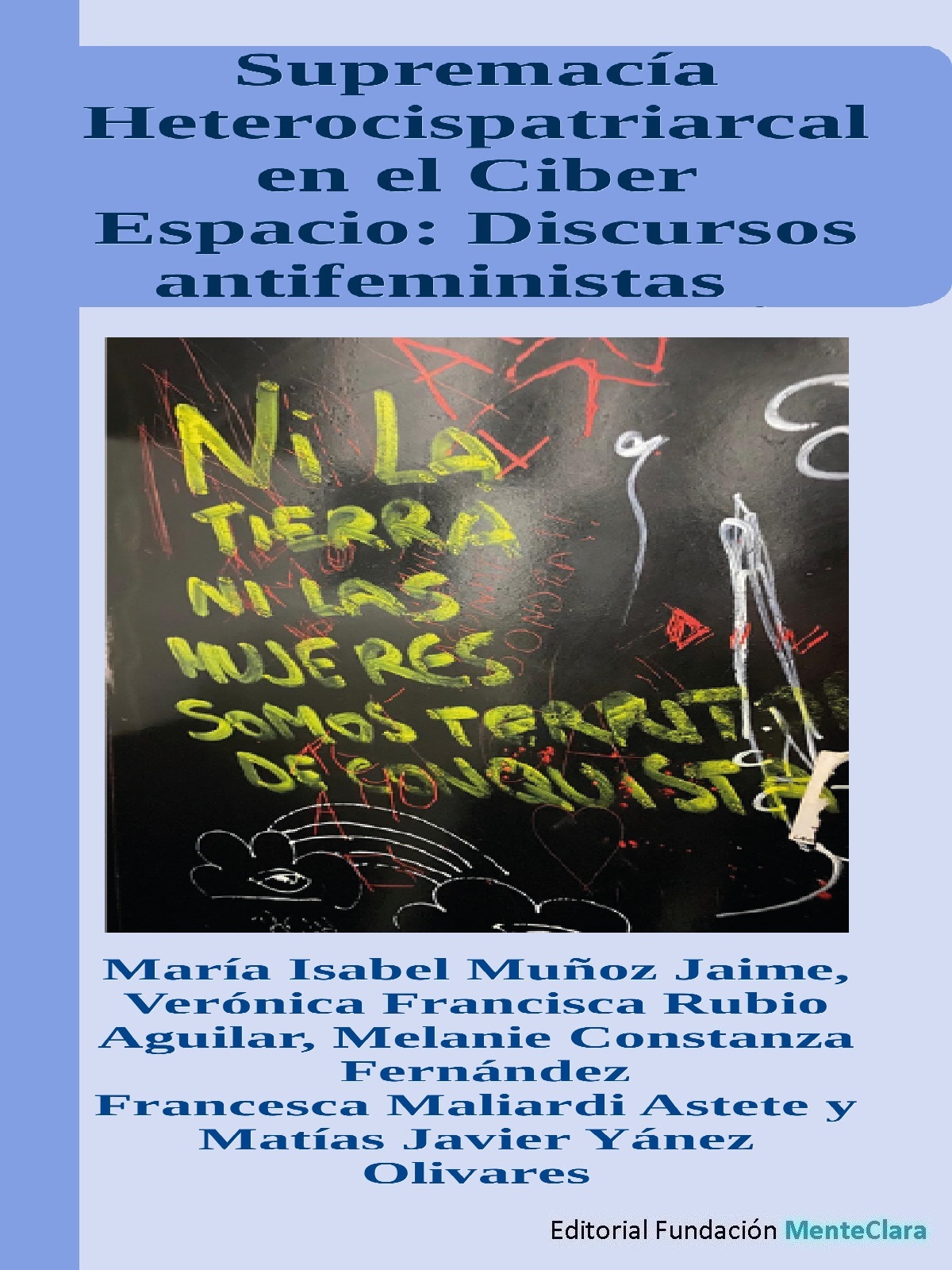
HETEROCISPATRIARCHAL SUPREMACY IN CYBERSPACE: ANTI-FEMINIST AND QUEERPHOBIC DISCOURSES IN THE MANOSPHERE
DOI:
https://doi.org/10.32351/rca.v11.463
Keywords:
Manosphere, hate speech, misogyny, cyberviolence, critical discourse análisisAbstract
This study addresses the proliferation of hate speech, misogynistic, and queerphobic discourses in the contemporary digital ecosystem, specifically within virtual communities associated with the manosphere on the social network X. The research problem lies in how these digital platforms reproduce and amplify symbolic violence and anti-feminist reactions, eroding the rights of women and the LGBTIQ+ community. The main objective was to analyze the manifestations of hate and misogynistic speech present in the conversational threads of said platform. Methodologically, the research is framed within a critical approach, employing netnography and critical discourse analysis (CDA) to examine a corpus selected through purposive sampling under criteria of visibility, theoretical saturation, and validation by intersubjective triangulation. The results are structured into five analytical macro-categories that evidence the patriarchal disciplining of female corporeality, the dehumanization and commodification of the body, structural misogyny linked to digital profitability, the delegitimization of sex-generic dissidences in the face of the masculinity crisis, and the political antagonism articulated within the manosphere. It is concluded that this space operates as an ideological system of patriarchal resistance that legitimizes cyberviolence and perpetuates gender subordination in cyberspace.
Downloads
References
Benassini, C. (2022). La construcción del discurso de odio contra las mujeres por los participantes en espacios misóginos de una red social. Revista Internacional de Comunicación y Desarrollo (RICD), 4(17), 57–74. https://doi.org/10.15304/ricd.4.17.8757
Bonet-Martí, J. (2020). Análisis de las estrategias discursivas empleadas en la construcción de discurso antifeminista en redes sociales. Psicoperspectivas, 19(3), 52–63. https://doi.org/10.5027/psicoperspectivas-vol19-issue3-fulltext-2040
Butler, J. (1990). El género en disputa: El feminismo y la subversión de la identidad. Routledge. http://www.kyoolee.net/GENDER_TROUBLE_-Preface-_Butler.pdf
Butler, J. (2025). Palabras que hieren: Sobre el discurso de odioo y la política de lo performativo. Paidós.
Butler, J. (2004). Undoing gender. Routledge.
Curiel, O. (2007). Critique postcoloniale et désir decolonisateur. Nouvelles Questions Féministes, 26(3), 61–76. https://doi.org/10.3917/nqf.263.0061
Curiel, O. (2014). Construyendo metodologías feministas desde el feminismo decolonial. En I. Mendia Azkue, M. A. Luxán, M. Legarreta, G. Guzmán, J. Zirion y J. Vergara (Eds.),
Chadí, M. (2000). Redes sociales en el Trabajo Social. Espacio Editorial. https://repositorio.unal.edu.co/bitstream/handle/unal/29327/15346-46637-1-PB.pdf?sequence=1
Creswell, J. W. (2014). Research design: Qualitative, quantitative, and mixed methods approaches (4.ª ed.). SAGE Publications.
De Lauretis, T. (1996). The practice of love: Lesbian sexuality and perverse desire. Indiana University Press.
Del Prete, A., y Pantoja, S. (2020). Las redes sociales on-line: Espacios de socialización y definición de identidad. Psicoperspectivas, 19(1), 1–11. http://dx.doi.org/10.5027/psicoperspectivas-vol19-issue1-fulltext-1834
Díaz, S. (2023). Sobre crisis, masculinidades y manosfera: El ¿nuevo? antifeminismo. La Revista de ACOP, (80), 18–21. https://compolitica.com/wp-content/uploads/2023/03/N80_Eta.2_La_revista_de_ACOP_Marzo2023.pdf
Franco, Y. (2023) “Misoginia online: La cultura de la manosfera en el contexto español”. Pensamiento y Acción Feminista. (pp. 56-71, 160-203).
García-Mingo, E., y Díaz, S. (2022). Jóvenes en la Manosfera: Influencia de la misoginia digital en la percepción que tienen los hombres jóvenes de la violencia sexual. Centro Reina Sofía sobre Adolescencia y Juventud, Fundación Fad Juventud. https://www.adolescenciayjuventud.org/wp-content/uploads/2021/02/Jovenes_en_la_Manosfera_Centro-Reina-Sofia_FAD.pdf
Ging, D., y Siapera, E. (2018). Special issue on online misogyny. Feminist Media Studies, 18(4), 515–524. https://doi.org/10.1080/14680777.2018.1447345
Gómez, Á. (2024). La era del patriarcado de vigilancia: Ciberviolencia, manosfera y democracia. Asparkía. Investigación Feminista, (45), 1–22. https://doi.org/10.6035/asparkia.7857
Ironwood, I. (2013). The Manosphere: How the Red Pill, Game, and the Internet are Revalorizing Masculinity for the 21st Century.
Jane, E. A. (2016). Online misogyny and feminist digilantism. Continuum: Journal of Media & Cultural Studies, 30(3), 284–297. https://doi.org/10.1080/10304312.2016.1166560
Krendel, A. (2020). The men and women, guys and girls of the ‘manosphere’: A corpus-assisted discourse approach. Discourse & Society, 31(6), 607–630. https://doi.org/10.1177/0957926520939690
Lacalle, Charo; Gómez-Morales, Beatriz; Vicent-Ibáñez, Mireya (2023). “Misogyny and the construction of toxic masculinity in the Spanish Manosphere (Burbuja.info)”. Profesional de la información, v. 32, n. 2, e320215. https://doi.org/10.3145/epi.2023.mar.15
Lagarde, M. (2001). Género y feminismo: Desarrollo humano y democracia. Editorial Cuarto Propio. https://repositorio.ciem.ucr.ac.cr/handle/123456789/259
Morse, J. M. (1995). The significance of saturation. Qualitative Health Research, 5(2), 147–149. https://doi.org/10.1177/104973239500500201
Ontivero, L. (2023). ¿Son los jóvenes la raíz del auge de la misoginia en España? Sesgos y problemas en la cobertura mediática de la Manosfera y el antifeminismo español. Ex Aequo, (48), 69–85. https://doi.org/10.22355/exaequo.2023.48.06
Ortega Fernández, E. (2024). La Manosfera y su evolución en la dinámica sociopolítica: Una revisión sistemática de publicaciones académicas. European Public & Social Innovation Review, 10, 1–16. https://doi.org/10.31637/epsir-2025-536
Patton, M. (2002) “Qualitative research and evaluation methods”. (3rd ed.). Thousand Oaks, CA: Sage Publications. Recuperado de: https://www.scirp.org/reference/ReferencesPapers?ReferenceID=757192
Pérez, R. P. (2020). Protegiendo la libertad de emitir opinión en los campus universitarios: Una mirada al discurso ofensivo desde la experiencia estadounidense. Revista de Derecho Público Iberoamericano, (16), 39–67. https://revistas.udd.cl/index.php/RDPI/article/view/422
Piñeiro-Otero, T., y Martínez-Rolán, X. (2021). Eso no me lo dices en la calle: Análisis del discurso de odio contra las mujeres en Twitter. Profesional de la Información, 30(5), Artículo e300502. https://doi.org/10.3145/epi.2021.sep.02
Rodríguez, M. (2016). La intervención del Trabajador Social desde las redes sociales en trabajo social comunitario: Fundamentos, dimensiones y competencias. Zerbitzuan, (61), 65–78. https://www.zerbitzuan.net/documentos/zerbitzuan/Intervencion_trabajador_social_desde_redes_sociales.pdf
Rubio, V. F., Villagra, V., & Wilson, F. (2022). Exclusión de disidencias y diversidades sexo genéricas en el sistema de salud chileno. Asparkía: Investigación Feminista, (41), 273-294. https://doi.org/10.6035/asparkia.6288
Rubio, M. J., y Gordo, A. (2021). La perspectiva tecno social feminista como antídoto para la misoginia online. Revista Española de Sociología, 30(3), a64. https://doi.org/10.22325/fes/res.2021.64
Segato, R. L. (2016). La guerra contra las mujeres. Tinta Limón.
Soler, I. (2020). El uso de las redes sociales y plataformas de internet como herramienta reivindicativa del feminismo en España durante el último año [Trabajo de fin de grado, Universitat Politècnica de València]. Archivo Digital UPV. http://hdl.handle.net/10251/150025
Tapia, M. (2016). Los vínculos interpersonales en las redes sociales: Nuevos modos de comunicación en el marco de la Universidad Nacional de San Luis (UNSL), Argentina. Espacio Abierto, 25(4), 193–201. https://www.redalyc.org/pdf/122/12249087015.pdf
TwitterAPI.io Team. (2026). Twitter (X) statistics 2026: Attributed figures and first-hand data on the biggest accounts. TwitterAPI.io. https://twitterapi.io/blog/x-twitter-statistics
Turpo, O. W. (2008). La netnografía: Un método de investigación en Internet. Educar, 42, 81–93. https://www.redalyc.org/pdf/3421/342130831006.pdf
Trujillo, M. (2019). Misoginia y violencia hacia las mujeres: Dimensiones simbólicas del género y del patriarcado. Atenea, (519), 49–64. http://dx.doi.org/10.4067/S0718-04622019000100049
UNESCO. (2024). What you need to know about hate speech. Recuperado el 30 de octubre de 2026, de https://www.unesco.org/es/countering-hate-speech/need-know
Van Dijk, T. (1996) “Discourse, power and access”. Texts and practices: Readings in critical discourse analysis. CaldasCoulthard, C. y Coulthard, M. (Eds.). Londres: Routledge.
Downloads
Published
Issue
Section
License
Copyright (c) 2026 MenteClara Foundation’s Peer-reviewed Journal

This work is licensed under a Creative Commons Attribution 4.0 International License.
Authors who publish in this journal agree with the following terms:
a. Authors publish under a Creative Commons Acknowledgment 4.0 International license that allows others to share the work with an authorship acknowledgment of the work and the initial publication in this journal.
b. Authors, who retain their rights after publication, are allowed and encouraged to disseminate their work electronically (for example, in institutional repositories or on their own website) before and during the submission process, as it may result in productive exchanges as well as earlier and greater citations of published works (See The Effect of Open Access).
 Since November 1st, 2018, all articles published in this journal are available under a Creative Commons Acknowledgment 4.0 International license.
How to Cite





 View the